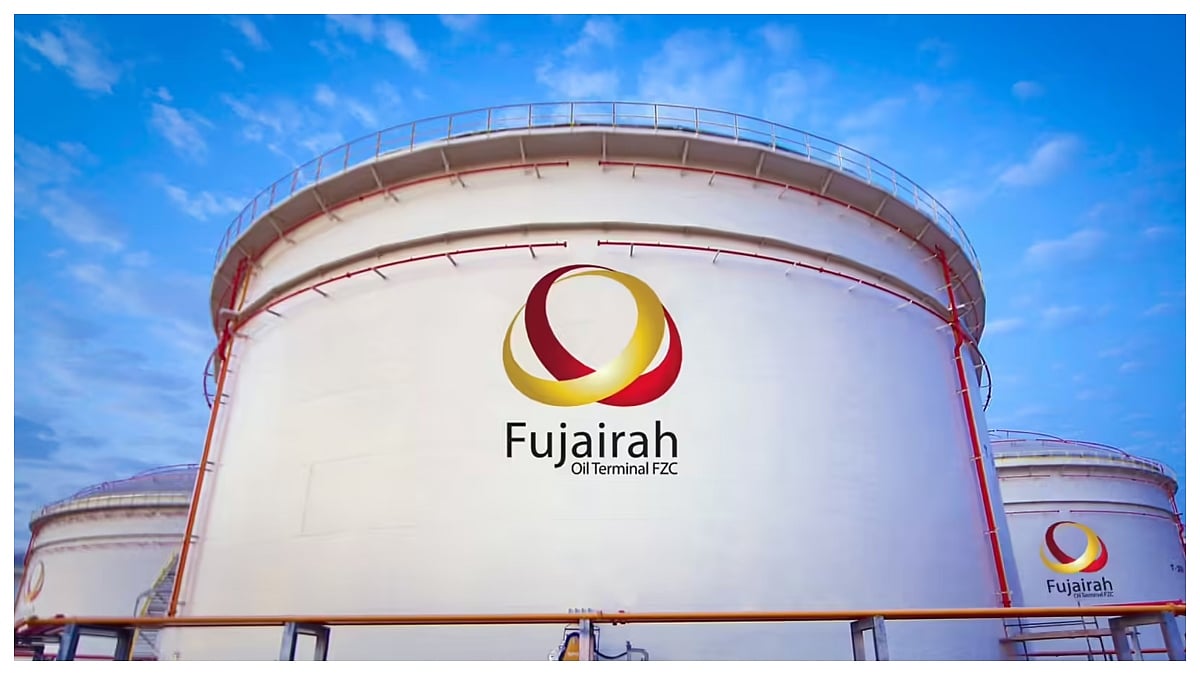
As the conflict in West Asia intensifies, a geographical name that once primarily occupied the minds of logistics managers—Fujairah—is now making headlines across the globe. Located in the United Arab Emirates (UAE), this port has transformed from a regional refuelling stop into the world’s most critical "pressure valve" for oil. Following recent drone attacks on its petroleum sites, the stakes for this coastal hub have never been higher.
Here we try to break down what is happening at the port, why it has become a target of Iranian projectiles and how its operations affect everything from local economies to global gas prices.
What is happening in Fujairah and who is involved?
In the last couple of days, the Emirate of Fujairah has faced a series of security threats, most notably drone attacks that triggered a fire at a major petroleum industry site. While the Fujairah Government Media Office confirmed the fire was limited and resulted in no injuries, the psychological and economic impact was immediate.
According to reports from Reuters and Bloomberg News, oil-loading operations were temporarily suspended following the strikes, though emergency teams were able to resume some activity shortly after on both occasions.
These strikes are retaliatory as the attacks on Fujairah followed a US bombing of military facilities on Kharg Island, Iran’s primary oil export hub. With Iran warning of strikes on regional energy infrastructure, Fujairah has found itself on the front lines of a "tit-for-tat" shadow war.
Where is Fujairah and why is its location so vital?
Geography is Fujairah's greatest asset. Most of the UAE’s neighbours—and its own primary oil fields—are located inside the Persian Gulf. To reach the rest of the world, tankers must pass through the Strait of Hormuz, a narrow waterway that Iran has effectively closed due to the ongoing war.
Fujairah is the UAE's only emirate located entirely on the Gulf of Oman, sitting outside that narrow chokepoint. Because it faces the Indian Ocean directly, it provides a "back door" for energy exports. By using Fujairah, the UAE can move its oil to market without ever entering the volatile waters of the Strait.
How does Fujairah keep the world’s oil flowing?
The port serves as the terminus for the Abu Dhabi Crude Oil Pipeline (ADCOP), also known as the Habshan–Fujairah Pipeline. This 400-kilometre onshore line carries crude from Abu Dhabi’s inland fields directly to the coast of Fujairah.
According to data from Kpler, Fujairah exported more than 1.7 million barrels per day (bpd) of crude and refined fuels last year. To put that in perspective, that is roughly 1.7 per cent of the entire world’s daily oil demand. The port is also a global leader in "blending"—the process of mixing different petroleum components to create specific fuels like gasoline or the "bunker fuel" used to power massive shipping vessels. In 2025, it ranked as the fourth-largest marine fuel hub in the world, trailing only Singapore, Rotterdam and Zhoushan.
When did it become so important to the UAE’s economy?
While Fujairah has been a growing hub for decades, its importance became absolute the moment the Strait of Hormuz was blocked. Before the war, the UAE produced over 3.4 million bpd of crude. Currently, the ADCOP pipeline can handle about 1.5 million bpd.
Without Fujairah, the UAE—OPEC’s third-largest producer—would have virtually no way to get its "Murban" grade crude to its primary buyers in Asia. If Fujairah were to be completely disabled by further attacks, the UAE would likely be forced to shut down a significant portion of its national oil production, as there would be nowhere for the oil to go.
Why does this matter to the average consumer?
If you are wondering why a drone strike in a distant port matters to you, the answer lies in storage and stability. Fujairah boasts a massive storage capacity of 18 million cubic metres, managed by global giants like VTTI, Vitol and ADNOC.
When supply routes are threatened, these reserves act as a buffer. However, when the "buffer" itself is attacked, the global market reacts with panic. Any prolonged disruption at Fujairah would cause a sharp spike in global oil prices, leading to higher costs for transportation, heating and manufacturing worldwide. Essentially, Fujairah is currently the only thing standing between the global energy market and a total supply vacuum in West Asia.
