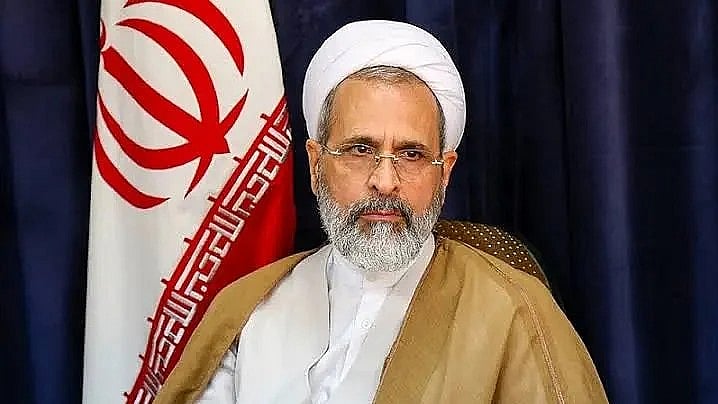
Senior cleric Ayatollah Alireza Arafi has been named Iran's interim Supreme Leadere following the death of Supreme Leader Ayatollah Ali Khamenei.
After Tehran activated Article 111 of its Constitution, an interim three-member leadership council was formed to assume the Supreme Leader’s authority. Arafi was appointed as the jurist representative from the Guardian Council, completing the temporary body that will govern until a permanent successor is selected.
The Constitutional Transition Mechanism
Under Iran’s constitutional framework, when the office of the Supreme Leader becomes vacant, a council temporarily assumes leadership duties. The council consists of the president, the chief justice and a cleric drawn from the Guardian Council.
Arafi now jointly holds authority alongside President Masoud Pezeshkian and Chief Justice Gholam-Hossein Mohseni-Ejei. Together, the trio exercises powers previously concentrated in the hands of a single supreme leader.
However, as the only senior cleric in the interim arrangement, Arafi is widely viewed as the dominant religious figure within the council.
Religious Scholar With Deep Institutional Roots
Born in 1959 in Meybod, Yazd province, Arafi is a prominent Shia cleric with longstanding ties to Iran’s religious establishment. He studied in Qom under leading scholars and rose to the rank of mujtahid, granting him the authority to issue independent Islamic legal rulings.
He currently serves as a member of both the Guardian Council and the Assembly of Experts the 88-member body responsible for appointing the Supreme Leader. Some reports describe him as deputy chairman of the Assembly.
Key Positions And Influence
Over the years, Arafi has held several influential posts within Iran’s religious and political framework:
Head of Iran’s nationwide seminary (hawza) system
Former chairman of Al-Mustafa International University in Qom
Former Friday prayer leader in Qom
Senior figure within institutions aligned with the Islamic Revolutionary Guard Corps
His career has focused heavily on religious education, ideological outreach and strengthening institutional loyalty to the Islamic Republic.
A Hardline Reputation
Arafi is often described as a conservative cleric with close ties to Khamenei. His father was reportedly acquainted with Ruhollah Khomeini, the founder of the Islamic Republic.

Observers consider him aligned with hardline positions, particularly on foreign policy and nuclear negotiations, advocating resistance to Western pressure.
What Happens Next?
The interim leadership council is a temporary arrangement. The Assembly of Experts is expected to begin deliberations on appointing a permanent Supreme Leader a decision that will shape Iran’s political and religious future.

