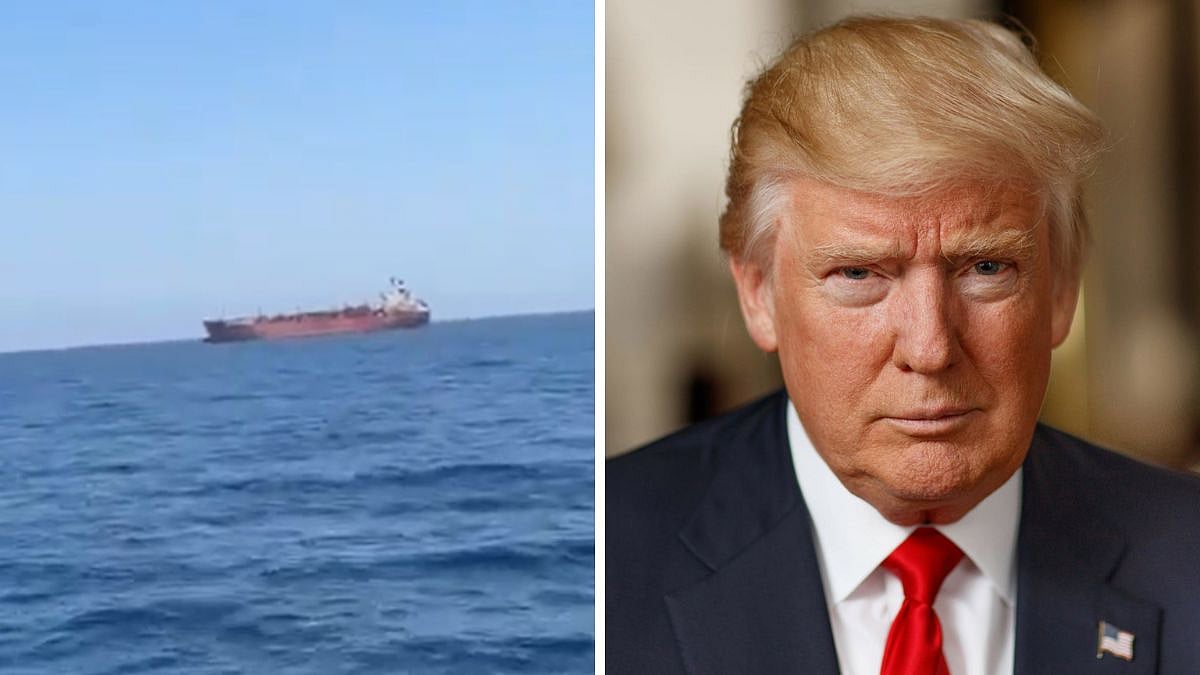
The Strait of Hormuz, a slender hook of water separating the Persian Gulf from the Gulf of Oman, has transitioned from a vital trade route to a volatile frontline. Since the outbreak of hostilities between the US, Israel and Iran on February 28, 2026, the waterway has been effectively paralysed.
While the US military continues Operation Epic Fury against Iranian targets, a startling shift in American foreign policy has emerged. President Donald Trump is now signalling that the US will no longer act as the world’s maritime police for the strait, demanding that allies take over the burden of securing their own energy supplies.
What is the Strait and why is it currently blocked?
The Strait is a geographic bottleneck, measuring only 21 miles wide at its narrowest point. Despite its size, it is the world’s most important energy transit point. In 2025, it carried roughly 20 million barrels of oil per day—representing about 20 per cent of global consumption—and a similar percentage of the world’s Liquefied Natural Gas (LNG), primarily from Qatar.
While Iran has not declared a formal physical blockade, it has achieved the same result through asymmetric threats. By deploying fast attack boats, drones and anti-ship missiles, Tehran has made the risk of passage too high for commercial insurers. Daily transits have plummeted from an average of 135 ships to fewer than five.
For those that do pass, Iran has reportedly established a toll booth system near Larak Island, allegedly charging friendly nations up to $2 million per vessel for safe passage, a scheme that could net Tehran $60 billion annually.
What is the US government’s new "hands-off" stance?
President Trump has sparked international debate by asserting that reopening the Strait is "not for us" but for the countries that rely on its oil.
Expressing deep frustration with allies who refused to join the initial military campaign against Iran, Trump has adopted a "user-pays" philosophy for global security. On Tuesday, he explicitly told allies like the United Kingdom and France to "go get your own oil," suggesting they use their own navies to force the passage open.
This rhetoric is backed by the Pentagon. Defence Secretary Pete Hegseth noted that while the US has done the "heavy lifting" in degrading Iran's military, the formal objectives of Operation Epic Fury do not actually include the guaranteed reopening of the shipping lanes.
White House Press Secretary Karoline Leavitt confirmed that the primary goals are destroying Iran’s navy, ballistic missiles and nuclear infrastructure. The administration’s current stance is that once the US "concludes its stay" in approximately two to three weeks, the Strait will "automatically" open—a claim many maritime analysts doubt.
How are US allies and regional powers responding?
The United Arab Emirates (UAE) has emerged as the most proactive, reportedly preparing to become the first Gulf nation to join the war effort directly. The UAE is currently pushing for a United Nations Security Council resolution to authorise a multinational coalition to reopen the Strait by force.
While heavyweights like China and Russia are expected to block any such UN resolution, the UAE has signalled it may proceed with mine clearance and security operations regardless.
They have even suggested the US seize strategic islands like Abu Musa to ensure long-term control. Meanwhile, European powers like France and the UK remain in a difficult position. They are facing domestic pressure over soaring energy costs but are hesitant to enter a conflict that President Trump has warned "the U.S.A. won’t be there to help you" with anymore.
What does this mean for the global economy?
The consequences of this "chokehold" are already manifesting in a global economic crisis. Brent crude oil has surged past $100 a barrel—a 45% increase since the war began—and peaked as high as $126. In the United States, gasoline prices have crossed the $4-per-gallon threshold for the first time in nearly four years, complicating the domestic political home.
The impact is even more severe in Asia and Africa, where energy-dependent nations are facing critical shortages. China, which relies on the Strait for nearly 90 per cent of its Iranian oil imports, is seeing its manufacturing costs skyrocket.
In response to the scarcity, countries like South Sudan and Mauritius have been forced to implement electricity rationing, while Slovenia has introduced the European Union’s first fuel-rationing programme of the crisis.
Is there a path to reopening the waterway?
The future of the Strait remains tied to the outcome of Operation Epic Fury. However, Iran’s foreign ministry recently denied any direct negotiations with the US, even as Trump paused certain strikes until April 6 to allow for intermediary talks.

