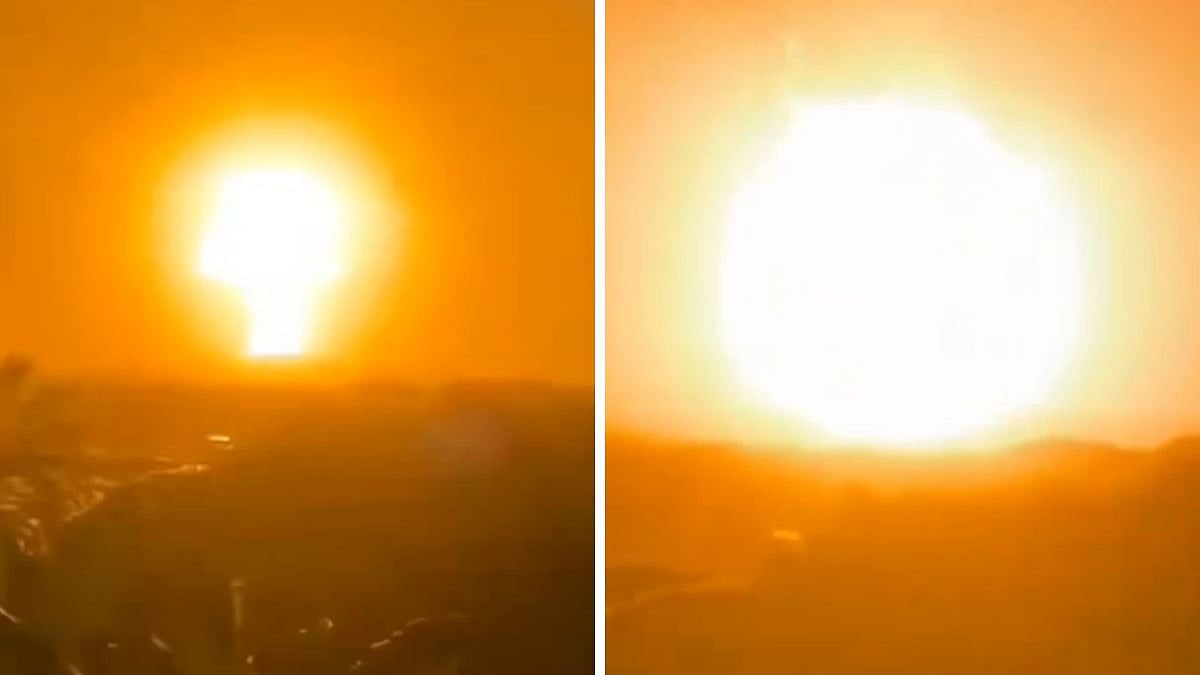
A massive mud volcano eruption in San Juan de Urabá, Colombia, on Wednesday, February 25, led to the death of several animals and caused major damage to the access road leading to the Siete Vueltas district.
Emergency services had already been deployed in the area when the eruption occurred. Firefighters immediately began dousing flames triggered by the eruption and cordoned off the site to prevent civilians from approaching the danger zone.
Multiple videos shared by local residents on social media captured dramatic visuals of the incident, showing towering flames lighting up the sky and remaining visible from neighbouring areas. A massive fireball can be seen as the volcano erupts, making it look like a 'nuclear blast,' as said by some netizens.
No Human Casualties Reported So Far, Several Animals Killed
According to preliminary assessments by relief agencies, no human casualties have been reported so far. However, the eruption is believed to have sparked a vegetation fire around the volcano.
Authorities have urged residents and onlookers to stay away from the affected area due to the risk of accidents. People have also been advised to avoid travelling on the road connecting San Juan de Urabá and San Juancito, as images circulating online show visible cracks and structural damage along several stretches.
Speaking to El Colombiano, San Juan de Urabá’s Secretary of Government, José Ignacio Díaz Salgado, said at least four houses were evacuated as a precautionary measure. He added that the local fire department was already on the ground on Wednesday night, working to control fires caused by the eruption.
While a full assessment of damage has been delayed due to poor visibility at night, Díaz confirmed that several cattle were found dead in the aftermath of the incident. Search and safety operations in the surrounding areas are ongoing.
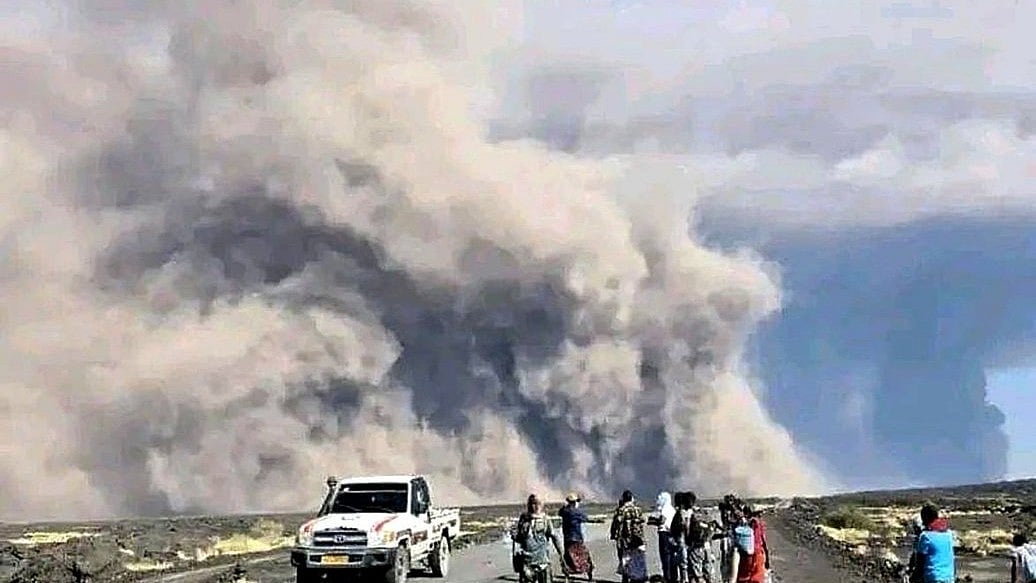
What Is A Mud Volcano?
Unlike conventional volcanoes that erupt molten lava, mud volcanoes expel a mixture of mud, water and gases, mainly methane, from underground sedimentary basins. These eruptions are often linked to tectonic activity or regions rich in oil and natural gas deposits.
When gas pressure builds beneath soft sediments such as clay or shale, it forces the muddy slurry upward. In certain cases, like the eruption in San Juan de Urabá, escaping methane can ignite, producing fireballs and explosions that resemble volcanic eruptions. Despite the intense visuals, mud volcano eruptions are typically much cooler than lava-based events.
Mud volcanoes vary widely in size, from small mounds to massive structures spanning hundreds of metres. Although generally less destructive than traditional volcanoes, they pose serious risks due to toxic gas emissions, unstable ground conditions and the possibility of secondary fires.

