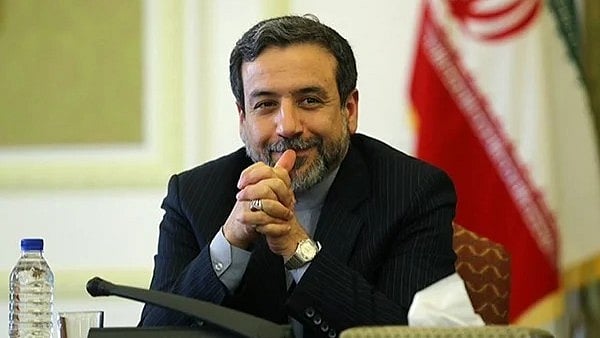
In the second week of the high-stakes conflict between Iran and United States-Israel, Iranian Foreign Minister Abbas Araghchi on Monday delivered a scathing rebuke of Israeli military strategy on social media. Following a wave of Israeli airstrikes on fuel depots in Tehran, Araghchi labelled the actions a violation of international law and a form of "ecocide." Writing on X, he warned that residents face "long-term damage to their health" and that the "contamination of soil and groundwater could have generational impacts." He concluded by asserting that Israel "must be punished for its war crimes."
However, there is a glaring contradiction in this stance. While Araghchi condemns the environmental toll of strikes on Iranian soil, the Islamic Revolutionary Guard Corps (IRGC) is simultaneously executing a massive campaign of energy destruction across the Gulf. This duality—decrying environmental destruction at home while actively pursuing it abroad—is being viewed as a strategically self-defeating move that undermines Iran's moral and legal standing.
Understanding 'ecocide' allegations
The term 'ecocide' has been central to Tehran's rhetoric following the March 7, 2026, escalation, when Israeli forces began a "large-scale wave" of attacks on Iranian regime infrastructure. These strikes targeted at least five oil and fuel storage facilities in and around the capital, including the Shahran and Tehran refineries. According to reports from The Guardian and the Conflict and Environment Observatory (CEOBS), the resulting blazes blanketed the city of nine million people in toxic smoke and "black rain"—a mixture of soot and rainwater that experts warn can contaminate food and water supplies.
While Araghchi’s concerns about generational health impacts are echoed by the World Health Organisation, his use of the term "war crimes" creates a legal paradox. By framing the destruction of fuel depots as a criminal act against humanity, he invites international scrutiny into Iran’s own military operations, which have mirrored these exact tactics since the war erupted on February 28.
Conflict of Iran's regional strategy
The primary reason Araghchi’s condemnation is seen as self-defeating is the scale of the IRGC’s own attacks on Gulf energy infrastructure. While the foreign ministry appeals to international law, Iranian military forces are actively targeting the same types of facilities in neighbouring states. ACLED data shows that the IRGC has shifted its campaign to target the maritime artery of the Strait of Hormuz and energy production sites across the region.
The list of Iranian-led energy strikes is extensive. Since the start of the conflict, drone and missile attacks have hit Saudi Arabia’s Ras Tanura refinery and the Shayba oil field. Fires have also been reported at fuel storage tanks in Bahrain and Oman’s port of Salalah following Iranian drone strikes. By adopting a scorched-earth policy against Gulf energy assets, Tehran is essentially committing the same 'ecocide' it claims to be a victim of, neutralising its ability to seek diplomatic or legal sympathy from the international community.
Economic and humanitarian fallout
The 'energy war' has had immediate global consequences that further complicate Araghchi’s message. The threat to the Strait of Hormuz—which carries 20 per cent of global seaborne oil—has sent prices soaring toward $100 a barrel. Iranian military officials, such as spokesperson Ebrahim Zolfaqari, have even leaned into this chaos, warning the world to "get ready for $200 per barrel."
This economic pressure primarily affects neutral Asian economies like India and China, which receive the vast majority of oil passing through the Strait. By intentionally destabilising global energy security and causing environmental disasters in the Gulf, Iran risks alienating its few remaining partners. The Iranian government is facing increasing pressure from Middle Eastern neighbours to halt attacks that have turned civilian sites into environmental hazard zones.
Risk of legal backfire
Araghchi’s move to label these strikes as 'ecocide' and 'war crimes' may create a significant legal liability for the Iranian leadership. Organisations like Amnesty International have already called on all parties—Israel, US and Iran—to cease unlawful attacks on energy infrastructure, citing the devastating risks to millions of civilians.
By setting a precedent that the destruction of fuel depots constitutes a punishable crime, Araghchi provides a legal framework for his own government’s prosecution. As long as the IRGC continues to strike tankers like the Safesea Vishnu or refineries in the UAE and Kuwait, Araghchi’s condemnations will likely be dismissed as hollow rhetoric, leaving Iran with less diplomatic leverage to stop the very strikes it fears most.
