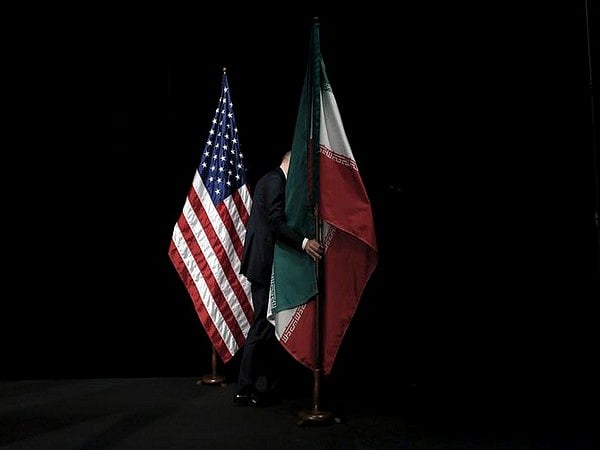
If reports are to be believed, despite the rampants threats against each other on social media, United States and Iran are currently locked in a high-stakes diplomatic gamble to pause a six-week-old war that has already seen the heavy bombing of Iranian territory and retaliatory strikes across the Middle East.
At the centre of these talks is a proposal for a 45-day ceasefire, intended to provide a "cooling-off" period to negotiate a permanent end to the conflict. However, with President Donald Trump issuing a final deadline of Tuesday at 8:00 p.m. ET, the window for a deal is closing rapidly. If the parties fail to reach an agreement, the alternative is a dramatic escalation that could involve massive strikes on Iranian civilian infrastructure and retaliatory strikes against energy and water facilities in the Gulf states.
Who is involved in the negotiations?
While the US and Iran are the primary combatants, they are not speaking directly in a formal setting. Instead, the negotiations are a complex web of "backdoor" diplomacy. According to an Axios report, mediators from Pakistan, Egypt, and Turkey are shuttling messages between the two sides. Simultaneously, a more direct line has opened via text messages between Steve Witkoff, President Trump’s envoy, and Abbas Araghchi, the Iranian Foreign Minister.
Other regional players, including Oman, are focussing specifically on maritime issues, such as the reopening of the Strait of Hormuz.
What are the terms of the 45-day proposal?
The proposed deal is structured in two distinct phases to build trust between two deeply suspicious governments. The first phase consists of a 45-day ceasefire where all offensive military actions would cease, providing a window to negotiate a permanent peace treaty.
The second phase would be a final agreement to end the war, which would address the most contentious issues including the full reopening of the Strait of Hormuz and the fate of Iran’s highly enriched uranium stockpile.
Mediators are currently pushing for "confidence-building measures," which means asking Iran to take partial steps toward opening shipping lanes or diluting its uranium in exchange for US guarantees that the ceasefire is not just a temporary pause for the US and Israel to prepare for further strikes.
Why is apocalypse a real possibility?
There is a fear of apocalyptic results that could follow a breakdown in talks. President Trump has been blunt about his intentions, stating to Axios that if a deal is not made, he is prepared to "blow up everything over there."
The US and Israel reportedly have operational plans ready to target Iran’s energy facilities and civilian infrastructure, such as power plants and bridges. Iran has responded by calling these threats "war crimes" and has demonstrated its ability to retaliate.
Recent drone and missile attacks have already damaged petrochemical plants in the UAE, power and water desalination plants in Kuwait and energy storage tanks in Bahrain. A full-scale escalation would likely see these targets expanded, potentially crippling the global energy supply and the water security of the Gulf states.
Where is the fighting happening now?
Despite the talks, the war remains active. For the past six weeks, US and Israeli jets have bombed the length of Iran, recently targeting the Ahvaz international airport and the Ardabil province, where five members of the Islamic Revolutionary Guard Corps (IRGC) were killed.
In return, Iran has targeted Israeli interests, including strikes near Haifa and the area surrounding Dimona, home to Israel’s nuclear facility. The conflict has also spilled into the air, with Iran claiming to have downed US helicopters and aircraft during rescue operations for a previously downed F-15 jet.
When is the final deadline?
The immediate fate of the region hinges on Tuesday at 8:00 p.m. ET. Originally, President Trump set a deadline for Monday evening, but he extended it by 20 hours to allow mediators one last chance to secure Iranian concessions. Trump told Fox News there is a "good chance" of a deal, but emphasised that the US is prepared to "take over the oil" if negotiations fail. This tight timeline has led mediators to warn Iranian officials that there is no time left for further negotiation tactics.
How are the two sides justifying their positions?
The stalemate exists because both sides have fundamentally different requirements for peace. The Trump administration demands the immediate reopening of the Strait of Hormuz and a solution for Iran's nuclear material, using the threat of infrastructure destruction as its primary leverage.
Tehran insists on a "new legal regime" for the Strait that includes transit fees to pay for war damages. Crucially, Iranian officials tell mediators they will not give up their main bargaining chips for a mere 45-day pause. They fear a "Gaza-style" situation where a ceasefire exists on paper while the U.S. continues to strike at will. While international voices like Russia, China, and Pope Leo XIV have called for an immediate ceasefire, the next 48 hours will determine whether diplomacy can bridge the gap or if the region will descend into a much wider conflict.

