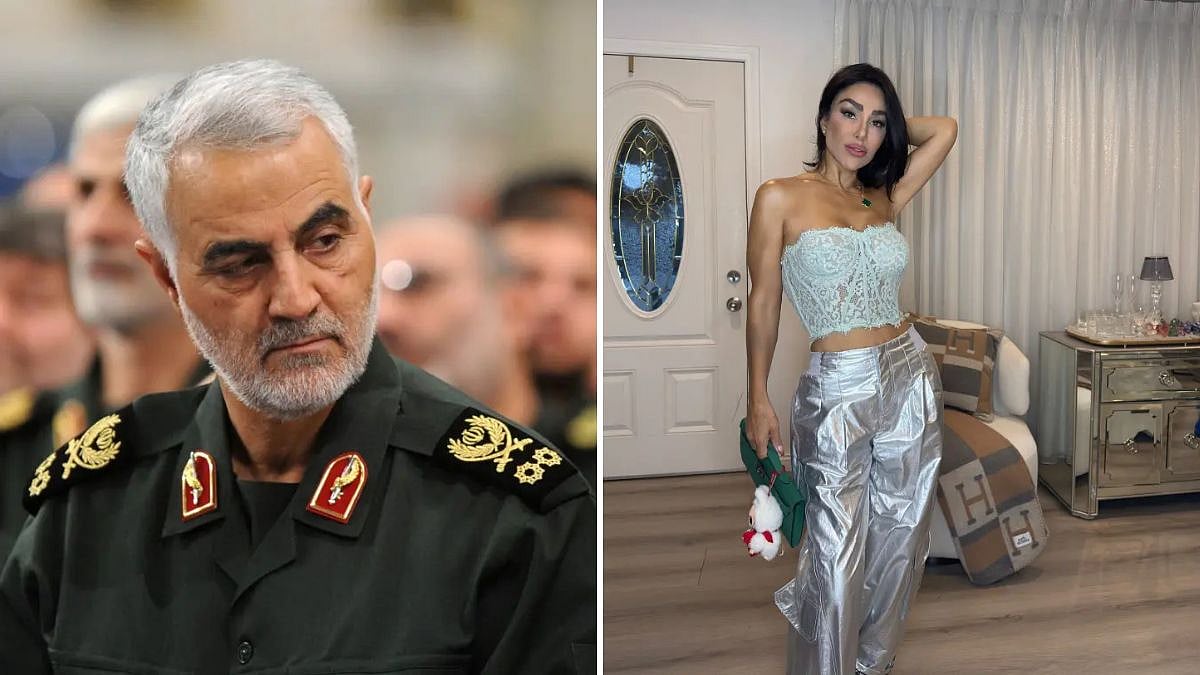
The United States has detained two women said to be relatives of Qasem Soleimani escalating tensions already strained by the late commander’s legacy and Washington’s longstanding disputes with Iran. However, the family of the slain Iranian general has firmly rejected the allegations, calling them baseless.
According to the US State Department, the women, identified as Hamideh Soleimani Afshar and her daughter, had their lawful permanent residency revoked and are currently in the custody of immigration authorities. The move was confirmed in a statement released over the weekend.

Residency revoked, deportation proceedings begin
US Secretary of State Marco Rubio said the two individuals were being held by Immigration and Customs Enforcement, with removal proceedings underway. In a social media statement, he alleged that they had been living comfortably in the United States despite questionable immigration claims.
Official records indicate that Soleimani Afshar entered the US on a tourist visa in 2015 and was granted asylum four years later. She subsequently received a green card in 2021. Her daughter, Sarinasadat Hosseiny, followed a similar path, arriving on a student visa before obtaining asylum in 2019 and permanent residency in 2023.
The Department of Homeland Security has alleged discrepancies in Soleimani Afshar’s asylum claims. Authorities pointed to her repeated visits to Iran after securing residency, arguing that such travel undermines claims of persecution.

Allegations of propaganda and political links
US officials have also accused Soleimani Afshar of publicly supporting the Iranian government. The State Department described her as an “outspoken supporter” of the regime and claimed she had shared pro government narratives on social media.
In addition, authorities confirmed that her husband has been barred from entering the United States, though his identity has not been disclosed.
The developments have added a political dimension to what might otherwise have been treated as a routine immigration case, especially given the enduring global profile of Qasem Soleimani.
Family rejects allegations, calls claims false
Responding sharply, Narjes Soleimani denied any familial connection between the detained women and her father. In a public statement, she said the individuals “have no connection whatsoever” to the late commander and accused US authorities of spreading misinformation.

She further criticised Washington, suggesting the claims were politically motivated and aimed at tarnishing Soleimani’s legacy.
The US State Department has declined to provide further details, stating only that it had nothing additional to add beyond its initial statement.
Legacy of Qasem Soleimani remains contentious
Qasem Soleimani, once one of Iran’s most powerful military figures, led the elite Quds Force and played a central role in shaping Iran’s military strategy across the Middle East. He was killed in 2020 in a US drone strike near Baghdad airport, an operation authorised by then President Donald Trump.
Speaking earlier this week, Trump revisited the decision, describing Soleimani as a “brilliant but dangerous” figure and defending the strike that ended his life. He also suggested that Iran’s current geopolitical standing might have been different had Soleimani remained alive.
The latest arrests have once again brought the late commander’s name into the spotlight, underscoring how his legacy continues to influence US Iran relations even years after his death.

