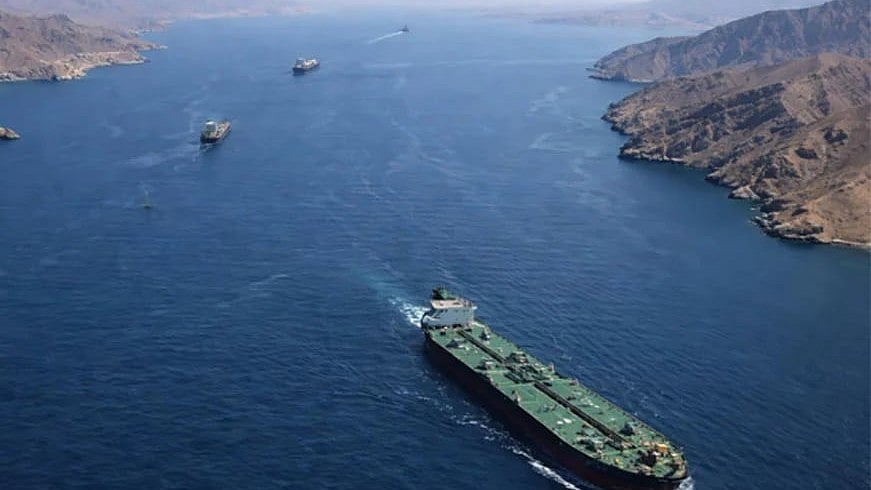
The United Arab Emirates has announced plans to fast-track the construction of a major oil pipeline aimed at significantly increasing crude export capacity through Fujairah by 2027, as tensions in the Gulf continue to disrupt global energy supplies.
The move comes amid the effective closure of the Strait of Hormuz following escalating conflict involving Iran, the United States, and Israel a development that has sent global oil prices soaring and raised fears of a wider economic slowdown.
ADNOC Directed To Speed Up Strategic Pipeline
According to the Abu Dhabi Media Office, Abu Dhabi Crown Prince Khaled bin Mohamed bin Zayed Al Nahyan instructed the Abu Dhabi National Oil Company (ADNOC) to accelerate work on the West-East Pipeline project during a recent executive committee meeting.
The new pipeline, currently under construction, is expected to become operational in 2027. Officials, however, did not disclose the original completion timeline.
The project is expected to substantially boost the UAE’s ability to export crude oil directly through Fujairah on the Gulf of Oman coast, bypassing the strategically critical Strait of Hormuz.
UAE Expands Alternative Export Route
The UAE already operates the Abu Dhabi Crude Oil Pipeline (ADCOP), also known as the Habshan-Fujairah pipeline, which can transport up to 1.8 million barrels of oil per day.
The new project is expected to nearly double export capacity through Fujairah, strengthening the UAE’s position as one of the few Gulf producers capable of exporting crude outside the Strait of Hormuz.
Currently, only the UAE and Saudi Arabia possess major infrastructure allowing oil exports to bypass the narrow maritime chokepoint, while Oman benefits from direct access to the Gulf of Oman coastline.
Hormuz Shutdown Disrupts Global Oil Supplies
The Strait of Hormuz located between Iran and Oman remains one of the world’s most critical energy transit routes, handling nearly one-fifth of global oil shipments.
Iran effectively shut the waterway in response to a joint US-Israeli air and naval campaign launched on February 28, severely impacting oil flows to Asian and global markets.
Countries including Kuwait, Iraq, Qatar, and Bahrain remain heavily dependent on the strait for crude exports, making them particularly vulnerable to the ongoing disruption.
Rising Prices Trigger Global Economic Concerns
The prolonged supply disruption has sharply increased global energy prices, forcing several governments to introduce fuel rationing measures while intensifying fears of inflation and a possible global economic downturn.
Analysts believe the UAE’s accelerated pipeline strategy reflects growing urgency among Gulf producers to secure alternative export routes and shield energy markets from prolonged geopolitical instability.

