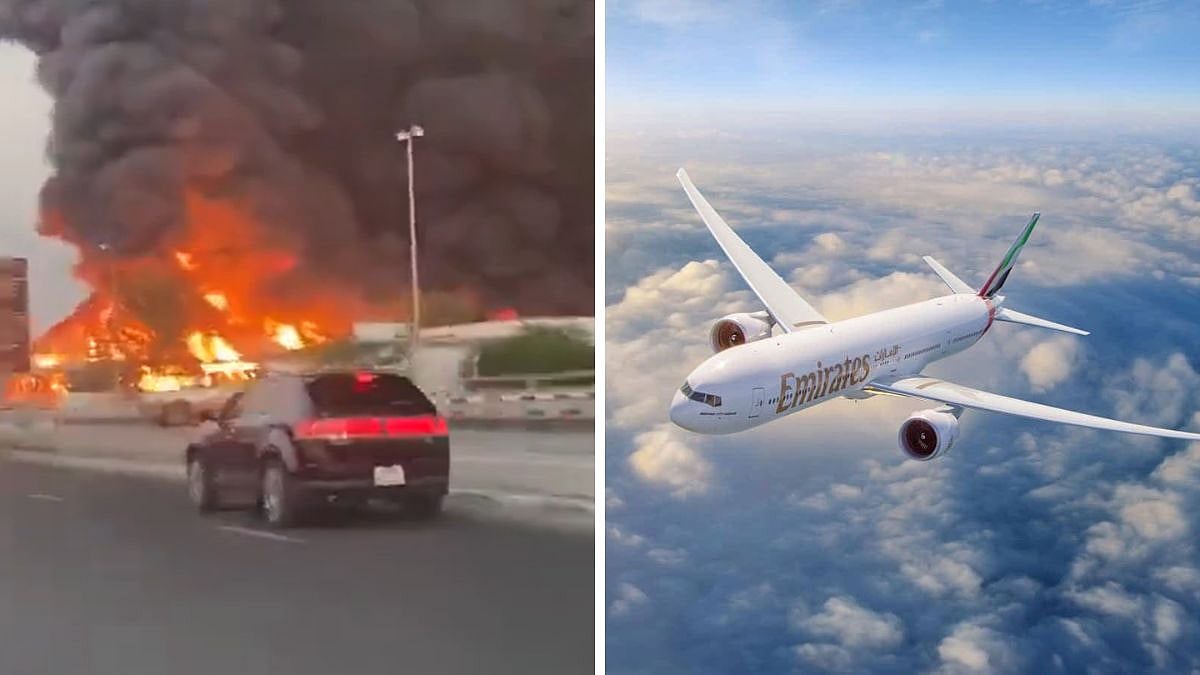
The United Arab Emirates reopened its airspace on Tuesday following a temporary shutdown triggered by escalating regional tensions, as Iran continues missile and drone attacks in the ongoing conflict involving the United States and Israel, now entering its third week.
According to the UAE Ministry of Defence, the country’s air defence systems have intercepted more than 300 ballistic missiles and approximately 1,600 drones since the escalation began. Authorities said these measures were crucial in protecting national airspace and critical infrastructure amid heightened security concerns.
The General Civil Aviation Authority (GCAA) confirmed that the decision to reopen the airspace was taken after a comprehensive review of operational and security conditions, in coordination with relevant authorities. The regulator stated that the situation continues to be monitored in real time to ensure the highest levels of aviation safety and security.
The airspace closure, which lasted nearly two hours, was described as an “exceptional precautionary measure” aimed at safeguarding flights, air crews, and UAE territory during rapidly evolving regional developments. Aviation authorities emphasised that such steps are necessary to minimise risks during periods of heightened military activity.

Drone Strike On Oil Depot Near Dubai International Airport
The temporary shutdown followed disruptions at Dubai International Airport, one of the world’s busiest aviation hubs. Operations had only partially resumed on Monday after a drone strike hit a fuel depot within the airport, triggering a fire. Officials confirmed that no injuries were reported in the incident. Notably, this marks the fourth drone-related strike linked to the airport in recent days, showing growing concerns over aviation safety in the region.
The situation reflects a broader pattern of disruption across Middle Eastern airspace, with several airlines cancelling or rerouting flights to avoid high-risk zones. Carriers are increasingly reassessing flight paths and schedules as geopolitical tensions continue to impact aviation operations.
British Airways announced on Monday that it has extended a temporary reduction in its Middle East flight schedule due to ongoing uncertainty. The affected routes include services to and from Abu Dhabi, Amman, Bahrain, Doha, Dubai, and Tel Aviv. The airline said it is closely monitoring the situation and remains in contact with passengers to offer alternative travel arrangements where necessary.
Meanwhile, the airline has operated eight relief flights from Muscat, Oman, and introduced additional services connecting Singapore and Bangkok to assist travellers affected by the disruptions.
With tensions showing no immediate signs of easing, aviation authorities and airlines are expected to remain on high alert, prioritising passenger safety while navigating an increasingly volatile regional landscape.

