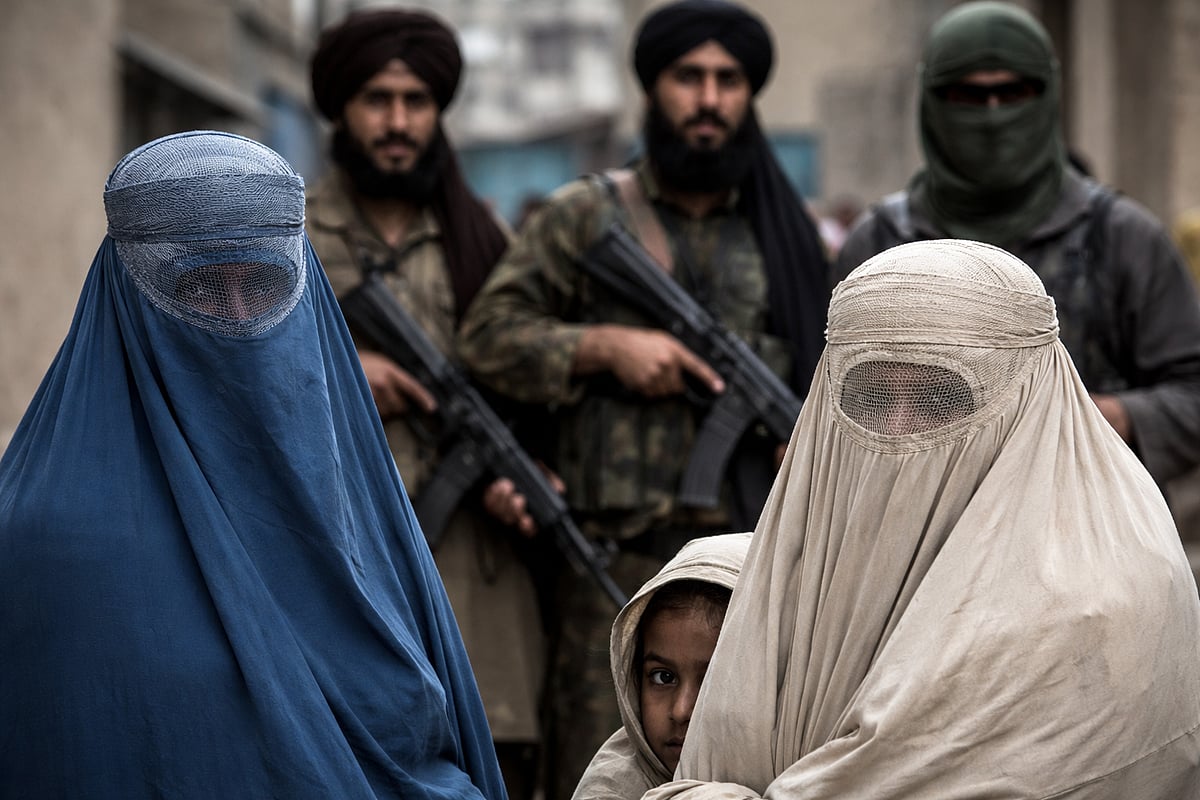
The Taliban has introduced a new 90 page penal code in Afghanistan that formalises some of its most restrictive policies, drawing sharp criticism from human rights groups who say it deepens discrimination against women and children.
Signed by supreme leader Hibatullah Akhundzada, the code permits husbands to physically discipline their wives and children, provided the punishment does not result in broken bones or open wounds. The provisions, reportedly grounded in the group’s interpretation of Islamic scripture, also prescribe varying penalties depending on whether an individual is considered free or a slave, institutionalising inequality within the justice system.
Under the code, psychological and sexual violence are not explicitly prohibited, leaving significant gaps in legal protection. The maximum penalty for abuse is 15 days in prison, and only in cases described as involving obscene force, such as visible fractures or serious injury.
Justice Nearly Impossible For Victims
Even in cases that meet this threshold, a conviction depends on the wife presenting proof of injury before a judge. Women must appear fully covered and accompanied by a husband or male guardian, even if the alleged abuser is the husband himself.
The law also allows a married woman to be jailed for up to three months if she visits relatives without her husband’s permission, including when seeking refuge from violence.
A legal adviser in Kabul, speaking anonymously, described the process of seeking justice as extremely lengthy and difficult. She recounted the case of a woman allegedly beaten by a Taliban guard while visiting her imprisoned husband. When the woman attempted to file a complaint, authorities said it would not be considered unless she appeared with a male chaperone, namely her husband who was in jail. The woman reportedly cried out in despair, saying death felt preferable to the ordeal.
Earlier Protections Rolled Back
The new code effectively nullifies earlier safeguards such as the Elimination of Violence Against Women law introduced in 2009 under the previous government. That legislation criminalised forced marriage, rape and other forms of gender based abuse.
Campaigners from the exiled rights group Rawadari warned that the penal code legitimises abuse and exposes women and children to continued domestic violence. The group has called for an immediate halt to its implementation in Taliban courts.
Years Of Expanding Restrictions
Nearly five years after the Taliban returned to power, Afghan women face sweeping restrictions. Girls are barred from secondary schools and universities, and many never begin primary education due to poverty and safety concerns. Women are excluded from most jobs and public spaces, including parks and gyms, and face severe limits on healthcare access due to mobility rules and shortages of female medical staff.
For many Afghan women, the new penal code signals not just a tightening of laws, but the further shrinking of space in which they can live, speak and seek justice.

