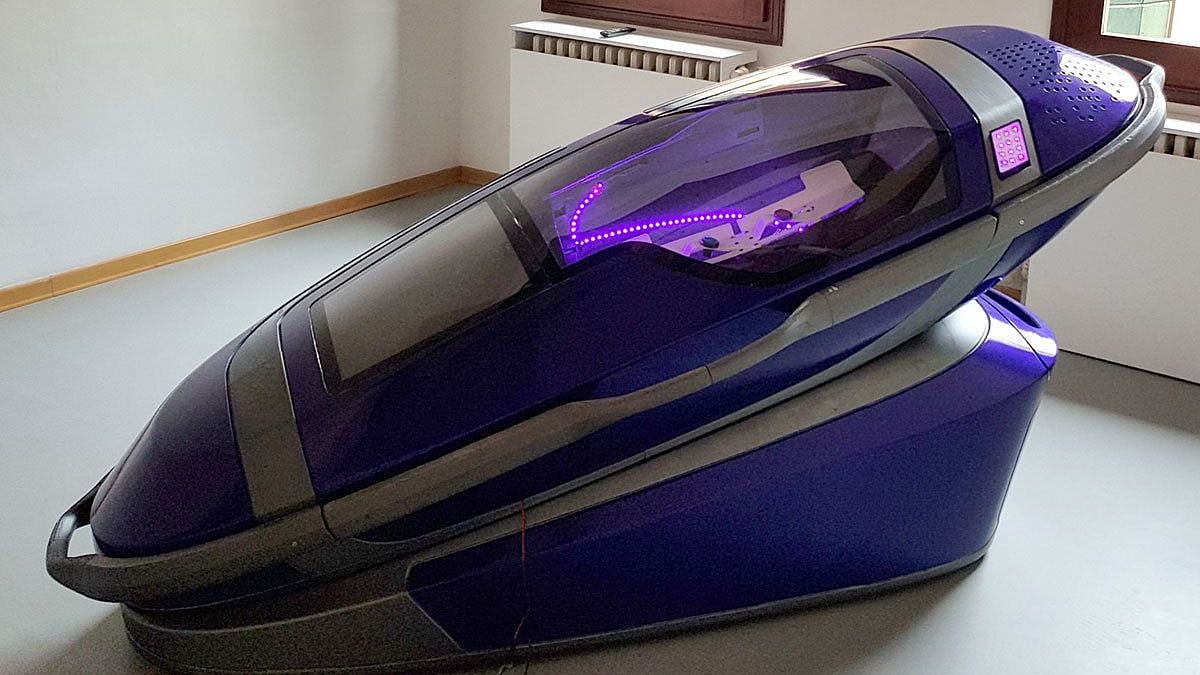
Zurich, Switzerland: In Switzerland, a significant development in assisted dying is imminent as The Last Resort organisation prepares to introduce the Sarco capsule. This portable suicide pod, resembling a space-age device, is designed to facilitate death through hypoxia induced by nitrogen deprivation. Priced at $20 per use, it aims to offer a peaceful and autonomous end-of-life option.
What Is Sacro Capsule?
The Sarco capsule, introduced in Switzerland, is a controversial euthanasia device designed to provide a peaceful and painless death for individuals seeking to end their lives. The Sarco capsule is distinctive not only for its intended function but also for its accessibility and aesthetics. Developed by Australian euthanasia advocate Dr. Philip Nitschke, it resembles a sleek, futuristic pod intended to facilitate a dignified death experience.
Developed over 12 years in the Netherlands at a cost exceeding $710,000, the Sarco represents a substantial investment in research and design. Despite its initial expense, future versions are anticipated to become more affordable.
How Does The Suicide Pod Function?
Functionally, the Sarco capsule operates by allowing the user to lie down comfortably inside. Upon activation, the Sarco rapidly reduces oxygen levels, inducing euphoria and loss of consciousness within moments. Monitored parameters include oxygen levels, heart rate, and blood oxygen saturation, ensuring a controlled and peaceful passing. Once activated, there is no option for reversal, emphasising the irreversible nature of the decision. The method is designed to be painless and swift, offering a humane alternative to traditional euthanasia methods.
Legal Framework
In Switzerland, it has been legal to die by assisted suicide without selfish motives since 1942. If an individual wants to obtain the services, they are given access after passing a mental capacity assessment, entering the capsule, answering automated questions, and, upon consent, pressing a button to initiate the process. Legal in Switzerland under certain conditions, the Sarco adheres to laws allowing individuals to self-administer lethal actions for assisted suicide. Advocates argue that it provides individuals with autonomy and a peaceful end-of-life choice.
Debate And Ethical Considerations
The introduction of the Sarco has sparked debates across Switzerland, particularly regarding its legality and ethical implications. While some cantons have expressed reservations or outright bans, advocates argue that it complies with existing legal frameworks and provides a non-medicalized alternative to traditional assisted dying methods. However, it has sparked significant ethical debates and legal considerations regarding assisted suicide and euthanasia. Supporters emphasise the importance of individual rights and the reduction of suffering, while critics raise concerns about potential misuse, the impact on vulnerable populations, and the broader societal implications of normalising such technologies.

Euthanasia In India
India's euthanasia laws make a distinction between active and passive euthanasia. In India, it is still forbidden to carry out active euthanasia procedures, such as giving fatal medications. Under certain conditions, India has allowed passive euthanasia (also referred to as withholding and/or withdrawing life support) since the Supreme Court's rulings in Aruna Shanbaug (2011), Common Cause (2018), and an order amending the Common Cause guidelines (2023). Patients have to be in a vegetative state or be terminally sick in order for them to give their consent through a living will. In January 2023, the Supreme Court simplified and reduced the procedural rules.
