Singapore will decriminalise sex between men but has no plans to change the legal definition of marriage as being between a man and a woman, Prime Minister Lee Hsien Loong said on Sunday.
Singapore’s gay community on Monday hailed the plan as “a triumph of love over fear” but warned there is still a long way to equality and new bans on same-sex unions could entrench discrimination against them.
The city-state is known for its conservative values, but in recent years an increasing number of people have called for the colonial-era 377A law to be abolished.
Singapore is the latest place in Asia to move on LGBT rights, after India, Taiwan and Thailand.
The government's previous stance was to keep 377A - which bans sex between men - but it also promised not to enforce the law in an effort to appease both sides.
What is Singapore's 377A law?
Same-sex sexual activity between males is technically illegal under Section 377A of the Penal Code, even if it is consensual and takes place in private, although the law is not enforced.
It is legal among women.
In February 2022, the Court of Appeal in the Supreme Court reaffirmed that 377A cannot be used to prosecute men for having gay sex, and that it is 'unenforceable'.
In August 2022, Prime Minister Lee Hsien Loong announced that the Government will repeal Section 377A of the Penal Code while also proposing enshrining heterosexual marriages in the constitution as a compromise with religious groups; civil unions were not officially ruled out.
'A hard-won victory'
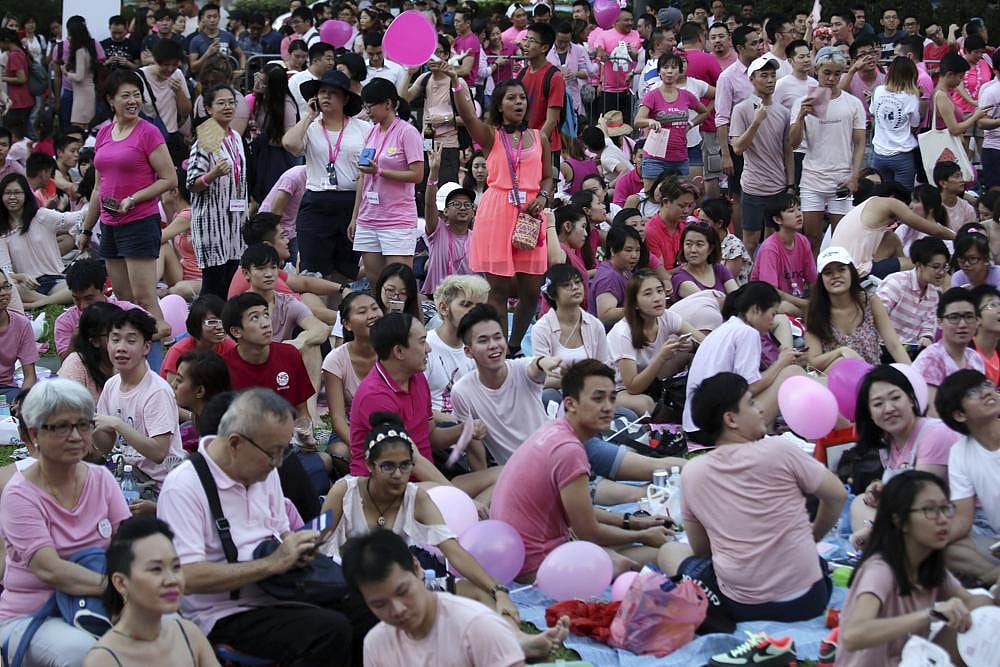
More than 20 lesbian, gay, bisexual and transgender groups — including Pink Dot SG that organizes an annual rally that attracts thousands of supporters — said the repeal was long overdue to show that “state-sanctioned discrimination has no place in Singapore.”
They called it a “hard-won victory, a triumph of love over fear” that will finally enable victims of bullying, rejection and harassment to heal. However, the groups said the repeal was merely “the first step on a long road towards full equality for LGBTQ people” amid other areas of discrimination they face at home, in schools, workplaces, and in housing and health systems.
They expressed disappointment with the government’s plan to introduce further legislation or constitutional amendments to ban same-sex unions that signal LGBTQ people as unequal citizens.
Such a decision will “undermine the secular character of our constitution, codify further discrimination into supreme law and tie the hands of future Parliaments,” they warned.
Religious groups were guarded in their reaction to Lee’s comments, saying the changes mustn’t hinder their religious freedom to articulate views on public morality nor cause any “reverse discrimination” on those who doesn’t support homosexuality.
(with inputs from AP)


