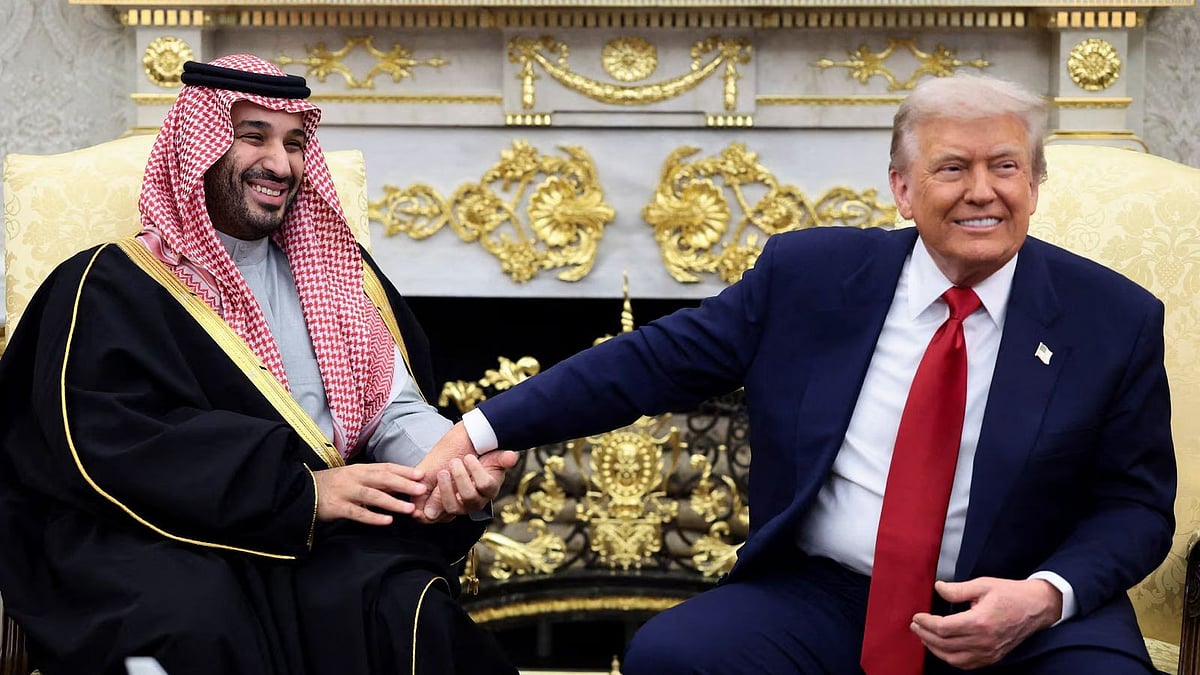
Washington, Sep 27: Saudi Arabia has not ruled out developing nuclear weapons, according to a classified US intelligence assessment that has intensified congressional concern over President Donald Trump’s civilian nuclear cooperation agreement with Riyadh, The Washington Post reported.
US intelligence assessment
The assessment was contained in classified documents sent to Congress last month, US officials told the newspaper. The intelligence findings have not been made public, and the CIA declined to comment.
The documents were provided as Congress reviews an agreement that would permit American companies to begin nuclear energy projects worth tens of billions of dollars in Saudi Arabia.
The Trump administration says the partnership would strengthen relations with Riyadh, create opportunities for US companies and prevent Saudi Arabia from turning to Russia or China for nuclear technology.
The State Department defended the agreement and said Washington “does not and will not support a Saudi nuclear weapon program”.
It said the agreement combined expanded nuclear energy cooperation with the strongest non-proliferation standards that were diplomatically achievable.

Saudi nuclear programme details
The Saudi government did not answer the Post’s questions about the intelligence assessment. It referred the newspaper to an earlier statement by Energy Minister Abdulaziz bin Salman, who said the kingdom’s nuclear programme would be “peaceful” and developed with “the highest levels of responsibility and transparency”.
The agreement initially limits Saudi uranium enrichment to below 5 per cent. But it could eventually permit enrichment of up to 20 per cent after an additional study and a separate written agreement, according to details reported by the Post and The Wall Street Journal.
Uranium enriched to 20 per cent is below weapons grade. However, experts say reaching that level substantially reduces the time and technical work needed to produce material suitable for a nuclear weapon.
Lawmakers have also raised questions about inspections. The agreement does not require Saudi Arabia to adopt the International Atomic Energy Agency’s Additional Protocol, which gives inspectors broader access to nuclear fuel-cycle facilities, research sites and suspected undeclared locations.

Congress raises concerns
A group of Democratic senators led by Edward Markey and Jeff Merkley wrote to Secretary of State Marco Rubio on Friday and demanded that the administration abandon the agreement.
“With this deal, the Trump Administration is departing from precedent, adopting looser restrictions, and caving to Saudi demands,” the senators said.
They argued that Riyadh should accept what lawmakers call the non-proliferation “Gold Standard”. That would prohibit domestic uranium enrichment and plutonium reprocessing while requiring the kingdom to implement the IAEA Additional Protocol.
The letter was also signed by Senators Tim Kaine, Chris Van Hollen, Peter Welch and Ron Wyden.
Also Watch:
Review process continues
Congress is in a 90-day review period. Lawmakers may introduce legislation rejecting the agreement. However, supporters would need a two-thirds majority to override a presidential veto and prevent it from taking effect.
Supporters of the agreement say US participation would provide Washington with more influence over Saudi nuclear activities than allowing Russian or Chinese companies to build the kingdom’s programme.
Trump has also made Saudi normalisation of relations with Israel a condition of the nuclear agreement, according to the Post. Riyadh has said it will not establish diplomatic relations with Israel without progress towards a Palestinian state.
Saudi Arabia is a party to the Nuclear Non-Proliferation Treaty and is subject to IAEA safeguards. Civil nuclear cooperation agreements under Section 123 of the US Atomic Energy Act establish the conditions under which American nuclear technology and material may be transferred to another country.
(Except for the headline, this article has not been edited by FPJ's editorial team and is auto-generated from an agency feed.)

