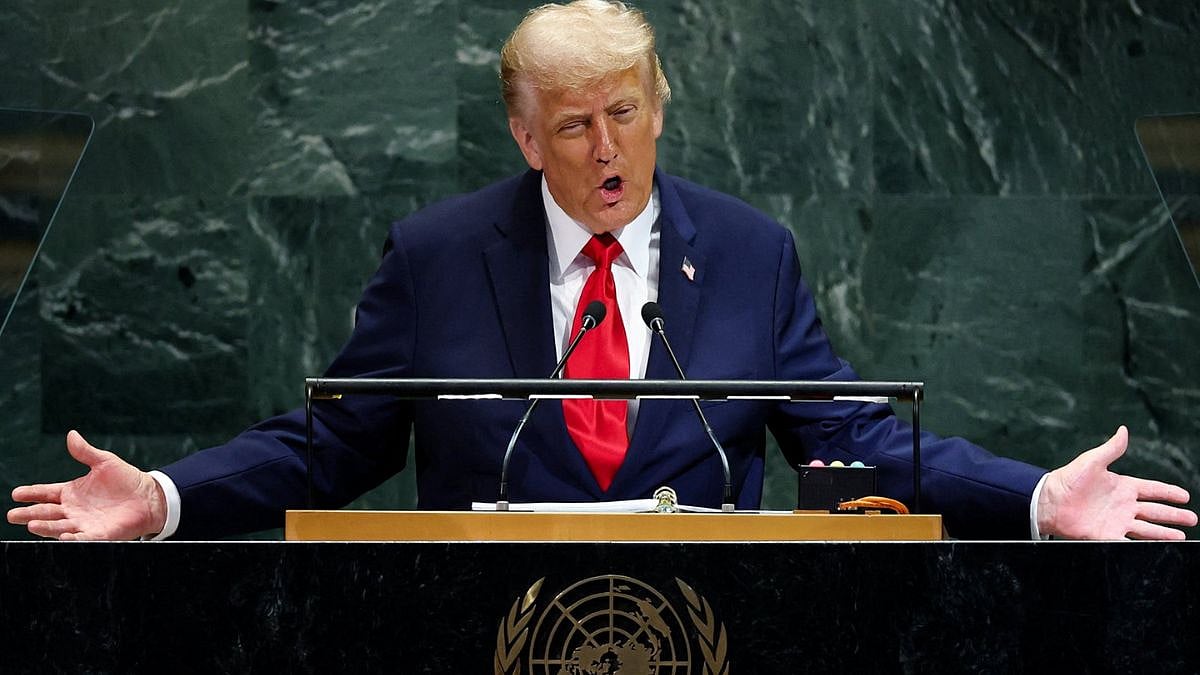
Washington DC: US President Donald Trump on Monday said Washington paused its recent military strikes on Iran after Tehran requested a meeting and urged a halt to military action, while warning that attacks could resume if the two sides fail to reach a new ceasefire agreement.
Trump Says Iran Sought Talks
Speaking to reporters on board Air Force One en route to Waterford Township, Trump said Iran had approached the US seeking renewed discussions and described the ongoing engagement as a diplomatic opportunity.
"They asked us very nicely, 'Please stop, let's meet,'" Trump said. "And that's where we are right now; see what happens. If we don't make a deal, we go back to the same thing."
The remarks came after nearly two weeks of US strikes on Iran, as Trump and his administration continue to assess further military options. The decision to pause the strikes followed discussions within the US administration over the potential consequences of expanding the military campaign.
CNN had earlier reported that Vice President JD Vance and Joint Chiefs of Staff Chairman Gen. Dan Caine had raised concerns regarding escalation, including issues related to US munitions stockpiles and other strategic implications.
Military Options Under Review
According to Axios, citing two sources familiar with the matter, the commander of the US Central Command (CENTCOM), Adm. Brad Cooper, had recommended stopping the bombing campaign around the Strait of Hormuz, noting that it had reached the limit of its effectiveness.
According to the report by Axios, citing the sources, the recommendation by Adm. Cooper came along with several other advisers—civilian and military—which impacted US President Donald Trump's decision on Friday to put a halt to the American military strikes against Iran.
Trump also said that the US is currently engaged in talks with Iran, claiming that communication channels had been opened both directly and through intermediaries.
"We're talking with Iran right now," Trump told reporters, adding, "We are having good talks."
Also Watch:
Talks Continue With Iran
He further said that the discussions could lead to positive developments.
"They would not have requested the meeting if we were doing poorly. The only reason they want to meet is because we've been hitting them very hard," Trump said.
Trump said Iran had sought the meeting through diplomatic channels as well as directly, indicating that negotiations were underway following the recent military escalation.
"They requested a meeting through their surrogates and directly, and we're meeting," he said.
The US President also addressed questions regarding American missile interceptor supplies, saying the country has sufficient defence resources while acknowledging efforts to further strengthen stockpiles.
US Defence Supplies Discussed
On US missile interceptor stocks, Trump said the US has "a lot of ammunition, different types."
He criticised the previous administration under Joe Biden for sending weapons to Ukraine, saying, "and so we're building that up. But we have a lot. We have a lot of the mid-level stuff too. I mean, more than we could ever use, no matter what."
"The Patriots, in particular, are being built," he added.
Trump said the future course of action would depend on the outcome of the ongoing discussions, reiterating that the US would return to military action if diplomacy failed to produce an agreement.
(Except for the headline, this article has not been edited by FPJ's editorial team and is auto-generated from an agency feed.)

