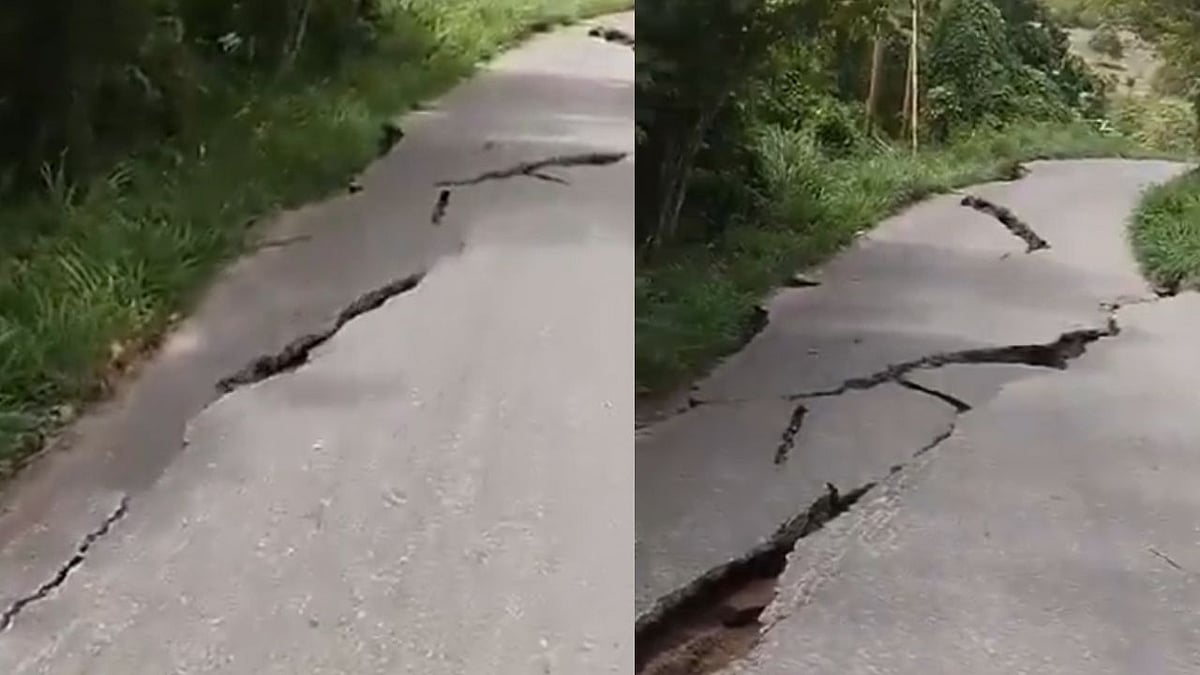
A 6.3-magnitude earthquake struck Haixi Mongol and Tibetan Autonomous Prefecture in northwest China's Qinghai Province on Tuesday evening, prompting authorities to launch assessments of the affected region.
According to the China Earthquake Networks Centre (CENC), the earthquake occurred at 5:06 pm local time (Beijing Time) and originated at a shallow depth of 10 kilometres, a factor that can intensify ground shaking near the epicentre.
Epicentre Located in Sparsely Populated Region
The quake's epicentre was recorded near latitude 37.80 degrees north and longitude 95.56 degrees east in a remote area of Qinghai Province. Preliminary data from the United States Geological Survey (USGS) placed the epicentre at 37.889N and 95.403E, approximately 260 kilometres southeast of Dunhuang and nearly 581 kilometres west-northwest of Xining, the provincial capital.
The region lies within a seismically active zone where tectonic movements frequently generate earthquakes of varying intensity.
No Immediate Casualties or Major Damage
State broadcaster CCTV reported that there were no immediate reports of casualties or significant damage following the earthquake. Local authorities were conducting field inspections and gathering information from affected communities to determine the extent of any impact.
Emergency response agencies remained on alert as officials continued to monitor the situation and assess infrastructure, transportation links, and residential areas.
Shallow Depth Raises Monitoring Efforts
Seismologists noted that the earthquake occurred at a depth of just 10 kilometres, classifying it as a shallow-focus quake. Such earthquakes often produce stronger shaking at the surface than deeper events, even when they occur in relatively remote locations.
The event was detected and analysed by both Chinese and international seismic monitoring networks, which are continuing to review aftershock activity and refine technical data.
Authorities Keep Close Watch
While the absence of immediate damage reports provided relief, authorities are expected to maintain heightened monitoring in the coming hours to track any aftershocks and ensure the safety of residents in the wider Qinghai region.
The earthquake serves as another reminder of the geological activity across western China, where several major fault systems intersect and periodically generate significant seismic events.

