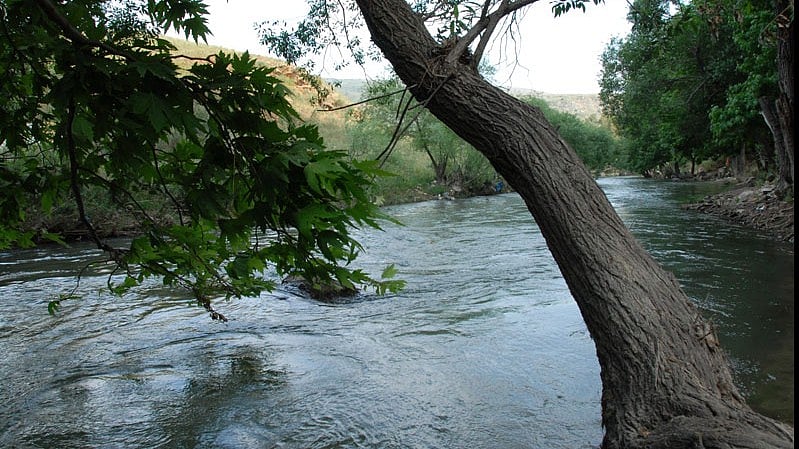
The Litani river has shifted from a scenic waterway into the volatile centrepiece of the ongoing conflict between Israel and Hezbollah. The river is no longer just a geographic marker, it has become the strategic red line for Israeli military operations and a potential new boundary that could fundamentally reshape the Middle East.
This 145-kilometre waterway, which flows entirely within Lebanon, now defines the limits of a proposed Israeli security zone that aims to permanently alter the security landscape of the region.
Why geography of Litani dictates the war
The Litani River is the longest river in Lebanon, originating in the fertile Beqaa Valley and winding south before taking a sharp westward turn to empty into the Mediterranean Sea. Its strategic importance lies in its position roughly 30 kilometres north of the internationally recognised border between Israel and Lebanon. Because the river runs almost parallel to the frontier, it creates a natural "pocket" of territory known as Southern Lebanon.
This area has historically served as a rugged defensive barrier and a primary staging ground for Hezbollah’s military operations. By controlling the river, a military force can effectively isolate the southern tip of the country from the rest of Lebanon, making it a natural choice for a buffer zone or a defensive perimeter.
How military operations are targeting the river
According to reports from The New York Times and Reuters, the Israeli Defense Forces (IDF) have recently transitioned from localised border raids to a systematic campaign to "choke" the river’s infrastructure.
Israeli Defence Minister Israel Katz announced that the IDF would exert full control over all remaining bridges and crossings spanning the Litani. This tactical shift is designed to achieve two major objectives. First, by destroying or seizing these bridges, Israel aims to sever the supply lines Hezbollah uses to transport Iranian-manufactured weapons and fresh fighters from northern strongholds into the southern combat zone.
Second, the military seeks to create a sterile zone where no militant activity can be sustained, effectively trapping existing Hezbollah units south of the river while preventing any reinforcements from reaching them.
Who the key players are and what they demand
The conflict is a direct confrontation between the Israeli government and Hezbollah, the Iran-backed militant group and political party that maintains a deep-rooted presence in Southern Lebanon. For Israel, the territory south of the Litani represents a launchpad for the relentless rocket fire that has plagued its northern communities.
Finance Minister Bezalel Smotrich argued during a Knesset meeting on Monday that the war must end with a radical change, proposing that the Litani become Israel’s new official border. He compared this strategy to the "Yellow Line" established in Gaza in 2025, suggesting a permanent separation between Israeli citizens and Lebanese threats.
Conversely, the Lebanese government, led by President Joseph Aoun, views this as a blatant violation of national sovereignty and an illegal occupation. Beirut is currently leaning on international diplomacy and the hope of direct talks to prevent the permanent loss of this territory.
When the conflict escalated to a territorial battle
The current crisis reached a breaking point on March 2, 2026, when a major Hezbollah attack triggered a massive Israeli counter-offensive. While previous skirmishes were often limited to tit-for-tat strikes, this round of fighting has seen a dramatic expansion in scale and intent.
Israeli authorities issued sweeping evacuation orders for all civilians living south of the Litani, warning hundreds of thousands of residents to move north of the river for their own safety. Since then, the area has been pummelled by daily airstrikes and the death toll in Lebanon has surpassed 1,000 people.
The rhetoric from Israeli leadership suggests that this is no longer a temporary incursion but a move toward a long-term territorial shift aimed at ensuring that residents of northern Israel never have to face an enemy "at their fences" again.
What history reveals about the river’s significance
The battle for the Litani is deeply rooted in decades of failed diplomacy and previous wars. Between 1982 and 2000, Israel occupied a security zone in Southern Lebanon to push back Palestinian and Hezbollah insurgents, an era that remains a painful memory for many Lebanese.
Following the 2006 Lebanon War, the United Nations passed Resolution 1701, which mandated that the area between the Israeli border and the Litani be free of any armed groups except for the Lebanese army and UN peacekeepers.
However, as noted by The New York Times, this agreement largely failed to prevent Hezbollah from building a vast network of tunnels and missile sites in the region. Israel argues that the current war is a necessary response to the fact that international agreements were consistently violated, while Lebanon maintains that Israeli incursions into its airspace and disputed border zones made the 2006 resolution impossible to uphold.
How the humanitarian crisis is unfolding
The decision to turn the Litani into a military boundary has had devastating consequences for the civilian population. Local mayors in border towns like Rmeish have reported that the destruction of bridges has made it nearly impossible to transport basic goods like food, water and diesel. Hundreds of thousands of displaced Lebanese citizens are now living in a state of limbo, as Minister Katz has stated they will not be permitted to return to their homes south of the Litani until Israeli security is guaranteed.
This has created a dead zone where those who remain are cut off from the state’s electricity and water grids. The potential for the Litani to become a permanent border suggests that these residents may face a long-term or even permanent exile, mirroring the deep-seated territorial disputes that have defined the region for generations.

