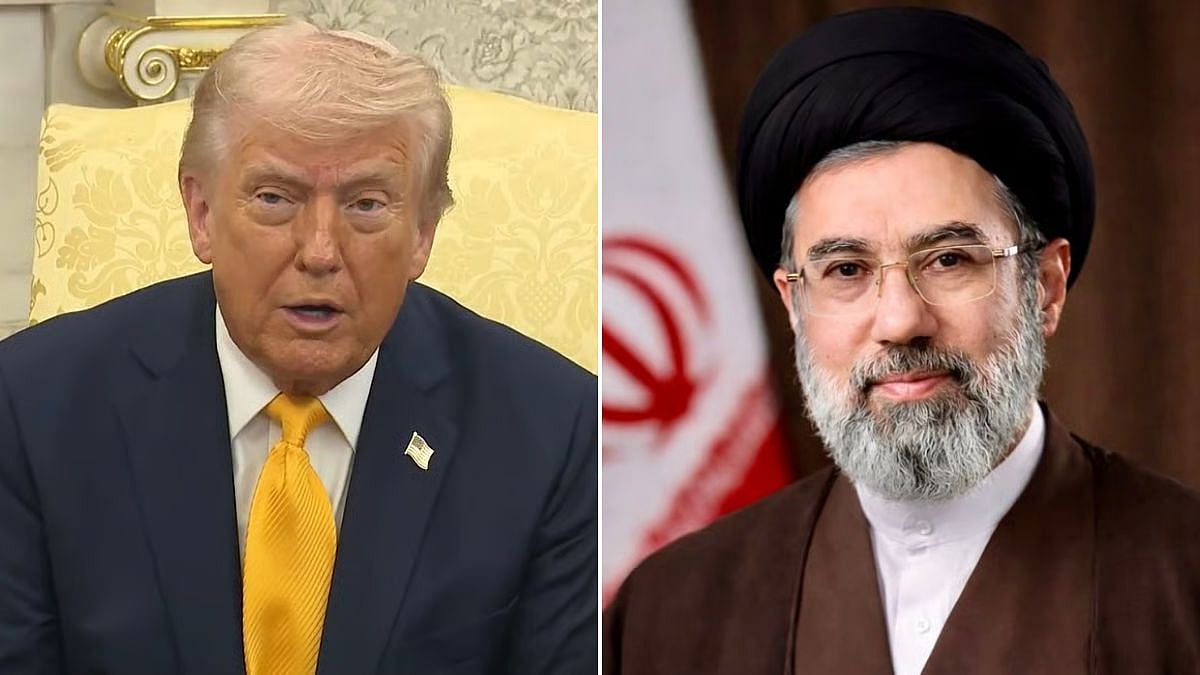
New Delhi: Iran's Islamic Revolutionary Guard Corps (IRGC) has issued a 25-page open letter addressed to the American public, urging US voters to reconsider Washington's policies towards Iran, Israel and the wider West Asia conflict ahead of the November 2026 midterm elections.
The letter, released on September 29 and addressed particularly to American scholars, students and media professionals, separates the American people from what it describes as the country's political leadership. IRGC spokesperson Brigadier General Hossein Mohebbi also discussed the letter at a press conference in Tehran. Reuters reported that Mohebbi acknowledged the message was unlikely to change the US administration's position but said it could influence American voters.
The document presents Iran's account of the ongoing confrontation with the US and Israel, while making several claims about the war, Iran's nuclear programme, the Strait of Hormuz and US foreign policy that remain disputed and should be understood as the IRGC's narrative.
'The Men Enthroned At The White House Oppress Both Iranians And Americans'
One of the central messages of the letter is that Iran does not consider ordinary Americans its enemy.
The IRGC argues that the conflict is instead with what it calls the US political elite and the leadership in the White House. In one of its most prominent lines, the letter says: “The men enthroned at the White House oppress both Iranians and Americans.”
The letter claims that US leaders pursue policies benefiting a small and powerful elite while imposing the costs of wars and foreign interventions on ordinary Americans.
It also attempts to draw a distinction between American citizens and the policies of successive US administrations, presenting Iranians and Americans as people who, in its view, share grievances against their respective political systems.
IRGC Appeals To US Voters Ahead Of Midterm Elections
The timing of the letter is significant. The IRGC directly appeals to Americans to use their political influence to challenge the government's foreign-policy direction ahead of the November congressional elections.
The document calls on Americans to "wake up", hold political leaders accountable and use voting and public pressure to change government policy.
Reuters described the letter as an effort by Iran's powerful military organisation to appeal directly to US voters and encourage them to reject President Donald Trump's policies.
The IRGC also calls for an end to what it describes as America's involvement in foreign wars and urges Americans to reconsider Washington's support for Israel.
Iran Claims Victory In The War
A major portion of the letter is devoted to Iran's account of the 2026 conflict.
The IRGC claims that the US and Israel failed to achieve their alleged objectives, including regime change, destruction of Iran's military and nuclear capabilities, control of the Strait of Hormuz and an Iranian surrender.
Iran presents its continued military resistance as a victory and claims that the US and Israel suffered significant losses.
The letter also makes extensive claims about Iranian casualties, attacks on schools and hospitals, and damage to US and Israeli military assets. These figures and descriptions are claims made by the IRGC and have not been independently established in the letter itself. Iranian state media has presented the claims as part of Tehran's account of the conflict.
Strait Of Hormuz And US Military Presence
The strategic Strait of Hormuz features prominently in the IRGC's argument.
The letter disputes claims that the US has secured control of the waterway and asserts that Iran retains significant operational leverage over the strategically important shipping route.
The Strait of Hormuz is crucial to global energy markets, making control or disruption of the waterway a central issue in the wider US-Iran confrontation.
IRGC Rejects US Terrorist Designation
The letter also takes aim at Washington's designation of the IRGC as a terrorist organisation.
The Guards reject the designation and portray themselves as a defensive force created to protect Iran's Islamic Republic. The letter claims there are no verified instances of IRGC violence against civilians.
That claim is part of the organisation's own defence of its record and contrasts with the US government's longstanding position on the IRGC.
'Death To America' Explained As Attack On US Leadership
The letter also seeks to explain one of the most recognisable slogans associated with Iran's Islamic Republic "Death to America."
According to the IRGC, the phrase is not directed at ordinary Americans but at what it describes as the US ruling elite and the policies carried out by successive administrations.
The document calls it a "prayer" against the political establishment rather than an expression of hostility towards the American population. It argues that Iranian anger is directed at US military intervention, sanctions and foreign-policy decisions.
IRGC Accuses US Of Misleading Americans On Iran's Nuclear Programme
A significant section of the letter focuses on Iran's nuclear programme.
The IRGC rejects the US position that Iran has pursued nuclear weapons and argues that Tehran's nuclear programme is peaceful. It accuses successive US administrations of repeatedly claiming that Iran was close to developing a nuclear weapon without producing the outcome Washington predicted.
The letter specifically attacks Trump, accusing him of using Iran's alleged nuclear ambitions to justify military action and questioning US claims about the extent of damage inflicted on Iran's nuclear facilities.
These assertions represent the IRGC's position. The status and history of Iran's nuclear activities remain a major subject of international scrutiny and dispute.
Historical Grievances: 1953 Coup To Iran Air Flight 655
The document also revisits several longstanding grievances between Tehran and Washington.
Among them are the 1953 US-backed coup in Iran, American involvement during the Iran-Iraq War, sanctions against Iran, covert operations and the 1988 shooting down of Iran Air Flight 655 by the USS Vincennes.
The IRGC uses these events to argue that the current confrontation is part of a much longer history of US-Iranian hostility rather than an isolated conflict.
Trump Comes Under Personal Attack
Trump is singled out repeatedly in the letter.
The IRGC describes the US president as a liar and accuses him of pursuing wealth and power while misleading Americans about Iran and the war.
Mohebbi similarly attacked Trump's credibility during his press conference, arguing that American claims about Iran and the Strait of Hormuz should not be accepted at face value. Reuters reported that the IRGC spokesman also portrayed Trump as driven by greed and deceit.
Call To Distance US From Israel
Another major demand is for Americans to distance themselves from Israel and oppose continued US support for the country.
The IRGC letter refers to Israel as the "occupier" of Palestine and argues that Washington's backing of Israel has contributed to instability and conflict in the region.
It calls for an end to foreign wars, a reduction in overseas military commitments and a redirection of resources towards domestic needs.
'We Can Live Together In Peaceful Coexistence'
Despite its aggressive criticism of Washington, the letter also contains an offer of what it describes as peaceful coexistence between Iran and the American people.
The IRGC says the two countries could coexist if the US changes its foreign policy, ends what Tehran describes as aggression and distances itself from Israel.
Mohebbi similarly presented the letter as an attempt to explain Iran's "logic" directly to Americans rather than communicate through conventional diplomatic channels. Reuters reported that he acknowledged the letter might not change the administration's position but could resonate with voters.
Aimed At Students, Scholars And Media
The letter is explicitly addressed to American scholars, university students and media workers, asking them to question the information they receive about Iran and the conflict.
It urges academics and journalists to examine claims about civilian casualties, Iran's nuclear programme and US military actions and argues that silence or acceptance of official narratives makes Americans complicit in their government's actions.
IRGC Warns Of A 'Powder Keg'
Towards the end, the letter warns that continued US military intervention could turn the world into what it describes as a "powder keg."
It argues that continued conflict could trigger economic and geopolitical consequences for the United States and urges Americans to pressure their government to change course.
The document concludes by portraying the current moment as a struggle between what it calls oppressive political elites and ordinary people seeking greater control over their governments.
What The Letter Represents
The 25-page document is ultimately an extensive presentation of the IRGC's own narrative of the US-Iran conflict and its appeal to the American public.
It combines historical grievances, criticism of Trump and US foreign policy, claims about the war and Iran's nuclear programme, and a direct appeal to American voters. Reuters and Al Jazeera have characterised the message as an effort to influence US public opinion ahead of the midterm elections.
Because the document comes from the IRGC, an organisation designated by the US as a foreign terrorist organisation, its claims about casualties, military successes, the nuclear programme and the conduct of the war should be treated as official Iranian claims rather than independently verified facts.

