
Israeli President Isaac Herzog has chosen Yashar party leader Gadi Eisenkot to form the next government, dealing a major political setback to incumbent Prime Minister Benjamin Netanyahu, who is seeking to retain power following the October 27 parliamentary elections.
Herzog is scheduled to formally hand over the mandate to Eisenkot at a ceremony at the President’s Residence in Jerusalem on Sunday, November 8, at around 5 pm local time.
The decision comes after Israel's election produced a hung parliament, with neither Netanyahu's right-wing bloc nor the opposition alliance securing the 61 seats required for a majority in the 120-member Knesset.
Eisenkot Secures Support Of 67 Lawmakers
The October 27 election left Netanyahu's right-wing and religious bloc with 53 seats, while Eisenkot's four-party opposition alliance, comprising Yashar, Together (B’Yachad), the Democrats and Yisrael Beiteinu, secured 48 seats.
Arab-led parties, Ra’am and the Joint List, won a combined 19 seats, marking a record performance.
During consultations with political parties, lawmakers representing 67 members of the Knesset recommended Eisenkot for the mandate. The support included 48 lawmakers from his opposition alliance and 19 from the Arab-led parties.
Netanyahu received recommendations from 46 lawmakers, while the ultra-Orthodox United Torah Judaism (UTJ), which holds seven seats, abstained from backing either candidate.
Although Eisenkot secured the backing of a larger number of lawmakers during the consultations, he still faces the challenge of translating that support into a coalition capable of winning a confidence vote.
Eisenkot Gets 28 Days To Form Government
Following the formal handover of the mandate, Eisenkot will have an initial 28 days to form a government. The period can be extended by up to 14 days if he requires additional time to negotiate with potential coalition partners.
If Eisenkot fails to assemble a coalition, Herzog can assign the task to another candidate, with Netanyahu among the likely contenders.
A prolonged failure to form a government could eventually lead to fresh elections. Until a new government is sworn in, Netanyahu will continue serving as caretaker prime minister.
Coalition Formation Remains Major Challenge
Despite securing recommendations from 67 lawmakers, Eisenkot's path to forming a stable government remains uncertain.
Among the possibilities being discussed are a minority government dependent on external support from Arab lawmakers, negotiations with ultra-Orthodox parties, or a broader national unity arrangement.
Eisenkot has called for the formation of a 'national emergency government' and outlined conditions for potential coalition partners. These include recognising Israel as a Jewish and democratic state, upholding its Declaration of Independence, supporting universal military, national or civilian service, and recognising Hamas as a terrorist organisation.
However, bringing parties with sharply different political positions together could prove difficult, particularly given the disagreements surrounding the role of Arab parties and religious factions in the government.
Netanyahu Seeks Unity Government
Meanwhile, Netanyahu, whose Likud party emerged as the largest single party with 27 seats, has called for a national unity government while criticising the opposition's reliance on Arab-led parties.
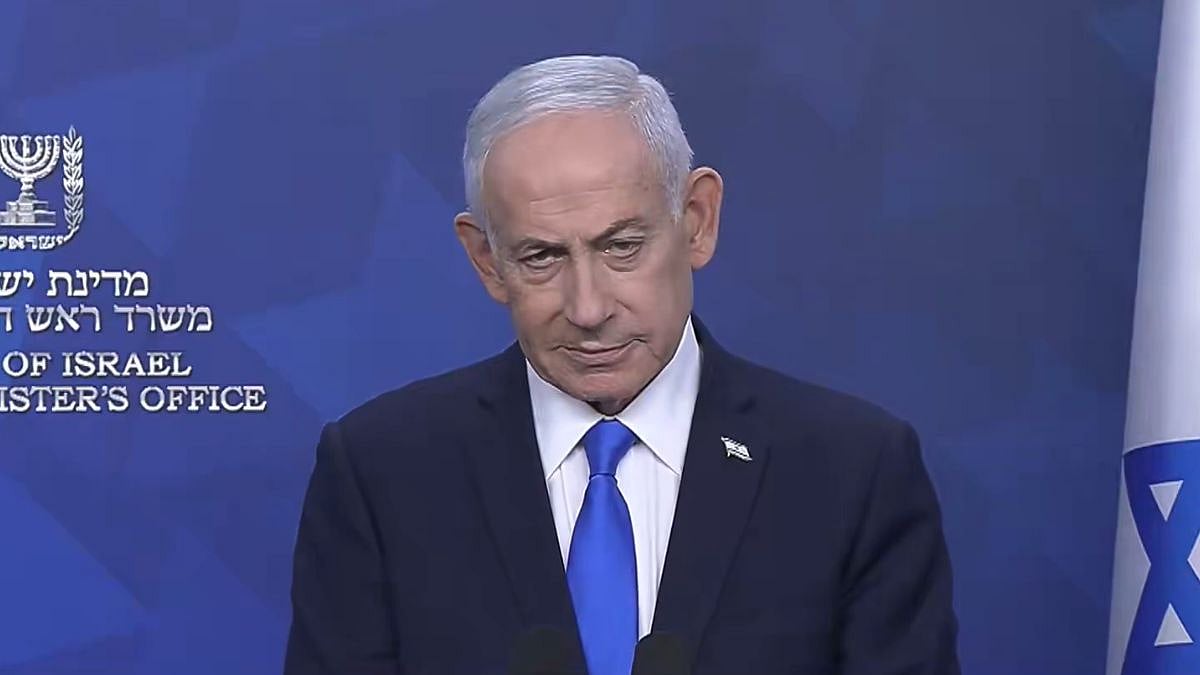
The development marks a significant challenge for Netanyahu, who is attempting to remain in power after years of polarising leadership and mounting political divisions.
The political uncertainty also comes against the backdrop of the wars and their continuing repercussions following the October 7, 2023, Hamas attack on Israel.
The coming weeks will be crucial in determining whether Eisenkot can secure the necessary support in the Knesset and bring an end to Netanyahu's tenure as prime minister.

