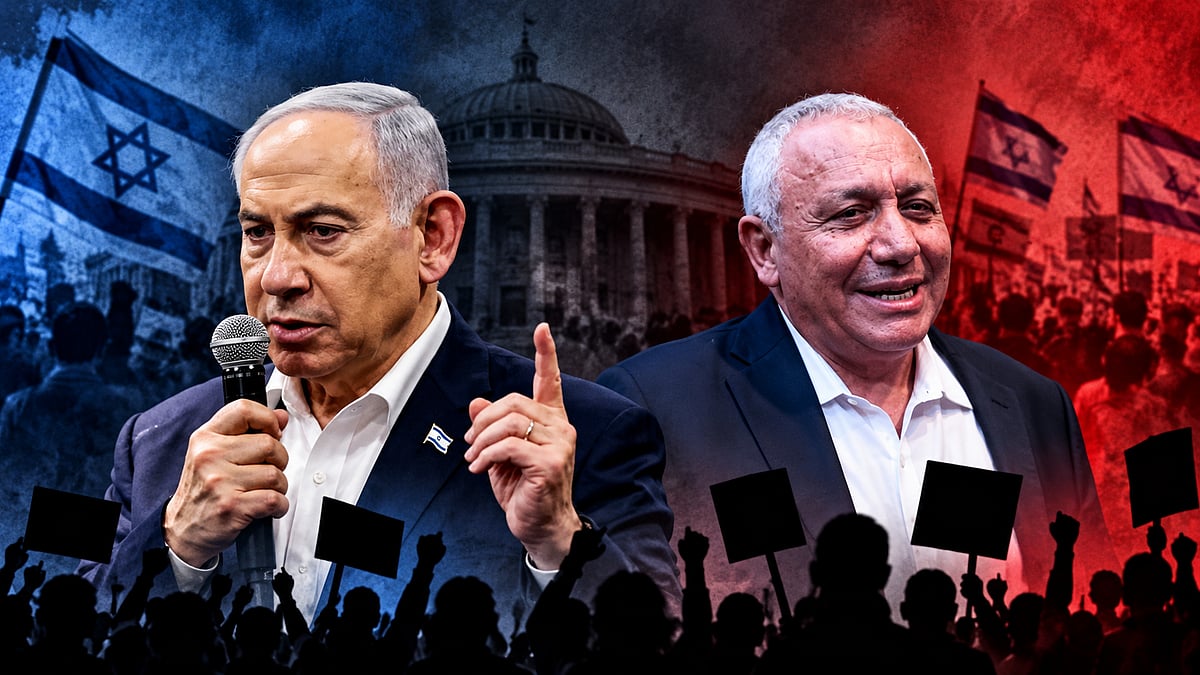
New Delhi: Israel seems headed for a hung parliament as the vote count in the election nears completion. Current figures show PM Benjamin Netanyahu’s Likud-led coalition with 53 seats, the bloc led by Gadi Eisenkot with 48 seats, and Arab parties with 19 seats. With neither of the two main blocs likely to reach the majority mark of 61 in the 120- member Knesset, all options remain open. Israeli rules allow 45 days to form a government in the event of a hung parliament, suggesting that back-channel talks will be key to determining the outcome.
For Netanyahu, the results are not good news. Israeli law provides immunity from prosecution to a sitting prime minister under certain circumstances, making his inability to form and head a government potentially consequential for his legal battles. He could face court proceedings and, possibly, imprisonment. Netanyahu has served three non-consecutive terms as PM since 1996.
In March this year, he became Israel’s longest-serving prime minister, surpassing David Ben-Gurion.
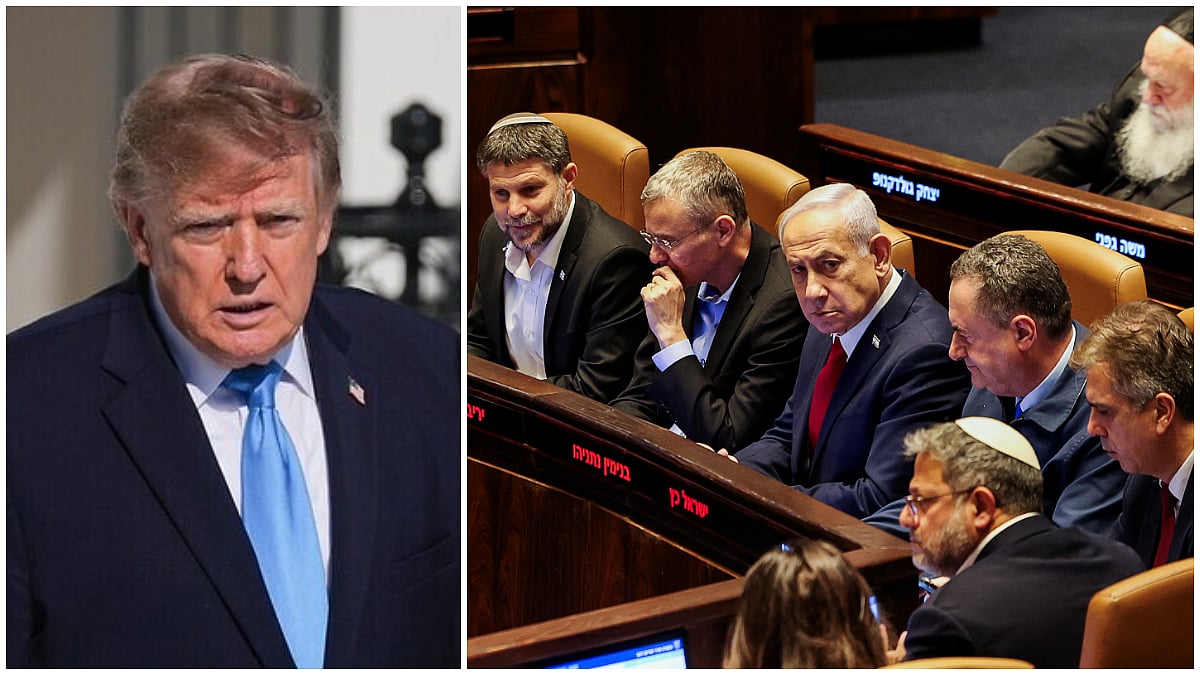
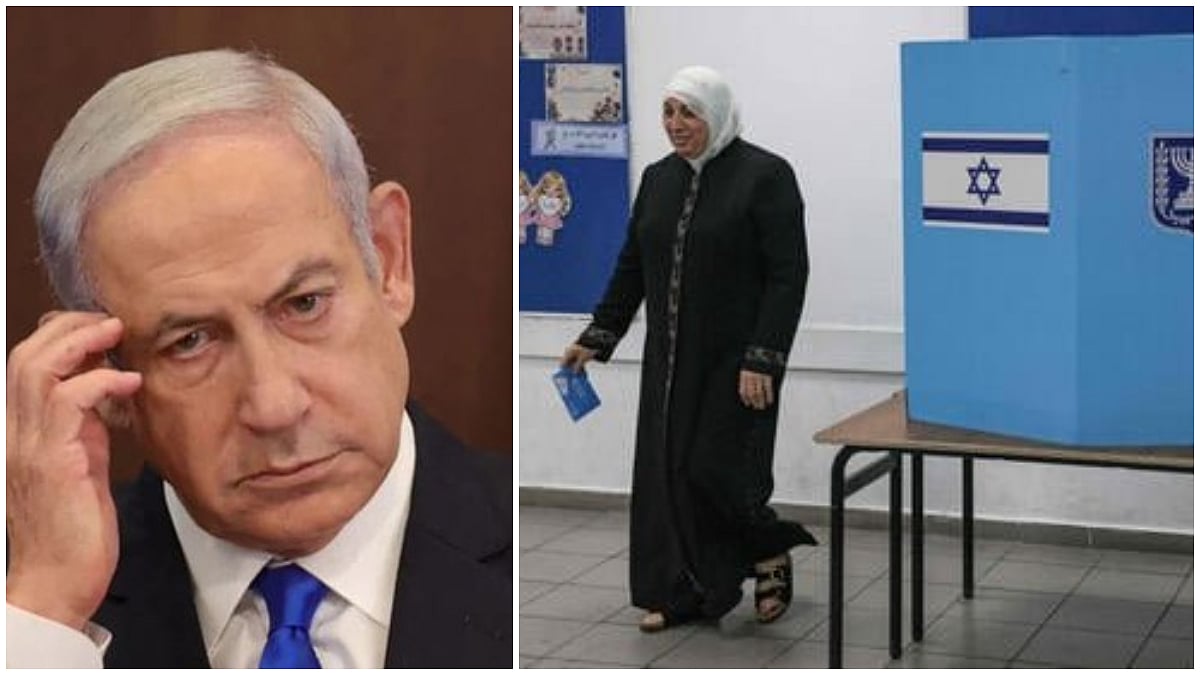
Netanyahu’s best bet was a national unity government, an option ruled out by Eisenkot and even by his coalition partner, Israel’s National Security Minister Itamar Ben-Gvir. While Netanyahu may still manage to cobble together a coalition, as he has done several times during his long political career, the odds appear stacked against him, given the high turnout among Arab Israelis seeking his removal and the significant number of seats won by Arab parties. Although Eisenkot is no moderate, there are signs that a deal could be struck between his bloc and the Arab parties. Left-wing leader Yair Golan signalled the first note of compromise by including the Arab parties’ seats in the Opposition tally. “Netanyahu lost. I know how to count to 120. Sixty-five is more than 55. That’s how Israeli democracy works. Period,” he said. Golan’s post was a direct rebuke to Netanyahu, who resorted to scare tactics targeting Arabs and Muslims throughout polling day. In one social media post, Netanyahu said: “We’re at war for our home. Muslim Brotherhood supporters are raiding the polling stations and stealing the elections.” However, the Israeli prime minister appeared subdued throughout the day, and his remarks were unusually brief.
If Netanyahu loses power, Eisenkot, who is of Moroccan origin, could emerge as the next prime minister. If elected, he would be the first prime minister of Arab origin to govern Israel.
Eisenkot’s Moroccan heritage, however, does not necessarily mean he would adopt a softer stance towards Arab parties or Palestinians. He believes Israel should remain a Zionist state, opposes a twostate solution and wants Arab citizens to perform national military service, something that has not been implemented in Israel’s history.
West Asia expert Talmiz Ahmad cautioned against assuming that Eisenkot would become prime minister just yet. “There are many things that could happen. The Netanyahu coalition could break, the Eisenkot coalition could break, the Arab parties could support from outside something that could prove problematic, as the government could fall over a single issue,” he said.
Ahmad added that the US elections and President Donald Trump’s role should not be overlooked. “While Israel is deliberating, the US midterm elections come up, and a US House and Senate run by the Democrats will play a factor. Also, Donald Trump might withdraw his endorsement of Netanyahu. What happens in the US will impact Israel’s elections,” he said.
West Asia experts believe that a potential Eisenkot government could contribute to greater regional stability, as he is seen as more pragmatic and stable than Netanyahu. They also argue that such a change would end nearly three decades of hard-right Likud dominance and could open the door to compromises. Concerns over Israel’s hegemonic role in the region, highlighted by the recently signed Mecca Pact, could also ease.
As for India, analysts do not expect a change in bilateral ties. While Prime Minister Narendra Modi shares a personal rapport with Netanyahu, the broader India-Israel relationship is unlikely to be significantly affected by a change of government.
“Contrary to what people think, there is no IndiaUAE-Israel alliance, as India does not enter into alliances. India will continue to follow a balanced approach towards Israel because we realise that we need to engage with Iran, Saudi Arabia and other players in West Asia,” Ahmad said.

