China’s Two Sessions, or specifically the National People’s Congress and the National Committee of the Chinese People’s Political Consultative Conference, were convened in Beijing March 5–12 and March 4–11, respectively. Over 5000 delegates deliberated on the draft Outline of the 15th Five-Year Plan for National Economic and Social Development of the People’s Republic of China (2026–2030) (simply called the Plan) and the priorities of economic and social development for 2026. In recent encounters and communications with my Indian friends, many showed interest in knowing more about the Plan. The following provides a brief introduction to it.
What are the key points of the Plan?
Since China started its first Five-Year Plan in 1953, 14 Five-Year Plans have been successfully concluded by 2025. This plan-implement-review consistency has showed China’s institutional advantage and helped to boost its economy to a size of about US$20 trillion and No.2 in the world in terms of nominal GDP. As the 15th Five-Year Plan period is to lay a solid foundation for basically building China into a socialist modern country, the Plan emphasizes four areas in setting the major strategic tasks for the next 5 years: Pursue high-quality development, strengthen domestic economy, advance common prosperity, and ensure both development and security. It specifies 20 main growth indicators covering five broad areas, namely economic development, innovation, public wellbeing, green and low-carbon development, and security. And it proposes a total of 109 major projects, among which, 28 focus on new quality productive force, 23 on further modernizing infrastructure system, 9 on integrated urban-rural development, 25 on public wellbeing, 18 on green and low-carbon transition, and 6 on food and energy security.
As China’s roadmap unfolds towards 2035, what opportunities can it create for the world? The Plan delivers a message that China remains a stable anchor for world economy and a reliable partner in addressing global challenges. Given its 1.4 billion people, China’s modernization drive will bring certainty, predictability and positive momentum to a turbulent and fragmented world. With a vision to reach the status of a “medium-developed” economy by 2035, China targets at a per capita GDP of over US$20,000. China’s ever-growing super large market will create enormous opportunities for global goods and services. China’s priorities of innovative and sustainable growth, as well as boosting domestic consumption will translate into tangible opportunities across various sectors for investors and businesses worldwide. For instance, China’s massive investment in renewables, AI (artificial intelligence) and AI plus, quantum computing, brain-computer interface, smart economy, and advanced manufacturing will not only bring new drives for global economic growth, but create new demands for international cooperation in talents, technologies, application scenarios, and partnerships. In the process of joint contribution and sharing through research and development projects or participation in emerging industrial clusters, businesses and enterprises, colleges and universities, research institutions, and start-ups worldwide can all benefit from expanded access to China’s innovation ecosystem as its door keeps opening wider. More significantly, China’s peaceful and high-quality development provides important experience and reference for the Global South countries in seeking their own dreams of modernization.
As 2026 marks the beginning of the 15th Five-Year Plan, what can we expect from China?
In consideration of evolving developments at home and disturbances and challenges abroad and other relevant factors, and taking into account both what is needed and what is possible, China set its GDP goal at 4.5%-5% for 2026. This is meant to ensures its GDP to keep growing within an appropriate range, with annual growth rate to be determined in light of actual conditions, while striving for better results in practice.
China’s 2026 priorities include, inter alia, building a robust domestic consumption market, fostering new growth drivers, achieving greater self-reliance in science-tech, building a high-standard socialist market economy, and expanding high-standard opening up. Taking its opening up as an example. China pledges to move faster toward all-around opening up through links running eastward and westward, across land, and over sea. Data show Chinese border authorities handled 185 million entries and exits in the first quarter of 2026, a year-on-year growth of 13.5%. China’s pilot free trade zones (FTZ) has expanded to 23 by early April 2026 with the establishment of the China (Inner Mongolia) Pilot Free Trade Zone, the latest move in its sustained push for high-standard opening up. China will further expand opening-up trials for value-added telecom services, biotechnology, wholly foreign-owned hospitals, and other fields, take well-ordered steps to expand opening up in the digital sector, and shorten the negative list for cross-border trade in services. China will develop national comprehensive demonstration zones for promoting greater openness in the service sector, advance negotiations to conclude more regional and bilateral trade and investment agreements, and continue to be fully engaged in the reform of the World Trade Organization to safeguard and develop the open world economy. China will improve the layout and scale of pilot free trade zones to boost their innovation-driven development capacity, step up support for both credit and credit insurance, and guide enterprises in optimizing resource allocation on the global market and work for integrated development of trade and investment. China will facilitate the expansion, upgrading, and growth of the “cross-border e-commerce plus overseas warehouses” model, and promote the development of logistics services for international delivery. China will expand trade in intermediate goods, advance digital trade and green trade, and boost border trade, encourage and expand two-way investment cooperation, and deepen reform of the institutional framework for promoting foreign investment and ensure national treatment for foreign-funded enterprises.
In a nutshell, China remains a strong engine for global growth and shares with the world its development opportunities. By shifting from old drivers of growth to new ones, China will contribute more to the world with its advanced, green, and efficient technologies and ever-increasing innovation. Persistent in its high-standard opening up, China stands ready to work with all world countries including India to make the cake of development bigger and contribute more to the wellbeing of the international communities.
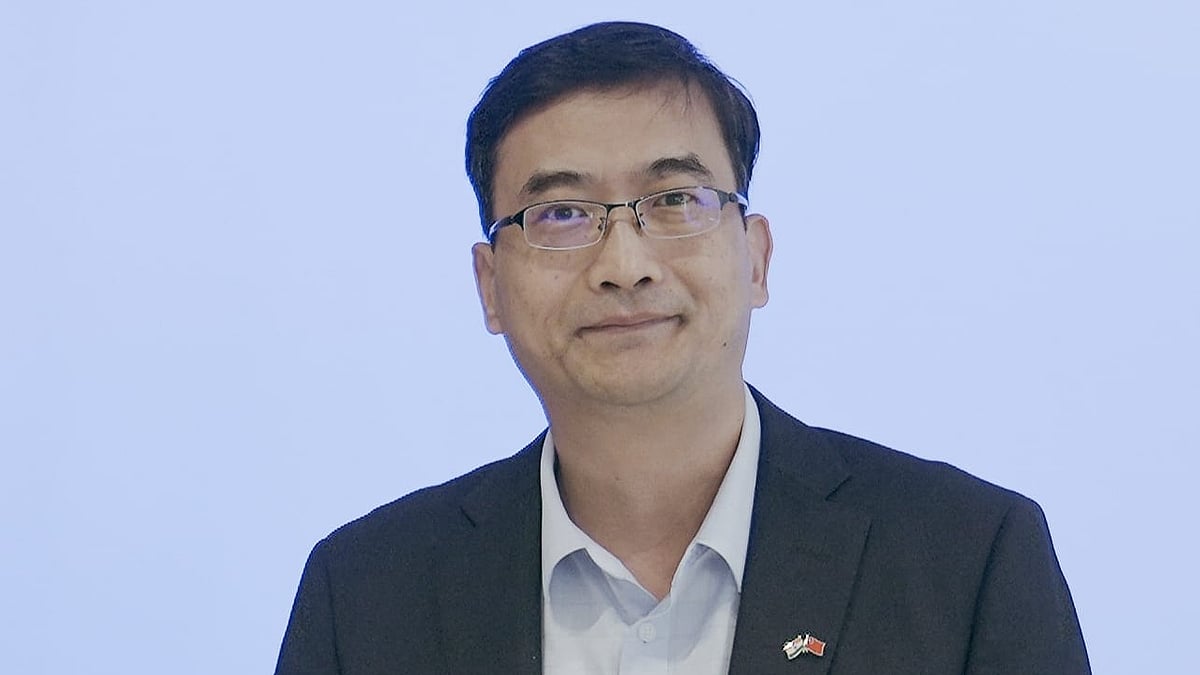
Qin Jie is Consul General of the People’s Republic of China in Mumbai

