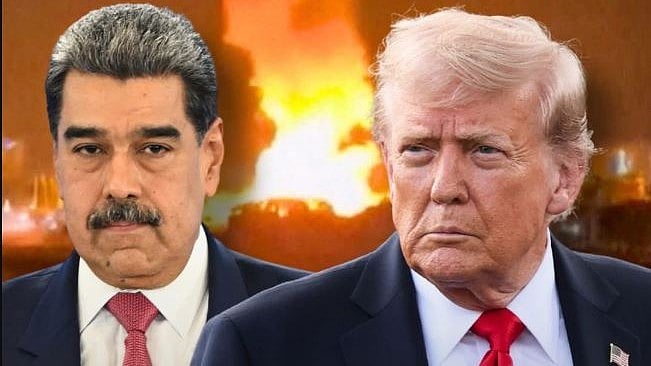
As reports of explosions and airstrikes in Caracas fuel fresh fears of a wider confrontation, The White House has re-released a video from October 17, 2025, triggering a political debate online. In the clip, a journalist tells US President Donald Trump that Venezuelan President Nicolas Maduro had “offered everything” and had even recorded a message in English for him.
Trump responds bluntly: “He offered everything. You know why? Because he doesn't want to fuck around with the United States.” The remark, resurfaced now, has reignited arguments over power, diplomacy, and the nature of US engagement with Venezuela.
The video was shared by the White House, but the timing and intent behind its re-release have not been explained. What followed instead was a flood of reactions on social media, with users sharply divided over what the statement really signifies.
Power Talk or Political Theatre?
One user, GRILLZ AUTOMOBILE, argued that fear should not be mistaken for authority. “Power does not equal legitimacy,” the post read, calling Trump’s remark “political theater” rather than evidence of leadership. The user added that the world deserves transparency and respect for international norms, not intimidation or theatrics.
Another account, TruthUnfiltered, framed the issue differently, questioning whether Maduro’s outreach itself was naïve or whether global audiences were simply ignoring what was already known. Others were less restrained. One user claimed Maduro had already “found out” and suggested his future lay in prison, reflecting how quickly online debate slid into judgement rather than facts.
Oil, Imperialism and the Question of Motive
Several responses focused on the larger geopolitical picture. Ravi, another user, pointed out that Trump’s own words suggested diplomatic channels were active. He argued that real strength lies in explaining terms and outcomes, not boasting about fear. “Power isn’t proven by intimidation,” he wrote, stressing transparency and avoided bloodshed as true measures of leadership.
The sharpest criticism came from users who linked the episode to oil and US foreign policy. One commenter accused the US of pursuing the same agenda it once did in Afghanistan and Iraq, alleging that “terrorism” narratives were tied to oil interests. Another highlighted that Venezuela holds the world’s largest oil reserves, calling the situation “naked US imperialism” aimed at overthrowing a sovereign government and plundering resources.

Taken together, the reactions show how a short, aggressive statement can reopen long-running wounds about US power, intervention, and credibility. The re-released video offers no new evidence or details of any deal, only a reminder of how foreign policy is often communicated through bravado. For critics, that is precisely the problem: fear may grab headlines, but without clarity and accountability, it leaves more questions than answers.

