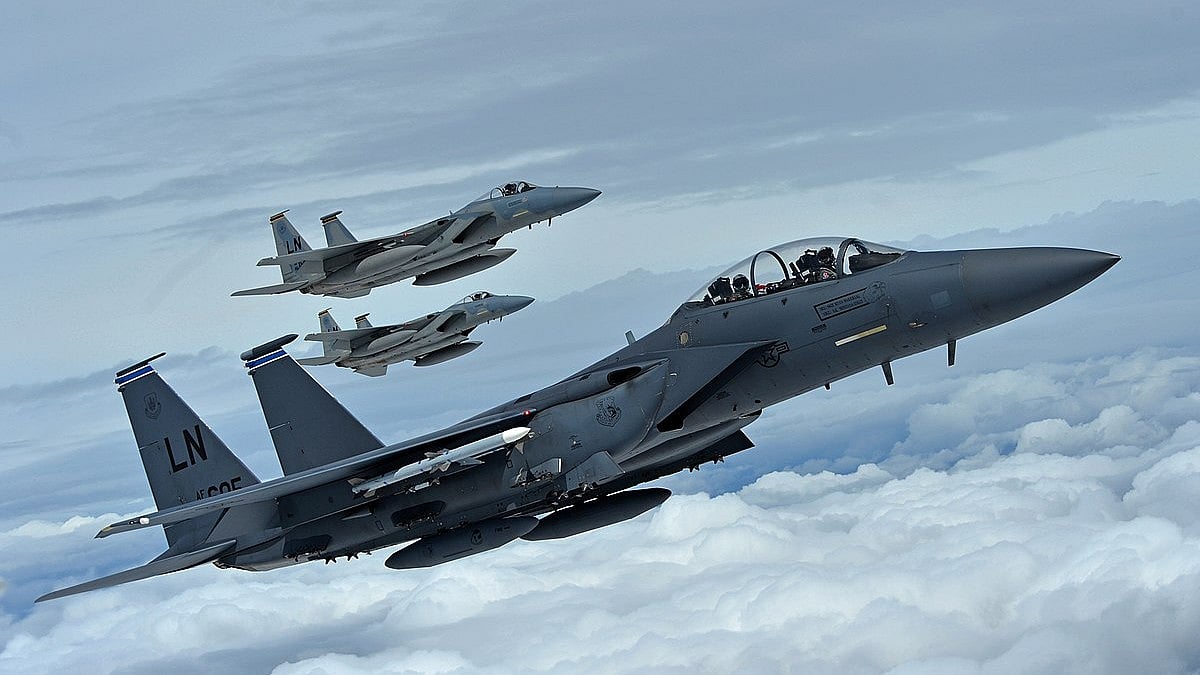
Even for the world’s most advanced military, a rescue mission behind enemy lines remains a monumental undertaking. While the recent recovery of an F-15E Strike Eagle pilot in Iran is a testament to intensive coordination, the ongoing search for the remaining crew highlights the inherent peril of these operations. In a high-stakes environment like Iran, the mission becomes a literal race. The United States seeks to extract its own while enemy forces hunt the pilot with equal zeal for intelligence, propaganda, or worse.
Ghost of Operation Red Wings
While Hollywood blockbusters like Behind Enemy Lines or Lone Survivor capture the adrenaline of rescue, they rarely convey the crushing weight of tactical failure. Real-world history serves as a sobering reminder of the gap between the cinema screen and the soil. On June 28, 2005, Operation Red Wings in Afghanistan became one of the deadliest days in the history of US Special Operations.
A single rocket-propelled grenade struck an MH-47 Chinook, claiming the lives of sixteen service members, including eight Navy SEALs and eight Army Night Stalkers. When combined with the three SEALs lost in the initial firefight—Michael Murphy, Matthew Axelson, and Danny Dietz—the mission resulted in nineteen American fatalities, leaving Marcus Luttrell as the sole survivor. Fable and fiction simply cannot get the better of such stark, lethal facts.
Tyranny of the golden hour
The primary difficulty in any CSAR mission lies in the "Golden Hour," that narrow window of time before enemy forces can converge on a crash site. The clock starts the moment an ejection seat fires. Rescuers must balance the frantic need for speed with the tactical requirement for stealth, knowing the enemy is utilising everything from local informants to sophisticated drone surveillance to locate the wreckage first. If the pilot is not recovered within this window, the mission shifts from a rapid extraction to a prolonged and significantly more dangerous evasion scenario.
A contested airspace
Rescuing a pilot often requires flying directly into the same "hot" zones that downed the original aircraft. Modern integrated air defence systems and man-portable missiles make low-altitude helicopter flights exceptionally dangerous.
Rescuers are not flying into a vacuum. They are entering a space where the enemy is already alerted and looking upward. Furthermore, electronic warfare can disrupt a pilot’s survival radio or GPS, forcing the rescue team to search blindly while the enemy attempts to jam communication channels or "spoof" signals to lure rescuers into a lethal ambush.
Psychological maze of positive identification
Beyond the physical dangers, there is a procedural hurdle in verifying the identity of the person on the ground. To avoid a "honey pot" trap where the enemy uses a captured radio to bait a rescue crew, pilots must answer specific, non-obvious questions from their Isolate Personnel (ISOPREP) data. This verification process must happen while the pilot is under immense stress, potentially injured and hiding from nearby patrols.
Meanwhile, the friendly aircraft overhead are burning fuel and remaining exposed to enemy fire, creating a high-pressure environment where a single misunderstood word can abort a mission.
Snowball effect of resource complexity
A successful recovery is rarely a solo endeavour. It typically requires a massive "package" of supporting aircraft to ensure the extraction helicopter survives the trip. This often includes attack aircraft to suppress ground troops, specialised tankers for mid-air refuelling to reach deep into enemy territory, and airborne command centres to manage the chaotic airspace.
The logistical complexity is so high that the loss of a single rescue asset can lead to a catastrophic "snowball" effect, where the number of personnel needing rescue suddenly doubles or triples behind enemy lines, turning a rescue into a larger-scale battle.
Environmental hostility and the geography of fear
The physical landscape often serves as an additional enemy that complicates every phase of the extraction. Dense jungles, jagged mountain ranges, or sprawling urban centres can make it impossible for a helicopter to land, forcing the crew to use hoists or rappelling lines. This leaves the aircraft hovering and vulnerable—a stationary target in a three-dimensional battlefield.
If poor weather or nightfall sets in, the pilot may be forced to "evade and escape" on foot for days, surviving on minimal rations while moving through terrain that favours the local forces who know the land intimately.
Strategic weight of the individual
At its core, CSAR is the ultimate expression of a military’s commitment to leave no one behind. However, the stakes extend beyond the life of the individual. The capture of a pilot provides the enemy with a powerful bargaining chip and a potent tool for psychological warfare. This reality adds a layer of strategic desperation to the mission.
As history and current events in the Middle East show, the distance between a commendable recovery and a national tragedy is often measured in seconds and the price of a single rescue can sometimes exceed the cost of the initial conflict itself.
