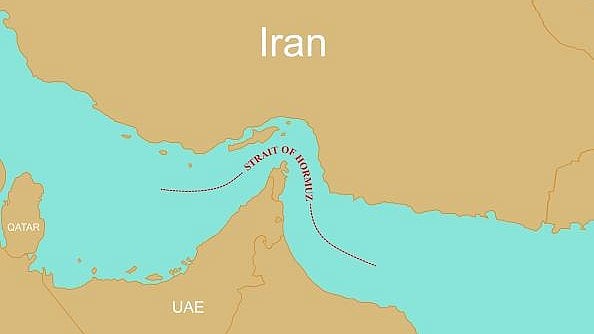
The standoff between the United States and Iran has reached a critical bottleneck, with the Strait of Hormuz transforming from a commercial waterway into a diplomatic chessboard. Tehran has strategically placed the responsibility for the success or failure of peace talks on Washington’s shoulders by demanding the immediate lifting of the naval blockade as a non-negotiable precondition for dialogue.
This move has effectively stalled the highly anticipated second round of peace talks in Islamabad, as Iranian officials argue that they cannot be expected to negotiate while the US Navy maintains a physical and economic "stranglehold" on their sovereign ports.
Decoding the conflict
The current crisis was sparked in mid-April 2026 when the US Navy, acting under orders from the Trump administration, established a blockade of the Strait of Hormuz to intercept Iranian cargo. The tension escalated on Sunday when a US guided-missile destroyer targeted and seized the Iranian-flagged cargo vessel Touska, an act President Donald Trump described as a necessary enforcement of the blockade.
However, Iran’s UN Ambassador, Amir-Saeid Iravani, countered this narrative by stating that the United States is the party violating the existing ceasefire. By citing the blockade as a "violation", Tehran has framed its refusal to attend the Islamabad summit not as an act of defiance, but as a reaction to American aggression.
Stalling of the Islamabad summit
Pakistan has spent the past week preparing for a high-stakes diplomatic encounter, even declaring a virtual lockdown in the capital to secure the arriving delegations. While two US C-17 cargo planes carrying security equipment have already landed at Noor Khan Airbase, the Iranian seats remain empty.
Prime Minister Shehbaz Sharif and General Asim Munir have been in constant contact with both capitals to prevent a total collapse of the truce, yet the gulf between the two sides remains wide. The US administration, initially planning to send Vice President JD Vance alongside special envoy Steve Witkoff and Jared Kushner, has faced internal confusion regarding security, further complicating the timeline for the talks.
'Security for all' doctrine
Central to Iran’s strategy is the use of the Strait of Hormuz as a point of maximum pressure. Iranian state media and officials have frequently invoked the principle of "security for all or security for none," a doctrine suggesting that if Iran’s maritime security is compromised by a blockade, no international vessel will be safe in the region.
By holding the Islamabad talks hostage to the lifting of the blockade, Iran is forcing the US to choose between a potentially embarrassing tactical retreat or a high-risk military escalation.
Rhetoric of "No more Mr Nice Guy"
As the ceasefire expired, President Trump has doubled down on his "maximum pressure" rhetoric, warning on social media that the US is prepared to target every power plant and bridge in Iran if a deal is not reached.
This aggressive posture, labelled by the White House as a "fair and reasonable deal," is viewed in Tehran as a series of "excessive and unreasonable" demands. The Iranian Revolutionary Guard Corps (IRGC) has responded with its own brinkmanship, claiming to have thwarted US attempts to seize merchant ships and asserting that they are ready for any scenario, whether it be a political solution or open warfare.
Path forward
Despite the frantic diplomatic efforts led by Pakistan, the outlook for constructive talks remains bleak unless a compromise is reached on the naval presence in the Persian Gulf. Iran’s envoy to Pakistan, Reza Amiri Moghadam, recently noted that as long as the naval blockade remains, the "faultlines" of the conflict will only deepen.
The international community is now looking to see if the Trump administration will offer a "gesture of good faith" by easing the blockade to bring Iran to the table, or if the current cycle of seizures and strikes will lead to the definitive end of the ceasefire and a return to full-scale regional confrontation.
