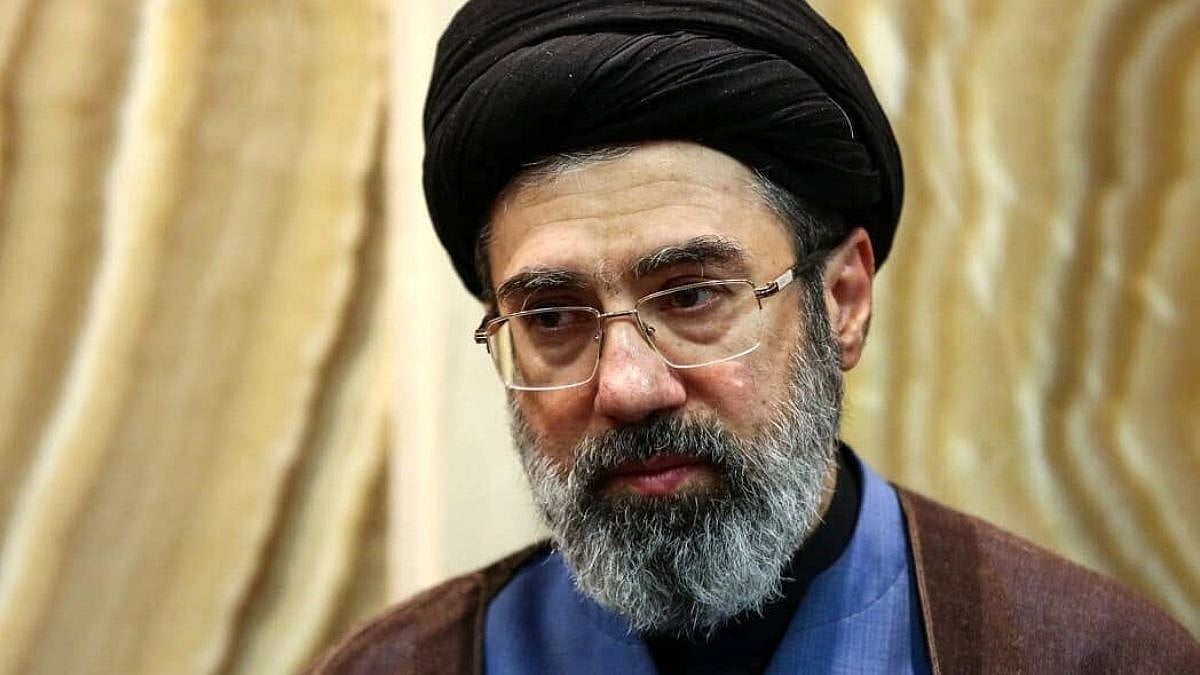
Is the war going exactly as the United States and Israel would have wanted? Iran is a pummelled country, but instead of becoming softened and timid, they are becoming hardened and ferocious. The appointment of Mojtaba Khamenei as Iran’s third supreme leader serves as a direct message of defiance to the United States and Israel. By naming a successor only a week after the assassination of Ayatollah Ali Khamenei and amid the ongoing military strikes, the Iranian leadership is signalling that the Islamic Republic will not be intimidated into a vacuum of power.
This move specifically targets the rhetoric of US President Donald Trump, who had dismissed the younger Khamenei as a lightweight and demanded a say in the selection of Iran’s next leader.
Tehran’s decision to move forward without such approval shows a refusal to accept the "unconditional surrender" demanded by Washington, asserting that the right to choose its leadership remains an internal sovereign matter regardless of external threats.
Continuity of hardline ideology and resistance
By selecting a figure with deep-rooted ties to the security apparatus and the elite Revolutionary Guards, the regime is communicating its intent to maintain a hardline stance toward the West.
Mojtaba represents a commitment to the foundational principles of the 1979 revolution and the doctrine of clerical rule. His appointment suggests that the "axis of resistance" will remain the cornerstone of Iranian foreign policy, with no immediate inclination to seek an "off-ramp" or compromise. According to report in The Financial Times, this choice signals to both regional allies and adversaries that Iran’s strategic posture regarding Israel and the US presence in the Middle East is unlikely to soften, even under the existential threat of a broader war.
Prioritising systemic survival over reform
The elevation of the son of the late supreme leader reflects a strategic move where the regime has chosen internal stability and collective interest over the risk of reform.
In this time of crisis, Mojtaba is being presented as a symbol of national unity and a guardian of the establishment's collective interests. The message to the Iranian public and the world is that the survival of the current system is the absolute priority, and the regime believes that a familiar, vetted figure closely aligned with the military is the most reliable way to ensure that survival.
Strengthening alliance between clerical and military power
The appointment cements the symbiotic relationship between the theocratic leadership and the Revolutionary Guards, who have pledged to be the "powerful arm" of the new leader.
By choosing a cleric who is also embedded within the security forces' vast business and military empire, the Iranian establishment is signalling a "new phase" of militarised clerical rule.
This alignment is intended to project a front of total domestic control and readiness for a long-term struggle. It serves as a warning that any attempt to destabilise the country from within or without will be met with the combined force of religious authority and military might, effectively closing the door on hopes for a swift, externally-mandated transition of power.
