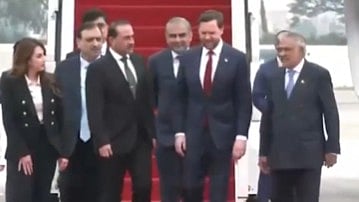
The touchdown of Vice President JD Vance in Islamabad on Saturday, represents a seismic shift in South Asian geopolitics that transcends the immediate outcome of the US-Iran negotiations. By selecting Islamabad as the neutral ground for these high-stakes talks, the Trump administration has effectively ended Pakistan’s decade-long diplomatic isolation and re-centred the country as an important regional player.
This move signals a definitive departure from the previous Washington policy of "de-hyphenating" India and Pakistan, placing Islamabad back at the heart of American strategic interests in Eurasia.
End of Pakistan’s diplomatic isolation
For nearly a decade, Pakistan’s standing in Washington was characterised by a cold shoulder policy, with US administrations prioritising a partnership that focussed almost exclusively on India.
Vance’s arrival—the first visit by a US vice president in 15 years—signals a quick shrinking of that isolation. By choosing Islamabad as the venue for the talks, the Trump administration has technically validated the current Pakistani establishment at least in front of the camera. This visit provides Pakistan with the high-level engagement it has craved, moving it from the periphery of US foreign policy back to the absolute centre of global security management.
Field Marshal Munir and the protagonist moment
The visual of Vice President Vance walking the red carpet alongside the highest echelons of Pakistan's leadership—including Deputy PM Ishaq Dar, Interior Minister Mohsin Naqvi and US Charge d’Affaires Natalie A Baker—is a calculated display of statecraft. However, it was Field Marshal Asim Munir who effectively stole the show.
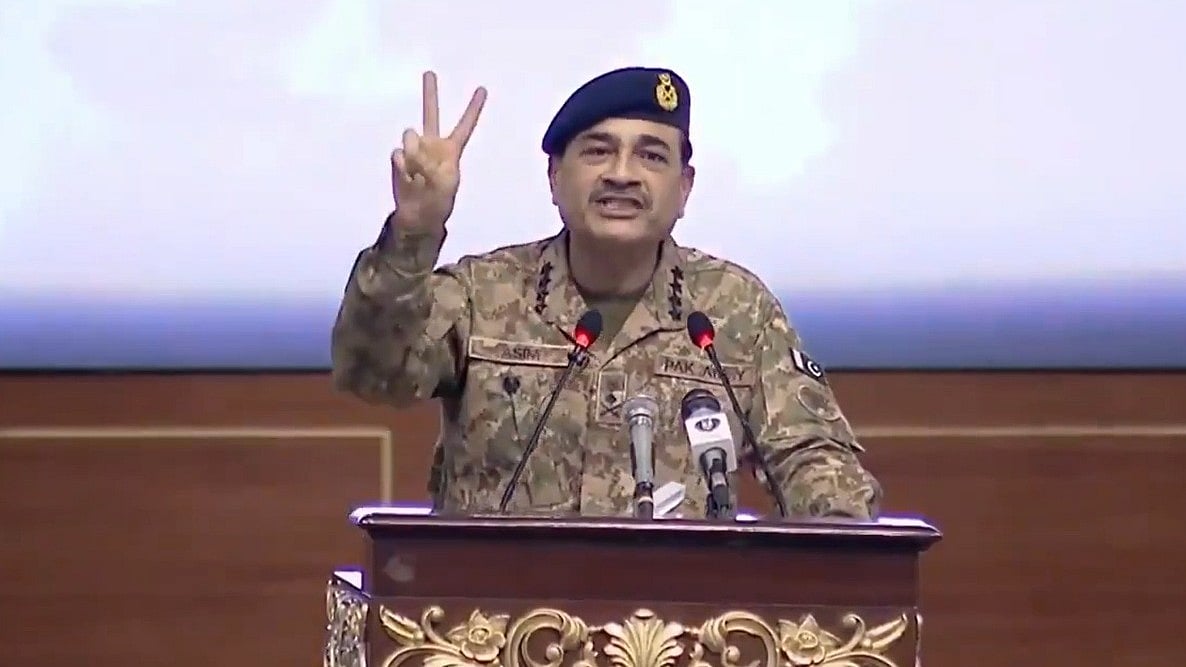
Field Marshal Asim Munir | X
In the optics-driven world of South Asian diplomacy, Munir’s presence in full ceremonial regalia signifies the "deep state" assurance that the US requires for a high-risk summit. For an American administration that prioritises "strongman" stability and transactional clarity, the optics suggest that the primary strategic interlocutor is the military leadership, granting Munir a crowning moment of international legitimacy.
Pakistan as essential conciliator
Islamabad has achieved a masterstroke by leveraging its unique geography and its delicate, yet functional, relationship with Tehran. At a time when the world economy is reeling from $114 per barrel oil prices and the closure of the Strait of Hormuz, Pakistan has positioned itself as the only player capable of bringing a populist US administration and a hardline Iranian leadership to the same table.
Even if the negotiations fail to yield a grand bargain, Pakistan has already won the battle of optics. It has demonstrated that it possesses the logistical and security infrastructure to host the world's most sensitive summit, proving its relevance to a White House that values results over long-standing diplomatic traditions.
Strategic reality check for New Delhi
For India, the Vance visit is a development that demands a total recalibration of its regional strategy. New Delhi has long benefitted from a relationship where it was treated as the sole major defence partner while Pakistan was sidelined.
The sight of US vice president, accompanied by influential figures like Jared Kushner, negotiating a global peace deal in the heart of Pakistan effectively "re-hyphenates" the region. It signals to New Delhi that Pakistan has regained a seat at the table with Washington’s inner circle, potentially complicating its influence.
New transactional reality
The presence of US delegation in Islamabad highlights the transactional nature of the 47th Presidency’s foreign policy. While India remains a long-term strategic partner, the immediate necessity of solving the Iran crisis has made Pakistan the priority of the moment. This shift indicates that the US is willing to turn to old allies if they can provide immediate logistical and diplomatic solutions.
For Pakistan, this is a moment of profound resurgence and a diplomatic coup of the highest order. For India, it is a stark reminder that in the current global order, strategic importance is highly fluid and defined by the crisis of the day.

