The long-standing tensions between Islamabad and Kabul reached a breaking point on February 27, 2026, with Pakistan’s Defence Minister declaring "open war" against the Taliban administration. This escalation followed a series of tit-for-tat border clashes and reported Pakistani airstrikes in Kabul, Kandahar and Paktia.
While Pakistan claims these operations—codenamed Operation Ghazab lil Haq—targeted militant hideouts and killed over 130 fighters, the Taliban has reported capturing several Pakistani border outposts and inflicting significant casualties on Pakistani ground troops. The conflict has severely destabilised the region, with land border crossings closed and both nations mobilising for sustained military engagement.
Personnel and manpower
According to Reuters, Pakistan maintains a massive advantage in terms of formal military personnel with approximately 660,000 active-duty members. This force is divided into 560,000 army troops, 70,000 air force personnel and 30,000 navy members. In contrast, the Afghan Taliban’s military strength is significantly thinner, estimated at around 172,000 active personnel. While the Taliban administration has announced plans to expand its force to 200,000, it currently lacks the formal recruitment and retention structures that bolster Pakistan's military, which benefits from long-standing defence partnerships and professional training.
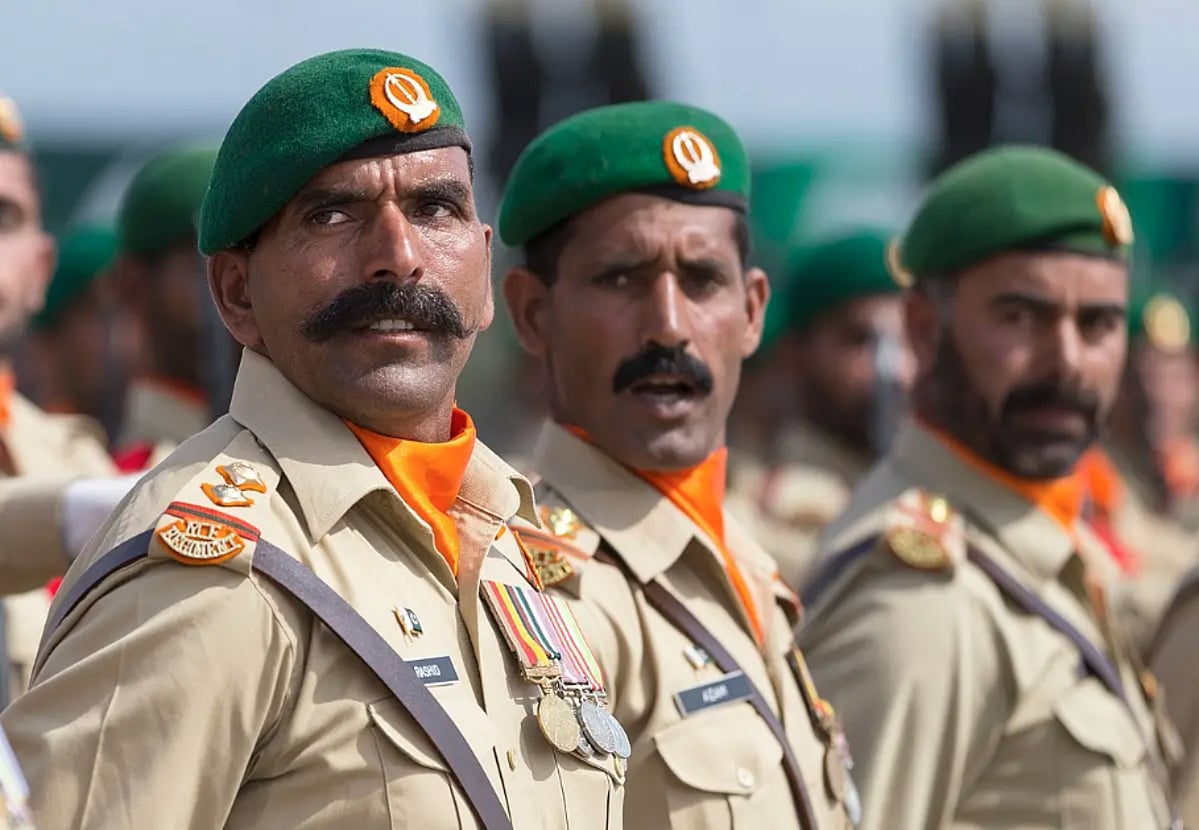
Pakistani soldiers are fighting Afghan soldiers across the Durand Line | Wikimedia Commons
Pakistan’s air power and aircraft inventory
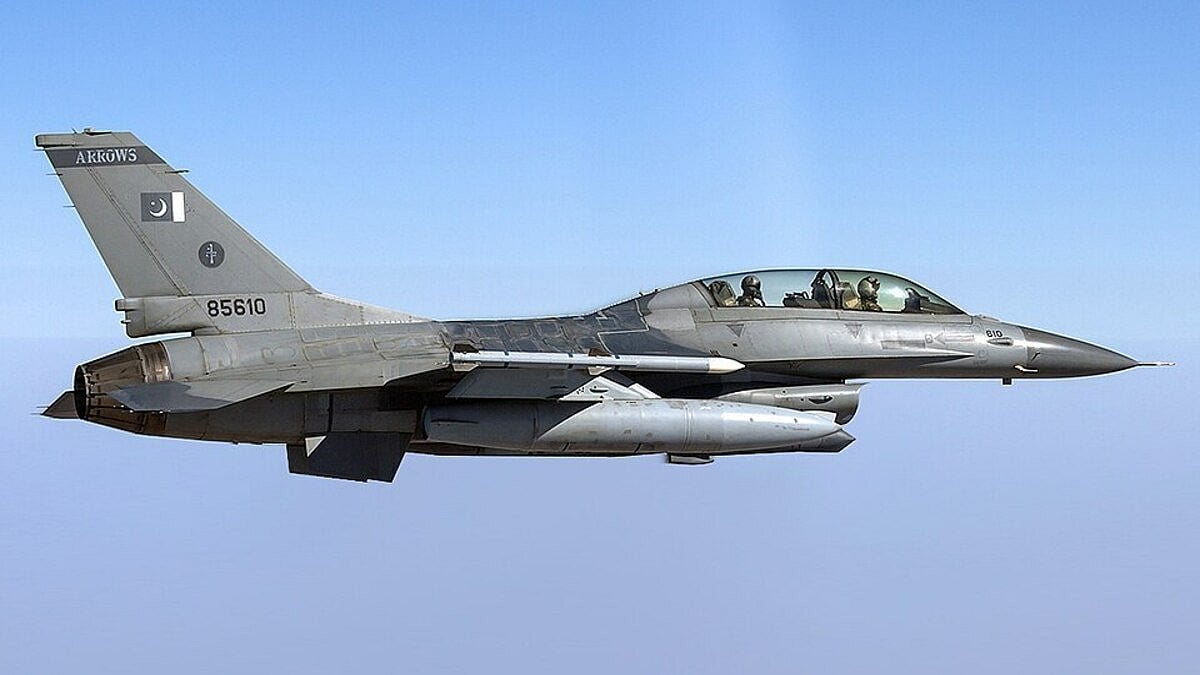
Pakistan operates a sophisticated and diverse fleet of approximately 465 combat aircraft. The backbone of the Pakistan Air Force (PAF) consists of nearly 150 JF-17 Thunder multi-role fighters, developed jointly with China and around 75 American-made F-16 Fighting Falcons (in various Block 15 and Block 52 configurations).
To further modernise, Pakistan has recently integrated the Chengdu J-10C "Vigorous Dragon" into its frontline squadrons. The fleet also includes aging but upgraded French Mirage III and Mirage 5 jets, used primarily for strike and reconnaissance missions, as well as Chinese F-7PG interceptors. These assets are supported by a robust surveillance wing featuring Saab 2000 Erieye Airborne Early Warning & Control (AEW&C) aircraft and various unmanned combat aerial vehicles (UCAVs) like the Wing Loong II and the domestic Burraq.
Afghanistan’s aerial capabilities
In sharp contrast to Pakistan’s advanced air wing, Afghanistan has no functional fighter jets and no traditional air force. Although they possess a handful of Soviet-era fixed-wing transport aircraft and approximately 23 helicopters seized during their return to power in 2021—including Mi-17 and American-made Black Hawks—it is difficult to determine how many are currently flight-worthy.
Without an air force, the Taliban relies heavily on ground-based anti-aircraft fire and captured shoulder-fired missiles to contest the airspace during Pakistani bombing raids.
Land forces and armoured vehicles
Pakistan possesses over 6,000 armoured fighting vehicles and more than 4,600 pieces of artillery, supported by a modernising logistics chain. The Afghan forces do possess a variety of armoured vehicles, including Soviet-era main battle tanks and American-made Humvees seized during the 2021 withdrawal, but the exact number of operational units is unknown. Taliban’s capability to maintain and utilise this foreign equipment is declining due to a lack of spare parts and international recognition, which prevents formal military modernisation.
Strategic and nuclear capability
A fundamental difference between the two forces is Pakistan’s status as a nuclear-armed state, holding an estimated 170 warheads. Islamabad continues to invest heavily in its military nuclear programmes and the modernisation of its strategic delivery systems. Afghanistan’s military is essentially a land-based insurgent force turned national army, lacking any nuclear or significant naval capabilities.
While the Taliban fighters are highly experienced in guerrilla warfare and have recently demonstrated the ability to seize border outposts, they lack the technological depth and strategic reach provided by Pakistan’s nuclear and naval infrastructure.
Defence partnerships and modernisation
Pakistan’s military strength is bolstered by its primary defence partner, China, which provides a steady supply of hardware and technological support. This allows for the continuous modernisation of the Pakistani Navy and Air Force.
Conversely, the Afghan Taliban face severe limitations due to a lack of international recognition and global sanctions. Their military modernisation is hindered by the inability to purchase new equipment legally, forcing them to rely almost entirely on aging Soviet stock and the remnants of equipment left behind by NATO forces.

