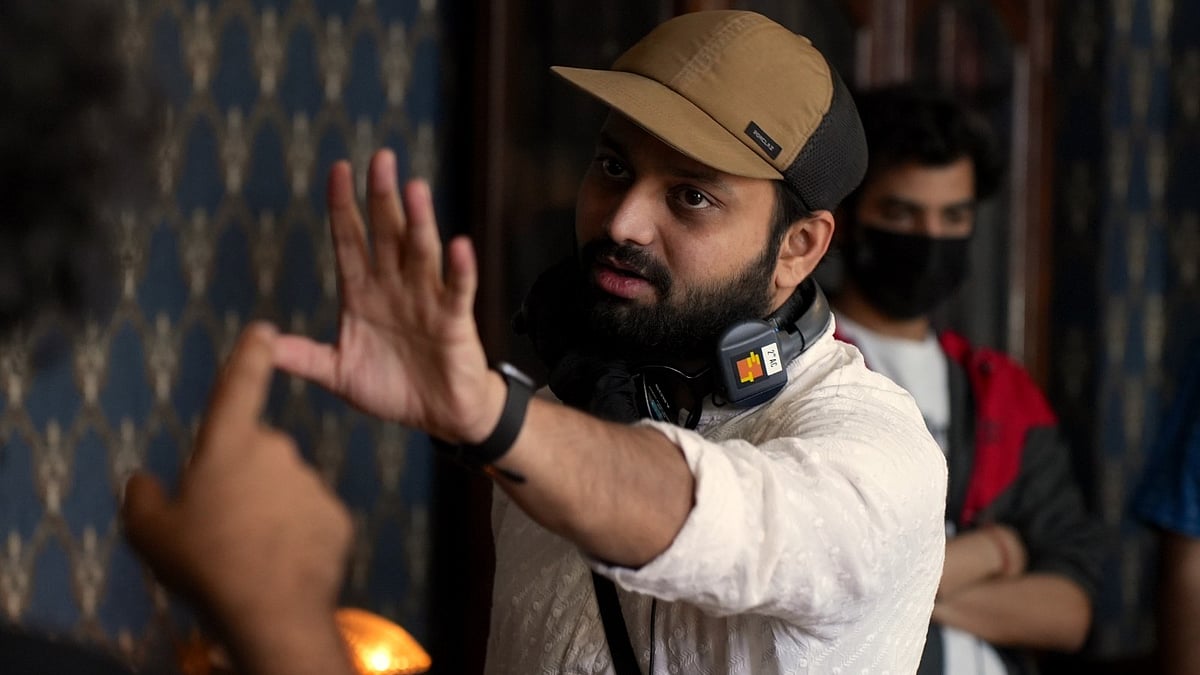
Aditya Suhas Jambhale hails from Goa, the only child of two dental surgeons, who has chosen to ‘extract’ a career in engineering before ‘implant’ing himself on stage, short films and cinema. At a passionate 33, he is a two-time National Award-winner for his Marathi shorts, Aaba…Aiktaay Na? (for Best Direction) and Kharvas (for Best Film).
Before this, he’s been an actor and stage writer-director for 10 years, carving a distinguished career and winning state awards for Nat-SMRT, Are Manasa Manasa and Final Verdict and staging the maha-naatak (mega-drama), Vande Mataram. From here to making Hindi films, his journey has been fascinating.
Excerpts from the interview:
Why did you not venture into Marathi cinema?
I have always liked to have the maximum audience. Laxman Utekar (Chhaava) advised that I should first establish myself in Hindi, then do whatever else I wanted. This was in sync with my wanting to leave my comfort zone. Also, the feedback I got from my Vande Mataram actors was that my style of treatment was best suited for Hindi cinema.
But your first non-Marathi film was in Punjabi!
Kharvas was selected for Cannes, where I met an NRI, Sarab Zavaleta, who narrated a story about her stationmaster father, who during Partition, shrewdly saved lives of many Muslims. I told her I will definitely make a short film, as there was no budget for a full-length feature. That became Amritsar Junction, completely shot in Goa with Manav Vij playing her father’s role and Dhairya Karva. Dhairya was in the cast of URI—The Surgical Strike and he mentioned my film to Aditya Dhar.
Was that how the association with Aditya Dhar began?
At the National Award ceremony, where URI… and Kharvas both won, I met Aditya, who expressed his wish to watch Amritsar Junction. He then invited me to Mumbai and offered me work on his now-shelved Ashwatthama. I told him frankly that I was not going to climb down the ladder after two National Awards and even if it is for a small film, I would like to only be the captain of a ship. He understood, though when I returned home, my family said I had been stupid to turn down Aditya’s offer.
Some weeks later, Aditya offered Dhoom Dhaam to me. I again turned down the film as a rom-com did not interest me! Aditya then gave me a two-page synopsis of a horror film based in Kashmir. We discussed options and I came back home. In two months, I wrote the first, 125-page, draft for Baramulla. He loved it.
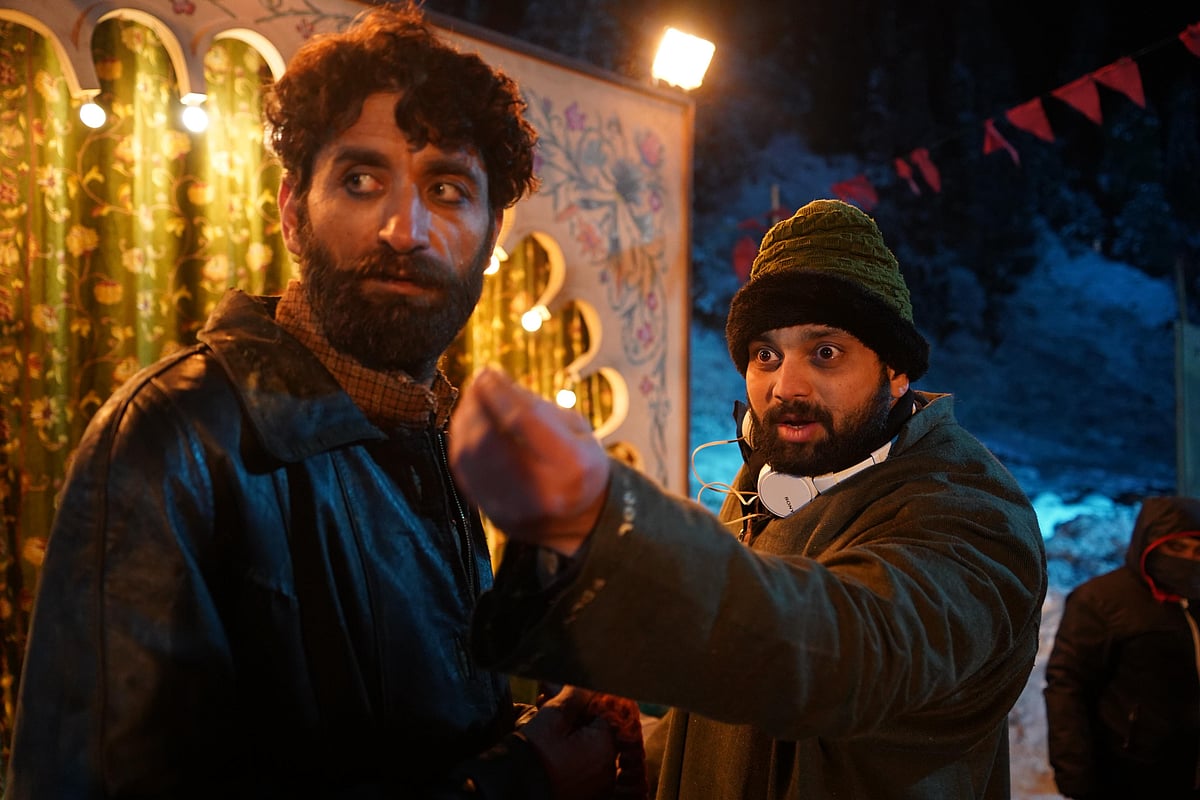
Wasn’t Baramulla shot before Article 370?
Yes, it was! We shot it between December 2022 and January 2023.
A horror film and Kashmiri Pandits—was this your idea or Aditya’s?
It was Aditya’s idea as he knew of Muslim families that had felt the pain that the Pandits did during their forced exodus. When Monal Thaakar and I were writing the drafts, even The Kashmir Files was not released. It was a process where we did not even know where we would go. And let me tell you that while working on the most dramatic sequences, I was weeping myself!
Did you get a free hand in casting?
Yes, in both my films! For Baramulla, Manav Kaul was the first name I thought. But there was pressure to sign ‘bigger’ names. Some liked the story, others found it too sensitive, so finally, we came back to Manav, who agreed to do the film instantly. He is one of the smartest actors, not insecure, very chilled- out and he loves his craft. We are in times when stars are obsessed with how they look on the monitor and their hair and make-up teams ask for a reshoot if one strand of hair is out of place! Manav did not even bother to see the monitor. A veteran like Mohan Agashe too had the same culture. During Article 370, when I asked him if he wanted to check the monitor, he told me simply, “I am an empty cassette that you are filling, so I trust in you!”
What about Bhasha Sumbli?
I had watched a play of hers, but there are actors whose photos and portfolios cannot help one decide about her. When I met her, I saw a mother in her and knew that she would bring something fresh to the table.
Your treatment of the supernatural was very different.
What is a ghost? It is as much an entity as an insecurity inside you. I wanted to bend the genre. My question was: Can I make you emotional and yet make the horror stay with you after the film ends?
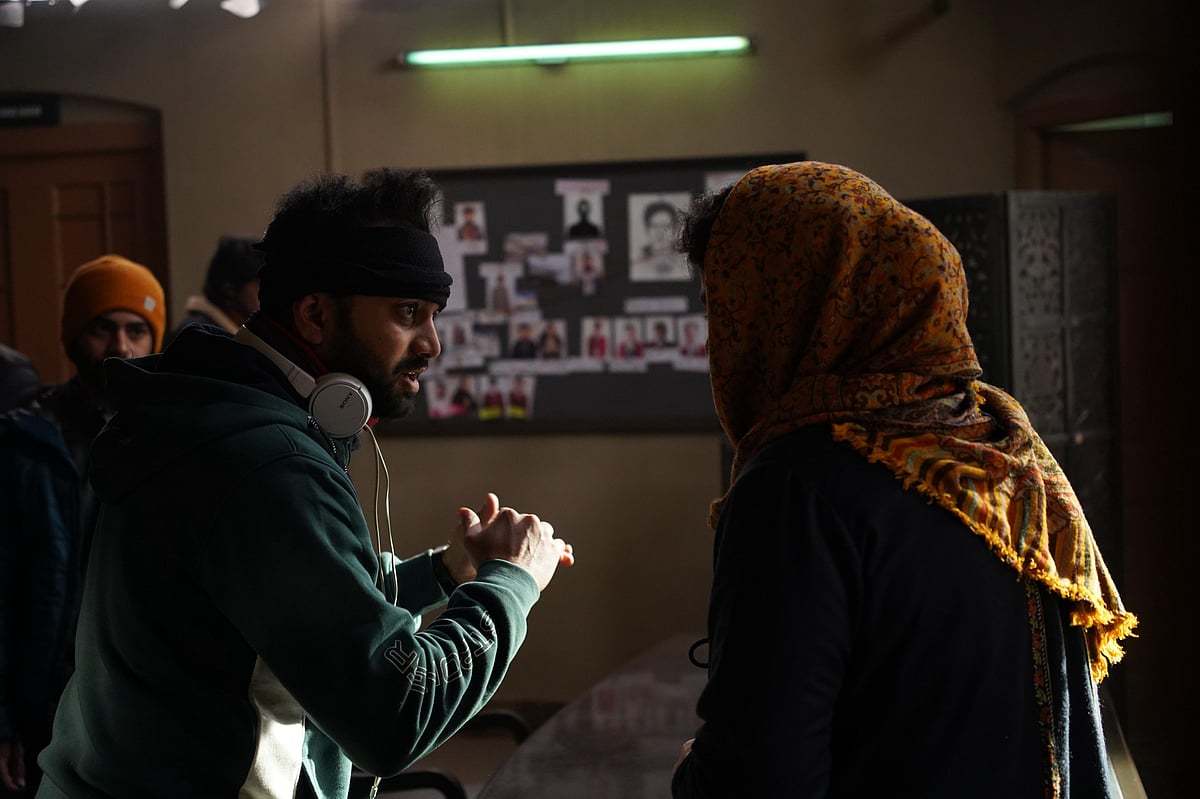
Why bring in kidnappings in such a subject?
That came to me during the writing. It was 2016, and children were being radicalized from the age of five and taught about kaafirs, India and Pakistan. Children were being mentally programmed with slogans like “Burhan banoge? Haan bhai haan!” at an age when they should play and enjoy like normal kids! They were sent across the border where the ISI trained them. Anyone familiar with Kashmir will know what is kheti (sending kids across the border) and fasal kaatni (recruitment). I have watched videos of fathers reciting slogans of azaadi into the ears of newborn infants! This was ‘diaper militancy’, a concept originating from Syria. It’s very difficult to deradicalize such children later!
You shot in sub-zero temperatures for two months. What were the challenges?
Honestly, there was not a single day when someone in the crew was not laid up with hypothermia! We faced an earthquake, and a snowstorm too for two days during which my set at Aru Valley was completely engulfed in show! We had to get help from the CRPF and Army to shift the materials elsewhere.
Thanks to the budgetary and time constraints, we could not afford more than three takes, as that would have meant missing out on something important! Also, in that season, there was bright light only for four hours! And everyone was dependent on me. There were no producers, only determined soldiers—my cast and crew. My executive producer, my DOP Arnold Fernandes, my co-writer Monal, and me were all first-timers! For me, an emotional angle came from the fact that my daughter was born around that time and I was away from her for over two months. I just thought, what if my film went wrong and she asks one day, “Was it for this that you were away from me?”
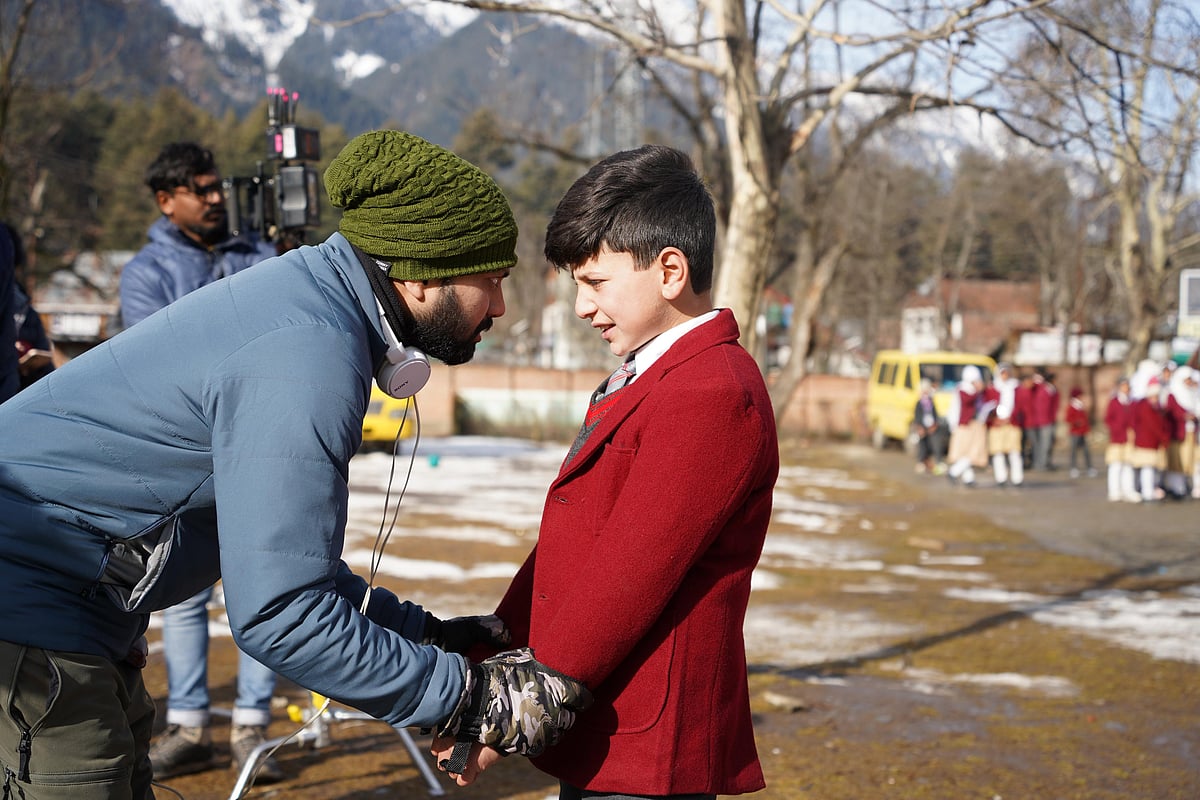
What were the positives?
For my opening shot, we had to climb to a higher spot. A limited crew of Arnold, six people and me had to lug the equipment to a place where it was even colder. Ahmad Ishaq, the Kashmiri kid who had to give the shot, and his father, both insisted on going. My crew also helped me in the technical aspects of designing the homogeneous look I wanted while showing the past and the present sequences. Bhasha had just delivered, and her husband, Sunil and baby was there in our hotel, and we had taken all precautions for medical support, hygiene and diet!
And why was Article 370 released first?
We had only shot Baramulla, based on which footage Aditya and his brother Lokesh Dhar signed me for Article 370! The entire edits and post-production remained. Article 370 was to be a big theatrical release with date locked, and had to be done first. You will not believe that we completed Article 370 in seven months and that means from the scripting to the release! Even mentally for me, there was no time to work on Baramulla in that phase.
Why is Baramulla not a theatrical release?
I admit I would have loved that, as visuals, sound and music in films are best experienced in a movie hall. But a producer has to calculate his risks and I must support his decision. On the high side, Netflix is a classy platform and my film saw release in 190 countries. And today, as seen with many good films, people do not often go into theatres. Incidentally, somebody showed me the English-dubbed trailer of Baramulla, and it had a different feel altogether!
All these three films have political angles. Is that deliberate?
I do subjects I believe in. As far as the actual Article 370 goes, I wanted its abrogation—always! Can you imagine any country that, within it, has two constitutions, two flags and two leaders for 70 years? My opinion had to come in along with some dramatization, as the viewer does not want a documentary.
What can we expect next from you?
I am toying with some subjects. I would love to do a film that has action, but is different from the standard superficial template, and a dark comedy too. But I am a typical Goan, who is never in a hurry.
