Kavitha Srinivasa tracks the changing dressing style in Bollywood.
In the hundredth year of Indian cinema, let’s take a look at some unforgettable fashion trends, then and now, that have influenced the way Indian women have dressed themselves over the decades. Clothes have not just been cosmetic props that enhanced the visual appeal of a scene – they have played a part in helping actors create memorable characters on screen.
According to Bangalore-based fashion stylist Ravina Belani, “When black-and-white films morphed into colour, the spotlight instantly shifted to visual appeal. Greater emphasis was given to the ‘look’. That’s how costume designers experimented with clothes that ranged from swirling, multi-layered skirts to form-fitting outfits, depending on the character and the context.”
A flashback into the black-and-white era conjures up distinct images. The western silhouettes have been showcased through the masked ‘super hero’ – ‘Hunterwali’ Nadia – who graced the screen in the thirties. It was functional dressing – a pair of shorts, mask and whip – which helped her jump off trains and fight goons. The astonishing acts of Fearless Nadia – as she was popularly known – can put any contemporary stunt master to shame. This quirky boldness in dressing made a lasting impression. Decades later, fashion designer Manish Arora paid tribute to Mary Ann Evans (her real name) when he designed a lion embroidered dress inspired by her, although with some nips and tucks.
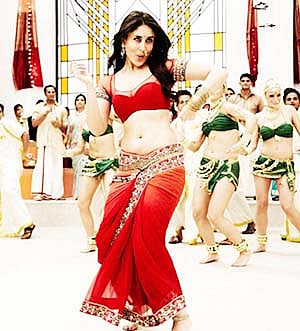
Another iconic look was sported by the H-Bomb or Helen, who always looked seductive in her fitted skirts, gowns or fish net stockings and sequined Flamingo costumes. She played the femme fatale, crooning numbers like ‘Mera naam chin chin chu’ in ‘Howrah Bridge’ (1958) and ‘O haseena zulfon wali’ from ‘Teesri Manzil’ (1966). This Golden Girl remains Bollywood’s ultimate show girl. Her style sense was so distinct that reigning leading lady Kareena Kapoor paid a tribute to her by stepping into her shoes, wearing a jazzy golden outfit, smiling indulgently and playing the seductress, in the remake of the 1978 potboiler ‘Don’, released in 2006.
“Fashion designers research for the outfits for a film depending on the script, era, current trends and forecast. For instance, the costumes in ‘Devdas’ (2002) were well researched and each character represented the era beautifully. Women’s costumes in Bollywood have a great impact on young film
goes and women in general, particularly, because most heroines were idolised for their fashion sensibilities,” observes Karishma Jamwal, a Mumbai-based fashion designer.
Attention to detail combined with a sound knowledge of history can truly recreate an era on screen. Critically-acclaimed costumier, Bhanu Athaiya, brought Kasturba Gandhi to life with her austere outfits in the epic biographical film, Richard Attenborough’s ‘Gandhi’ (1982). She won an Oscar for this effort, the first Indian
woman to get this international cinematic honour. Athaiya dressed her Kasturba in such as way that it enhanced her dignity and restrained appeal.
Thanks to DVDs and Google this historical look remains alive in the popular conscience. In the 2007 film, ‘Gandhi – My Father’, which dwelled on the Mahatma’s relationship with his son, Harilal Gandhi, the wardrobe created by Sujata Sharma stuck to the period and depicted the transformations in Gandhi through his clothes as he switched from more formal English attire to that of an Indian peasant.
Feels Nikhil Thampi, the Mumbai-based fashion designer whose outfits are worn by fashionable female actors like Kajol and Madhuri Dixit, “As a designer, one needs to understand the director’s vision and the essence of the
character. The idea is to design a look that becomes the trademark of the film and is in keeping with the feel of the movie.”
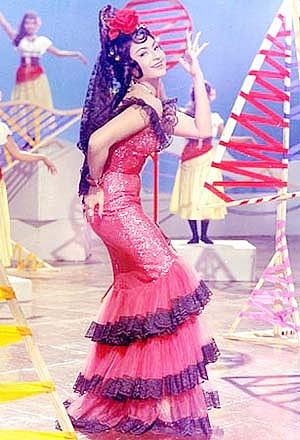
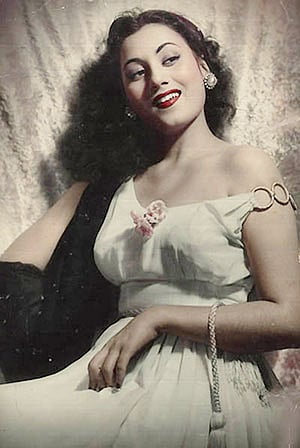
Some actors are still known by the outfits they sported decades ago. Who can forget the beauty of yesteryear, Madhubala, as she essayed the role of an Anglo Indian cabaret dancer in the thriller, ‘Howrah Bridge’. Her bewitching smile lit up the screen and as a club dancer she looked sensuous in her deep cut blouses, fitted Capri pants and tailored Chinese dresses.
Posters and wallpapers continue to sell this image.
Dimple Kapadia became a seventies teen icon after starring in ‘Bobby’ (1973) with her polka dot tops and short skirts. Vyjayanthimala looked ethereal in a white stitched sari in ‘Sangam’ (1964). It was made of six yards of material, with a twist, and became well-known as the ‘Sangam Sari’. The fall of the garment was perfect, and was aptly recreated for Mumtaz in ‘Brahmachari’ (1968).
Saris have firmly found their place in Hindi cinema as Yash Chopra insisted on dressing up his heroines in chiffons. In fact, the white chiffon sari became his cinematic signature style. While Rekha was probably the first to adorn the ensemble in ‘Silsila’ (1981), Sridevi rode her way to box office history with ‘Chandni’ (1989). Actors like Juhi Chawla, Madhuri Dixit followed. Says Belani, “Yashji made romantic films and always took care to add grace to the heroine’s wardrobe. Those chiffon saris are all time favourites.”
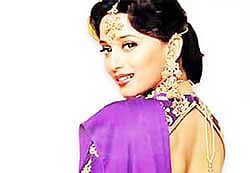
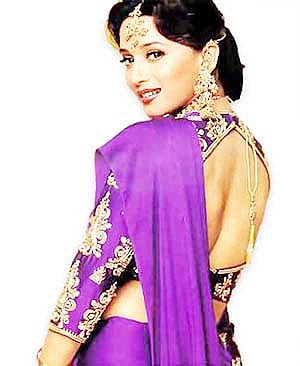
In the early 1990s, Madhuri Dixit made hearts flutter with her purple sari and ‘designer’ blouse in ‘Hum Aapke Hai Kaun’. Aishwarya Rai’s lehangas and jewellery in ‘Jodha Akbar’ (2008) transformed her into a classical beauty. “I am a big fan of old school Bollywood. Madhuri Dixit looked gorgeous in ‘Pukar’ (2000) dressed in chiffon saris. Aishwarya Rai looked absolutely regal in her intricate lehengas and statement jewellery in ‘Jodha Akbar’. Recently, Vidya Balan’s sultry look in ‘The Dirty Picture’ was also well thought out,” remarks Thampi.
But do classical outfits find a resonance in modern design sensibilities? Well, the anarkali style that is such a rage today can trace its origins to the cult outfits of Mudhubala in K. Asif’s ‘Mughal-e-Azam’ (1960), and Meena Kumari in Kamal Amrohi’s ‘Pakeezah’ (1972). The vivid colours and fine embroideries have a timeless quality. Says Belani, “Reviving a lost weave is nostalgic. Meena Kumari’s ‘mujra’ outfits remain a point of reference even today, though it’s a challenge to recreate their grandiose appeal.”
Of course, individual fashion designers were not always a part of the film universe. In the seventies, Kachins, a Mumbai-based company crafted clothes for films such as ‘Sholay’, ‘Amar Akbar Anthony’ and ‘Chaand Kaa Tukdaa’. For a long time it ruled the marquee before designers came in with their nifty ideas. Today, the film’s canvas has become a creative space for experimentation.
Delhi-based fashion designers Pragya and Megha Samor elaborate, “Costume designers carry out research into the styles, designs and construction methods appropriate for the productions’ time period. A number of resources, including libraries, museums and the Internet, are used. Sometimes there can be discussions with actors as well. Designers share their initial ideas with the director on the overall costume vision, using sketches and fabric samples. They also talk about colour palettes with the director of photography and the production designer.”
Over the last 15 years, designers like Neeta Lulla, Manish Malhotra and Ana Singh have taken costume designing to the next level. Niharika Khan has been credited for getting under the skin of the character of Silk Smitha in Milan Luthria’s ‘The Dirty Picture’.
Inspired by the life of the southern siren, the film packed quite a punch and swept audiences off its feet. Vidya Balan as Silk flaunted sexuality and her outfits created just the right amount of oomph reminiscent of the eighties. Balan would not have looked half as seductive had it not been for the clothes – like the gold skirt with a tight choli or the tie-up floral tops.
In times to come, as filmmakers adopt experimental scripts, fashion, too, will explore newer frontiers. Many layered illusions of escapism are still waiting to be discovered.
