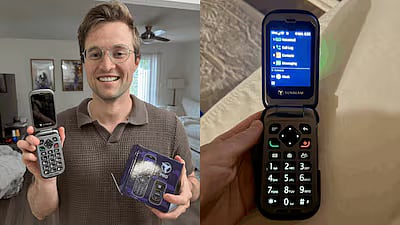
In an age where smartphones dominate nearly every aspect of daily life, the idea of going without one can seem unrealistic. However, one man decided to challenge that assumption by replacing his smartphone with a basic flip phone for an entire month. The results, he says, were surprisingly positive.
Nathan Covey recently shared his experience on X, revealing that he had successfully completed 30 days without relying on a modern smartphone. The experiment, according to him, exposed just how dependent many people have become on their devices.
“Everyone is more severely addicted to their smartphones than I thought. Once you have a dumbphone, you’ll frequently find yourself as the only person in the room not on their phone," he wrote.
Overcoming the fear of disconnecting
Before making the switch, Covey admitted he was convinced that living without a smartphone would create countless problems. Yet many of the obstacles he anticipated never became major issues.
“My iPhone addiction had fed my brain excuses to not do this earlier. If you really want to make the switch, you can," he explained.
One of his earliest concerns was how people would react to seeing him use a flip phone. Initially, he felt awkward carrying an older-style device in public, but those feelings gradually faded as he became accustomed to his new routine.
Sharper memory and more real-world engagement
Covey says one of the biggest benefits was becoming more mentally engaged with the world around him. Instead of relying heavily on digital tools, he found himself using traditional methods and exercising his memory more often.
“I am using my brain more. Even though my flip phone has Waze, I find myself memorising maps and roads. I’m more bored and get lost in my thoughts. I’m using paper and pen more. Increased desire for tangible things > digital things. Overall, it has been a great experience and I plan on never going back," he said.
Research has increasingly linked excessive smartphone use to shorter attention spans, increased distraction, and reduced face-to-face interactions. Many digital wellness experts recommend reducing screen time to improve focus, sleep quality, and mental well-being.
Why phone calls made a comeback
The experiment also transformed how Covey communicated with others. Without the convenience of endless messaging apps, he began making more phone calls and discovered benefits he had overlooked.
“I call people way more now. And I’ve discovered that calling is just so much more superior than texting for a lot of things," he noted.
Many supporters of digital minimalism argue that voice conversations can create deeper connections and reduce misunderstandings that often occur through text messages.
Social media reacts
Covey's post quickly gained attention online, with users eager to learn how he handled everyday tasks typically managed through smartphone apps.
One person asked, “I love the idea of doing this – but have some questions – how do you handle services, products, etc that require apps. Can it scan a QR code? What about digital payment, in places where it becomes necessary? What about being able to use Gmail and Google Calendar?"
Others shared similar experiences with reducing smartphone dependence.
“I can totally see it. Just removing most apps from the device was a really positive experience for me when I was running this setup with OpenClaw," one user commented.
Another person expressed concern about the growing impact of smartphones on family interactions, writing, “So depressing when I go to a restaurant or diner and see parents and kids in their own little phone worlds. Headphones on and all. The phones are poison."
Growing interest in an analogue lifestyle
Several users said Covey's experience resonated with a broader desire to return to simpler, more focused tools and hobbies.
“Haven’t quite gone this far yet, but definitely finding myself drawn to analogue things more lately. Notebook and pen, mechanical watch, film camera. There’s something about the singular focus of analogue that I find attractive as everything around becomes hyper digitalised," another commenter wrote.

