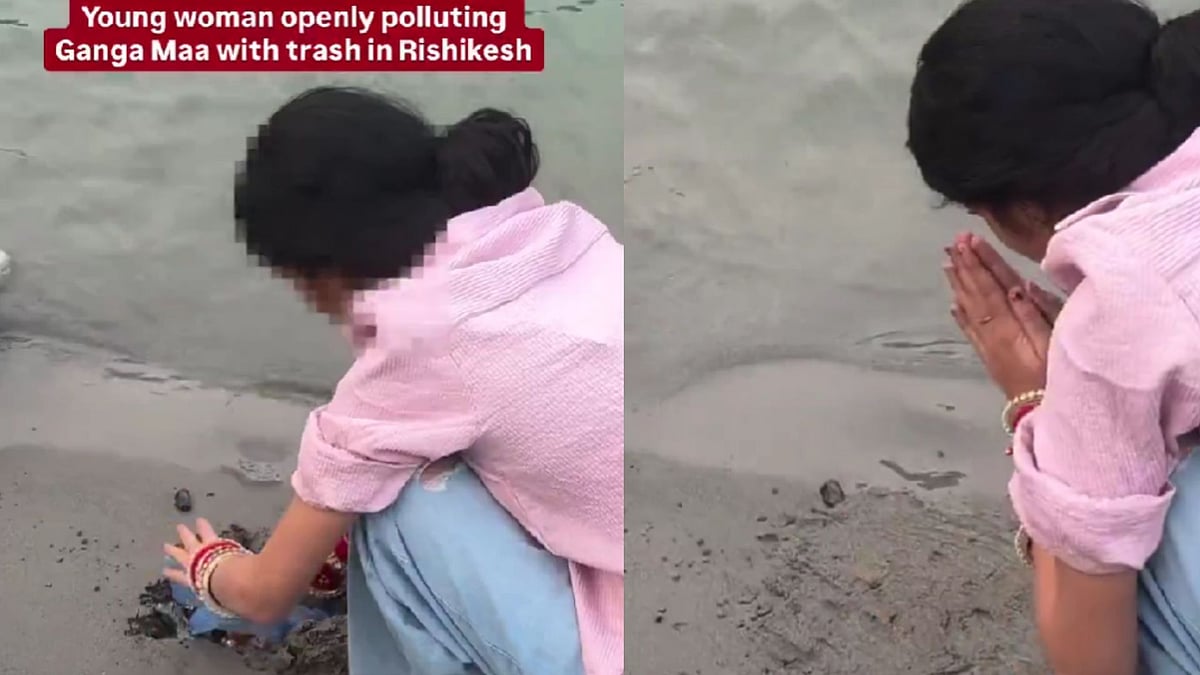
A video filmed in Rishikesh has ignited widespread debate online after showing a woman allegedly disposing of religious waste along the banks of the sacred Ganges River, raising fresh concerns about environmental negligence at pilgrimage sites.
Foreign visitor documents incident at Sai Ghat
The viral clip was recorded at Sai Ghat by foreign traveller Sierra Liliann, who shared her experience on social media after witnessing what she described as troubling behaviour near the river.
In the footage, a woman can be seen digging a small pit in the sand and burying pooja materials before leaving the area. According to the visitor, the offerings included plastic and other non-biodegradable items, materials known to contribute to river pollution.
Liliann said she attempted to question the woman about her actions but received no response, prompting her to reflect online about the contradiction between worshipping the river and simultaneously polluting it.
Concerns over ritual practices and river pollution
The traveller also claimed that similar scenes unfolded during the evening Ganga Aarti, where devotees allegedly discarded plastic-wrapped offerings directly into the water.
Environmental experts have long warned that religious waste, flowers wrapped in plastic, synthetic cloth, and packaging materials, significantly contributes to pollution in the Ganga. While traditional offerings such as flowers and leaves are biodegradable, modern packaging often prevents natural decomposition and harms aquatic ecosystems.
Social media reacts strongly
The video quickly gained traction online, triggering sharp reactions from users across platforms. Many viewers criticised the lack of awareness around eco-friendly religious practices, arguing that devotion should not come at the cost of environmental damage.
Several commenters pointed out that some devotees avoid throwing sacred items into regular dustbins, believing it to be disrespectful, which unintentionally leads to pollution of rivers and lakes instead. Others expressed disappointment that such behaviour continues despite growing environmental education and awareness.
At the same time, a section of users debated cultural understanding, with some arguing that outsiders may not fully grasp local traditions, while others insisted that protecting nature is a universal responsibility.
Growing call for sustainable worship
The incident has reignited conversations about balancing faith with environmental responsibility. Authorities and environmental groups across India have repeatedly encouraged pilgrims to use designated collection bins for ritual waste and adopt eco-friendly alternatives such as biodegradable packaging.

