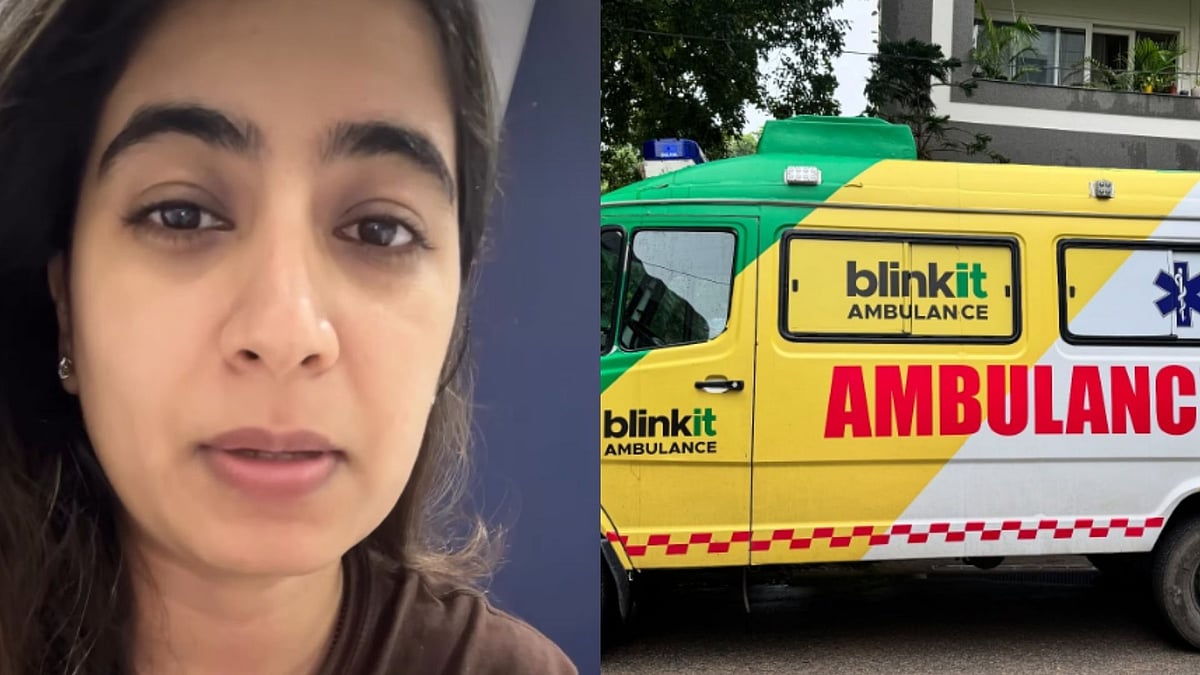
A Mumbai-based woman has shared a heartfelt account praising Blinkit’s ambulance service after it helped her aunt reach the hospital during a medical emergency in the early hours of the morning. The woman, Prachi, posted her experience on Instagram, highlighting the platform’s swift response and the fact that the service was provided free of cost.
Emergency call from Delhi at dawn
Prachi revealed that she woke up at around 4 am to a distressing phone call from her parents in Delhi. Her aunt, who lives with them, had suddenly suffered a seizure and urgently needed medical attention. However, the family struggled to arrange transport, as cabs kept getting delayed despite repeated attempts.
“It was one of the toughest mornings for me,” she shared in her video, explaining how helpless she felt being in Mumbai while her family faced a crisis in Delhi.
Blinkit’s ambulance service steps in
While discussing the situation with her husband, Prachi was reminded of Blinkit’s recently launched ambulance feature. Acting quickly, she booked an ambulance for her aunt from Mumbai, and within minutes, help was on the way in Delhi.
What surprised her the most was that the service did not charge any fee. The booking included a message urging users to request the ambulance only in genuine emergencies. Prachi said she would have gladly paid for the service, given the urgency of the situation.
Relief during a difficult moment
Prachi described the experience as deeply emotional, saying the timely arrival of the ambulance brought her immense relief. Even though she could not be physically present, she felt comforted knowing she could support her family during a critical time.
She also reflected on how easy it is to overlook the value of such services in everyday life, adding that the quick response made a significant difference when every minute mattered.

Growing role of quick-commerce in emergency services
Blinkit, widely known for its rapid grocery and essentials delivery, has been expanding its offerings to include emergency services like ambulances in select cities. This initiative aims to bridge critical gaps in urban healthcare access, especially during odd hours when transportation options are limited.

