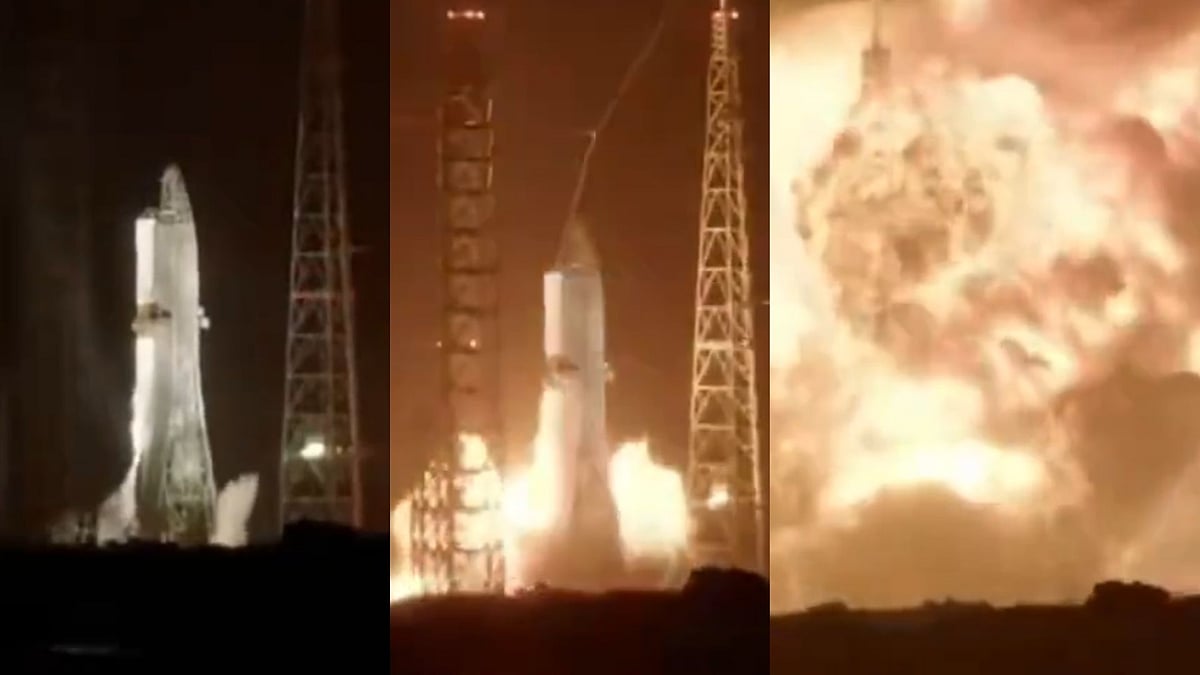
Blue Origin suffered a major setback on Thursday after its powerful New Glenn rocket exploded during a hotfire test at the launch pad in Cape Canaveral, Florida. Dramatic visuals from the site showed thick smoke rising from beneath the giant rocket moments before a huge fireball engulfed the area.
The aerospace company later confirmed the incident in a statement posted on X.
"We experienced an anomaly during today's hotfire test," the company said, adding that "all personnel have been accounted for."
No injuries were reported, and emergency response teams quickly secured the launch complex.
Jeff Bezos reacts after rocket blast
Blue Origin founder Jeff Bezos addressed the explosion shortly after the incident, admitting the company faced a difficult moment but promising to continue development efforts.
"It's too early to know the root cause but we're already working to find it," Bezos wrote on X.
"Very rough day, but we'll rebuild whatever needs rebuilding and get back to flying. It's worth it."
The New Glenn rocket, standing nearly 98 meters (321 feet) tall, is considered central to Blue Origin’s long-term commercial space and lunar ambitions.
Elon Musk calls incident “most unfortunate”
SpaceX founder Elon Musk also reacted publicly to the failed test. Despite being a direct competitor in the private space industry, Musk expressed sympathy over the mishap.
He described the explosion as "most unfortunate."
The incident once again highlights the high-risk nature of heavy-lift rocket development, where even routine ground testing can lead to catastrophic failures.
NASA monitoring situation closely
The explosion immediately drew attention from government and space officials. Florida Congressman Mike Haridopolos stated that he had spoken with NASA Administrator Jared Isaacman regarding the accident.
"I am grateful there were no reported injuries and thankful for the first responders, engineers, and launch crews who acted quickly," Haridopolos posted on X.
Isaacman also acknowledged the incident, emphasizing how challenging modern spaceflight programs can be.
"Spaceflight is unforgiving, and developing new heavy-lift launch capability is extraordinarily difficult," he wrote.
"We will work with our partners to support a thorough investigation of this anomaly, assess near-term mission impacts, and get back to launching rockets."

