NASA’s Artemis II crew has marked a historic milestone in deep space exploration while sharing an emotional tribute that touched audiences back on Earth.
Six days into the mission, Commander Reid Wiseman, Pilot Victor Glover, and astronauts Christina Koch and Jeremy Hansen travelled 252,756 miles away from Earth, officially becoming the farthest humans have journeyed into space.
The achievement surpassed the previous record set by the Apollo 13 mission in 1970, which reached 248,655 miles from Earth. The milestone highlights the growing momentum of NASA’s Artemis programme, designed to return humans to lunar exploration and eventually prepare for missions to Mars.
Emotional tribute on the moon
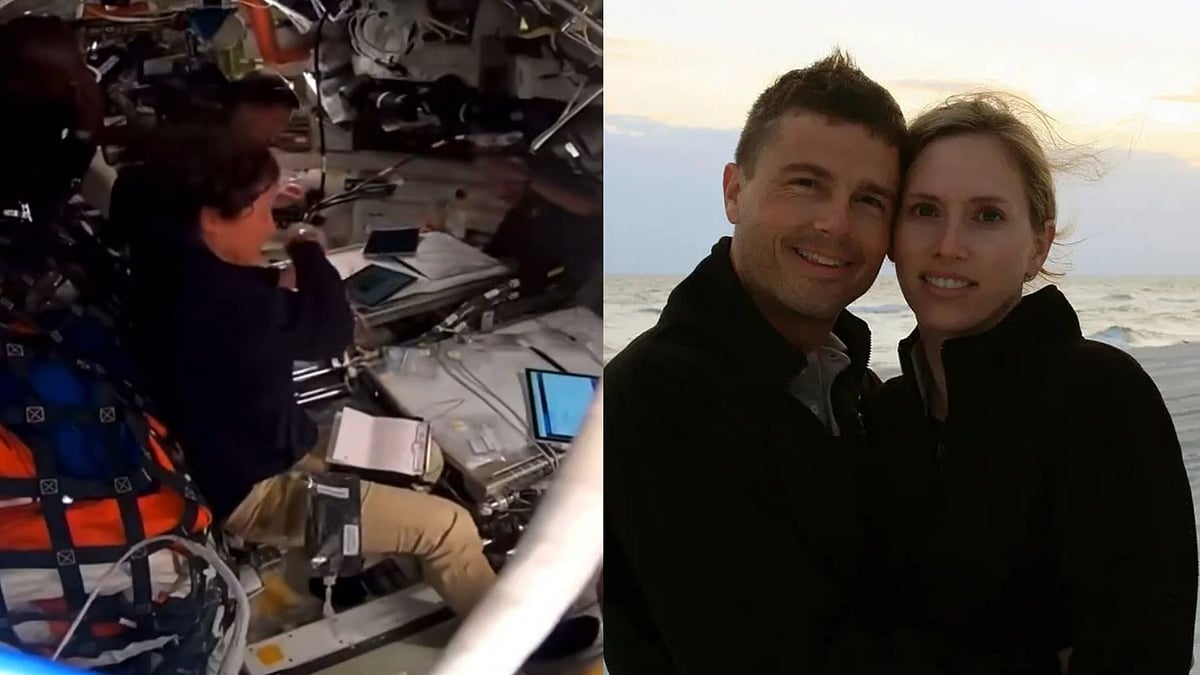
As the spacecraft approached the Moon’s far side, the astronauts paused to honour a deeply personal loss. The crew named one of two newly identified lunar craters after Commander Wiseman’s late wife, Carroll, who passed away in 2020 following a battle with cancer. She was 46. They have 2 daughters.
“A number of years ago, we started this journey in our close-knit astronaut family, and we lost a loved one. And there's a feature in a really neat place on the moon,” Hansen told mission control.
“And so we lost a loved one, her name is Carroll, the spouse of Reid, the mother of Katie and Ellie… And it's a bright spot on the moon, and we would like to call it Carroll.”
The moment grew emotional inside the spacecraft, with Wiseman embracing Hansen as the crew reflected on the tribute.
The astronauts named the second crater after their spacecraft, Orion.
First crewed moon mission in over 50 years
Launched on April 1, Artemis II became the first crewed lunar mission in more than five decades, marking humanity’s return to deep-space travel since the Apollo era.
During their lunar flyby, the astronauts conducted a seven-hour observation session while also experiencing a solar eclipse from space, a rare perspective few humans have ever witnessed.
Close pass over the lunar surface
NASA confirmed the crew made their closest approach to the Moon at approximately 7 p.m. local time, flying about 4,067 miles above the lunar surface.
While passing over the Moon’s far side, astronauts documented geological features including impact craters, ancient lava plains, fractures, and ridges formed over billions of years. They also observed variations in colour, brightness, and surface texture, data that will help scientists better understand the Moon’s composition and evolution.
Beginning the journey back to earth
Following the successful flyby, the Orion spacecraft has started its return journey. Mission teams expect the spacecraft to exit the Moon’s gravitational influence shortly before heading back toward Earth for re-entry and splashdown.
Artemis II represents a critical step toward future lunar landings under NASA’s Artemis programme, paving the way for sustained human presence on and around the Moon, and setting the foundation for humanity’s next giant leap into deep space.

