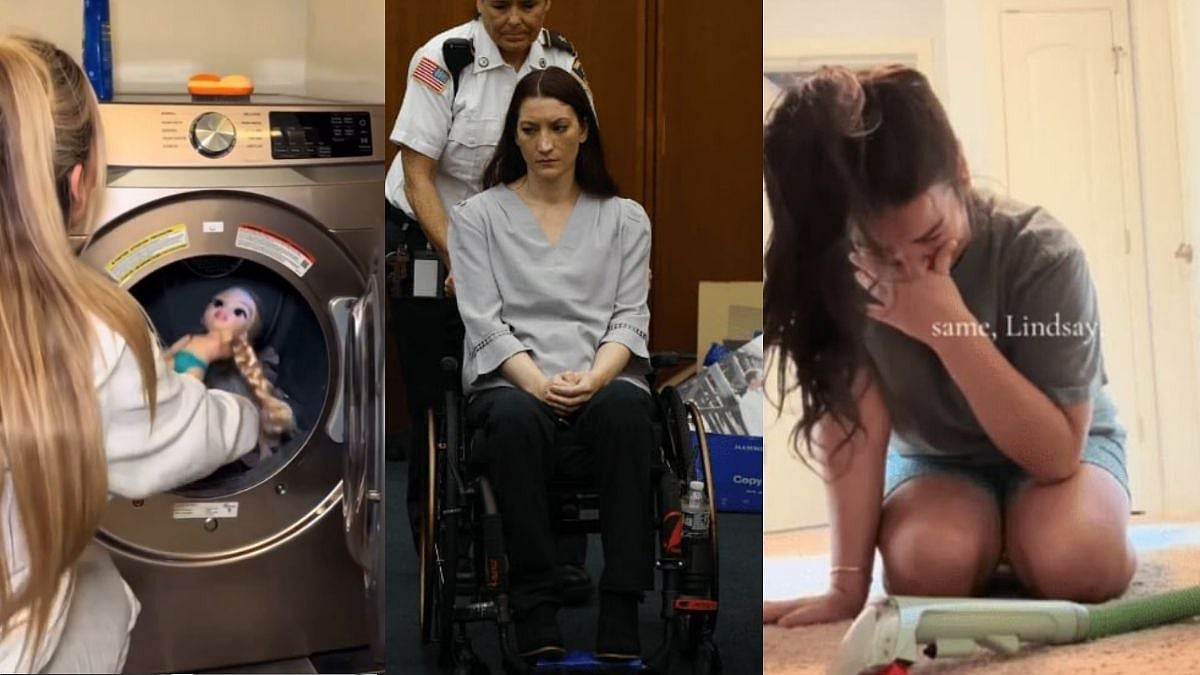
A disturbing TikTok trend connected to the highly publicized Lindsay Clancy case has triggered fierce backlash online, with social media users condemning videos in which women appear to pretend to harm their own babies.
The controversy comes as the Massachusetts mother's murder trial has generated an unusually intense reaction on social media. While some women have expressed sympathy for Clancy and highlighted the mental-health struggles she described before the deaths of her children, others have strongly rejected attempts to portray her as a sympathetic figure.
TikTok videos draw strong criticism
A compilation circulating on X shows women appearing to act out scenarios involving harm to infants, including pretending to throw a child down stairs and placing a baby in a washing machine.
The post described the trend as deeply disturbing and questioned why anyone would use the possibility of harm coming to a child as entertainment or a way to attract attention online.
The reaction was swift.
“This sad and tragic. What crazy woman are we raising?” one user commented.
Another wrote, “Totally sick and demented,” while a third simply stated, “This is evil.”
“Disturbing,” another user wrote. One commenter added, “These are very sick women- this is not a joking matter.”
Other reactions were similarly blunt. “These women are disgusting. I don’t find any of this funny at all,” one person wrote, while another said, “Everything about this is disgusting.”
The videos have intensified an already heated online debate about the way the Clancy case is being discussed and recreated on social media.
Lindsay Clancy case has divided social media
Clancy, a former labor and delivery nurse, is accused of killing her three children — 5-year-old Cora, 3-year-old Dawson and 8-month-old Callan — at the family's Duxbury, Massachusetts, home in January 2023.
Clancy has admitted that she killed the children but has pleaded not guilty by reason of lack of criminal responsibility. Her defense maintains that she was experiencing severe mental illness, including postpartum psychosis, when the killings occurred.
Prosecutors have presented a very different interpretation. They argue that Clancy understood what she was doing and acted deliberately. The prosecution has pointed to evidence they say demonstrates planning and awareness, while the defense has focused on her deteriorating mental state and efforts to obtain psychiatric treatment.
The trial has consequently become more than a criminal case for many people following it. It has also prompted wider conversations about postpartum mental illness, maternal distress and the limits of criminal responsibility.
Supporters have used TikTok to show solidarity
The latest controversy follows several other social-media trends surrounding Clancy.
Earlier, supporters organized public demonstrations, created T-shirts and even discussed “justice spells” in support of the Massachusetts mother.
Another trend featured women holding or rocking their babies while crying, with captions such as “same, Lindsay.” Some of those posts incorporated excerpts from Clancy's writings about anxiety, depression and the overwhelming experience of motherhood.
Critics argued that such content blurred the distinction between showing compassion for people experiencing mental illness and appearing to minimize the deaths of three children.
The response has illustrated just how emotionally charged the case has become online, where short videos and personal reactions can quickly reach large audiences.
Jury deliberations remain unresolved
The courtroom drama reached another critical stage this week.
After four days of deliberations, jurors told the judge on September 1 that they were unable to reach a unanimous decision. They were sent home and are expected to continue deliberating.
The jury is weighing whether Clancy was criminally responsible for the deaths. Possible outcomes include convictions on murder or lesser charges, an acquittal, or a finding that she was not criminally responsible because of mental illness.
If Clancy were convicted of first-degree murder, she could face life imprisonment without parole. A finding of not guilty by reason of lack of criminal responsibility could instead result in commitment to a psychiatric facility.
Trial has renewed debate over postpartum psychosis
The defense case has placed postpartum psychosis and maternal mental health at the center of national attention.
Defense attorneys contend that Clancy's mental condition had deteriorated significantly after the birth of her youngest child and that her psychiatric treatment did not adequately address the crisis.
Prosecutors dispute that explanation, arguing that Clancy's behavior before and during the killings showed that she knew what she was doing and understood that it was wrong.
The case has therefore raised difficult questions about how the justice system should treat defendants accused of horrific crimes while experiencing serious mental illness.

