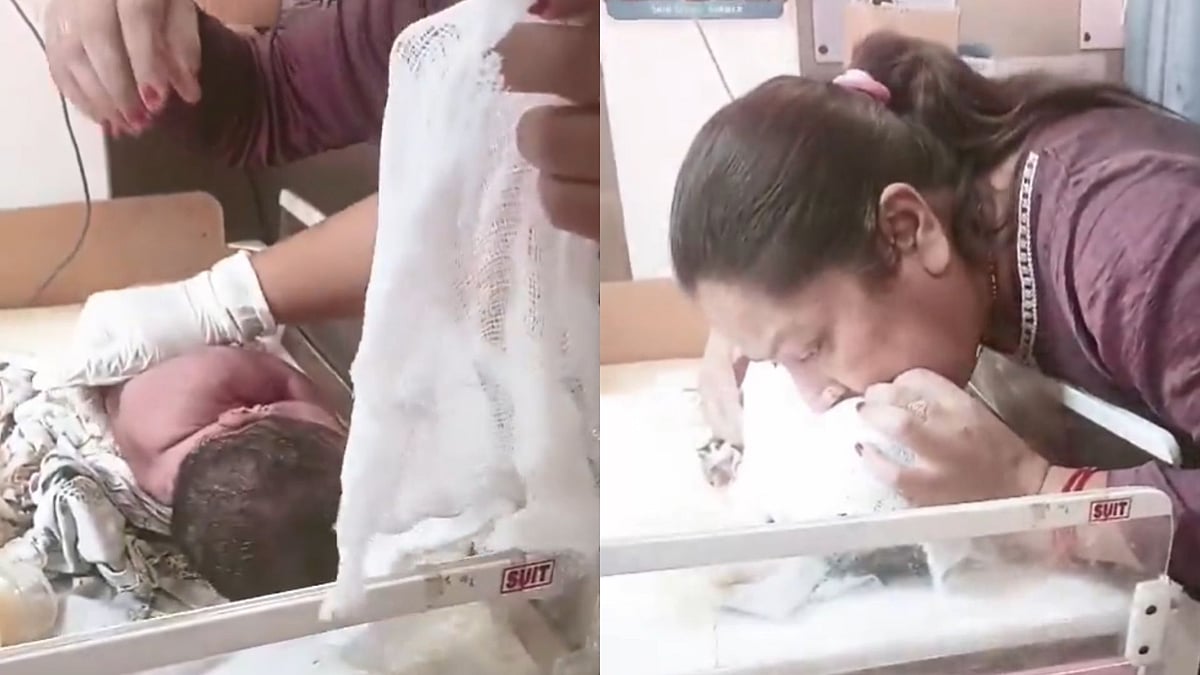
A dramatic life-saving moment unfolded at a Community Health Centre in Nanauta, Saharanpur, when a female doctor revived a newborn who showed no signs of breathing immediately after delivery.
Ayesha, a resident of Dadanpur village, had been admitted to the hospital on Monday after experiencing labour pains. While the delivery was completed successfully, tension gripped the medical team when the baby failed to cry or breathe after birth, signalling a medical emergency.
Doctor takes immediate action
The delivery was being conducted by Dr. Ruma, who first attempted standard neonatal resuscitation procedures. Oxygen support was provided using available medical equipment, but the newborn’s condition did not improve.
Realising that time was critical, Dr. Ruma quickly shifted to manual resuscitation. She administered mouth-to-mouth breathing while simultaneously performing chest compressions, refusing to give up despite the prolonged effort.
Medical experts note that the first few minutes after birth are crucial for oxygen supply to a newborn’s brain, and immediate intervention can make the difference between life and death.
Hours of effort lead to emotional moment
After sustained attempts and continuous monitoring, the newborn finally let out a cry, a moment that brought visible relief and celebration among hospital staff and the child’s family members.
A mobile video recorded by hospital staff captured the intense rescue effort and has since circulated widely, drawing praise for the doctor’s dedication and presence of mind.
According to Dainik Bhaskar, Dr. Ruma said, “It was a challenging moment. If the newborn had been referred elsewhere, reaching Saharanpur in time would have been difficult, so I immediately started treatment and continued until the baby responded.”
Importance of immediate neonatal care
Healthcare professionals emphasise that birth asphyxia, when a baby does not begin breathing at birth, remains one of the leading causes of newborn complications in India. Quick resuscitation at primary health centres plays a vital role, especially in rural areas where advanced facilities may be far away.
Dr. Ruma’s swift decision prevented a risky referral and ensured the newborn received life-saving care without delay.

