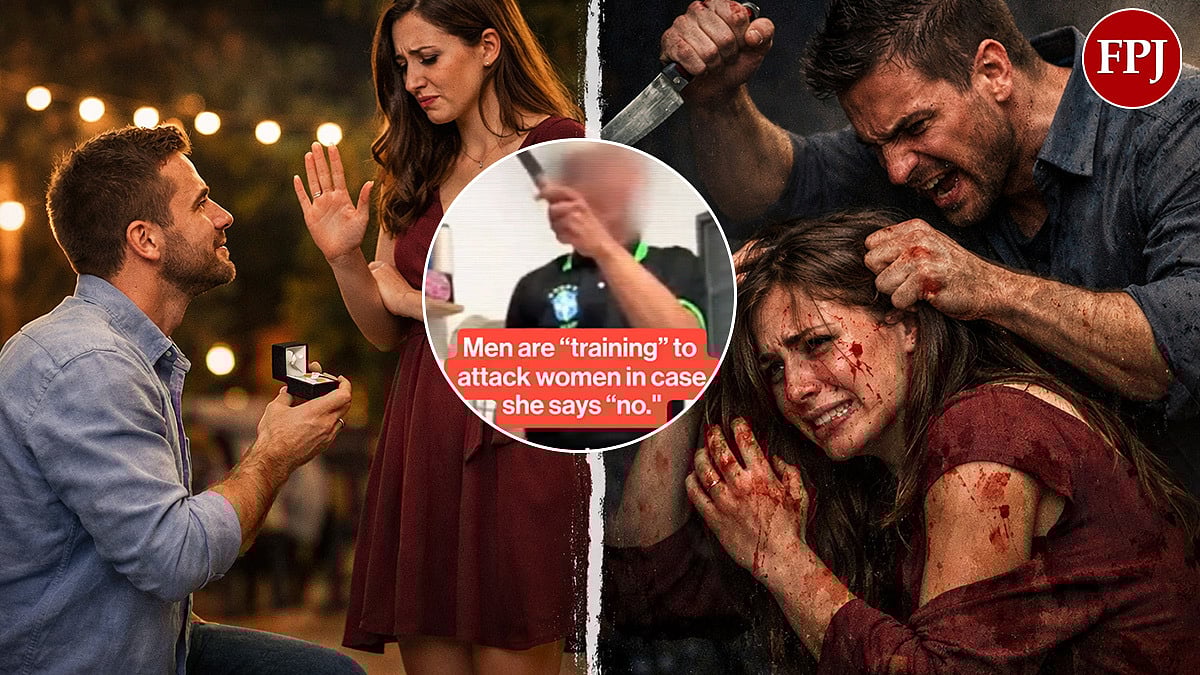
A disturbing social media trend has drawn international scrutiny after videos surfaced showing men staging violent scenarios tied to rejection by women. In many clips, creators simulate stabbings, throw mock punches, or aim firearms toward the camera, framing the acts as hypothetical reactions to a woman saying “no.”
The trend, widely referred to as “if she says no,” gained traction around International Women’s Day, amplifying concerns about how online humour and performance can blur into threats that normalise violence against women.
Woman attacked following the trend
According to reports by Brut America, Helena Anizio Rosak, 20, had rejected a man who had previously sent her flowers and chocolates. Weeks after the rejection, he allegedly broke into her home in São Gonçalo near Rio de Janeiro and stabbed her nearly 50 times, stopping only when her mother intervened. Helena was placed in a medically induced coma and underwent multiple surgeries before eventually recovering.
Around the same time, similar videos were gaining traction online. Brut reported that men across Brazil were posting clips showing themselves attacking mannequins or imaginary targets while saying, “I’m practicing in case she says no.” Helena’s mother later stated that the attacker had consumed comparable content online before the assault. Brazilian authorities launch investigation
Brazilian officials moved swiftly after complaints surfaced from civil society groups and digital safety advocates. The Federal Police’s cybercrime division opened an inquiry into whether the videos could encourage real-world violence or harassment.
Authorities also urged TikTok to remove the content and retain account data connected to the creators for investigative purposes. The platform confirmed that it had taken down posts that violated its community standards and said moderation teams were continuing to monitor similar uploads.
Despite removals, officials reported that variations of the trend continued circulating across social platforms, highlighting the challenge of moderating rapidly evolving online trends.
Experts warn of online radicalisation patterns
Researchers studying digital behaviour say the trend reflects a broader ecosystem of misogynistic online communities often linked to so-called “manosphere” or “Red Pill” ideologies.
According to experts, radicalisation rarely begins with overt threats. Instead, it often starts with content that subtly portrays women as adversaries or frames masculinity through dominance and resentment. Over time, some users migrate toward more extreme spaces where aggression is normalized and publicly performed.
Academics and cybercrime investigators warn that repeated exposure to such narratives can gradually desensitize audiences to violence, transforming harmful rhetoric into socially accepted online performance.
Studies examining online platforms in Brazil have already documented rapid growth in channels promoting misogynistic messaging, with millions of subscribers engaging with content that reinforces gender hostility and grievance-based narratives.

Digital culture and the normalisation of violence
Researchers describe this phenomenon as “veiled violence”, content presented as satire, jokes, or hypothetical situations but rooted in intimidation. Experts argue that algorithm-driven platforms may unintentionally amplify controversial or emotionally charged material because it generates higher engagement.
This creates a feedback loop where increasingly extreme content gains visibility, encouraging creators to escalate shock value for views, shares, and online validation.
Cyber safety specialists also point out that young audiences are particularly vulnerable, as repeated exposure to aggressive gender narratives can shape perceptions about relationships, consent, and power dynamics.

