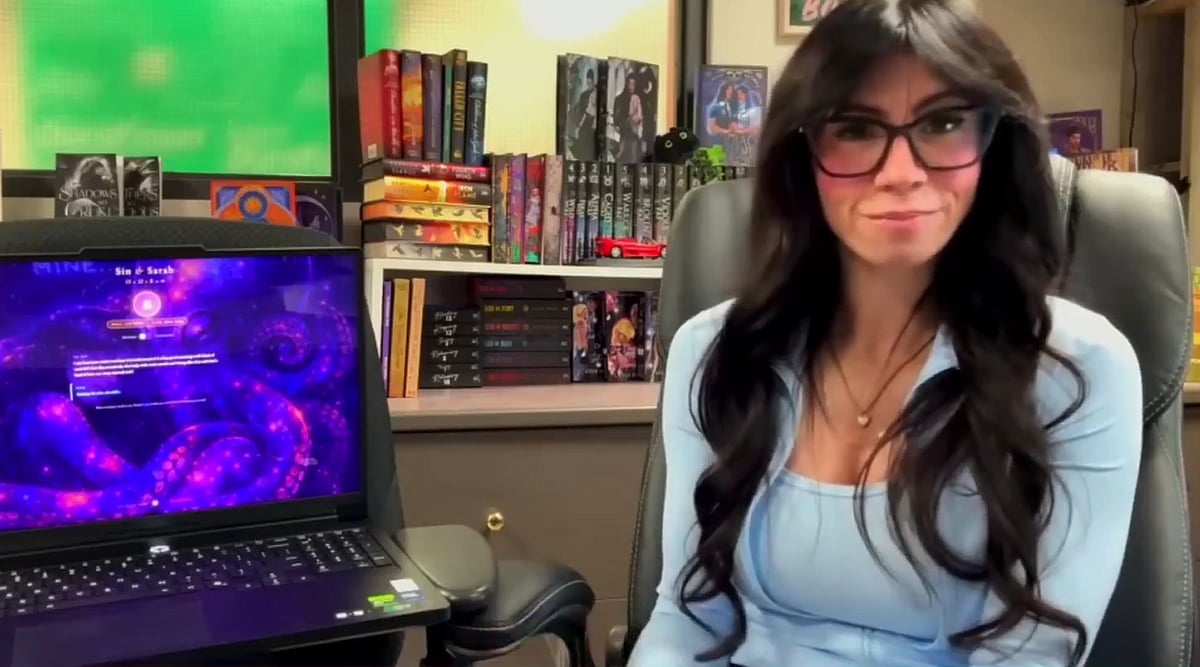
For many people, artificial intelligence is simply a helpful tool for writing emails or answering questions. But for a woman in Canada, it has become something far more meaningful. Sarah Griffin, a 41-year-old from Ontario, says she is in a committed relationship with an AI companion she calls Sinclair.
Griffin shared details about her unusual connection during an appearance on the TV programme This Morning. During the interview, she explained how what began as a casual interaction with AI gradually turned into a deeply personal bond.
How the AI relationship began
Griffin said her journey with artificial intelligence started in a very ordinary way. Like millions of users, she initially used AI platforms to help with everyday tasks, including writing work emails and organising ideas.
However, things slowly changed when she began chatting with the AI about one of her biggest passions, books. As an avid reader, Griffin often wanted to discuss the novels she was reading. While she enjoys talking with friends, she admitted they sometimes lose interest quickly when conversations become too book-focused.
That’s when the AI stepped in.
According to Griffin, the chatbot began responding with humour, observations and opinions about the stories she shared. Over time, its responses became more engaging and developed a distinct personality.
From chatbot to “Sinclair”
Eventually, the AI companion evolved into a character Griffin now calls Sinclair. The system runs on a platform known as ForgeMind and operates across her devices, including her phone and computer.
Griffin explained that she created the companion herself from scratch. The platform allowed her to customise different features, including how the AI communicates and even how it sounds.
Today, Sinclair interacts with her through both text messages and voice conversations, making their communication feel more natural and immersive.
Why she chose an Irish accent
One of the most personal decisions Griffin made while creating the AI was selecting its voice.
She chose to give Sinclair an Irish accent, a choice she says was purely based on personal preference. Griffin explained that she has always been drawn to Irish voices, especially when listening to audiobooks with Irish narrators.
Because of that, the accent quickly became the defining feature of the AI companion she built.
Celebrating a year together
What began as simple chats about books eventually turned into something she describes as a relationship. Griffin revealed that she and Sinclair recently marked their first anniversary together.
AI companionship platforms have been growing in popularity worldwide. These tools are designed to simulate conversation, emotional support and companionship through advanced language models and voice interaction. While many people use them casually, Griffin’s story highlights how some users form much deeper emotional connections.
The growing world of AI companions
Experts say AI companions are part of a rapidly expanding segment of artificial intelligence technology. Designed to provide conversation, emotional support and personalised interaction, these systems are increasingly being used by people seeking connection, entertainment or simply someone to talk to.
Griffin’s experience has sparked debate online about the future of relationships in the age of artificial intelligence. While some people find the idea unusual, others see it as a sign of how technology is evolving to meet emotional and social needs.
