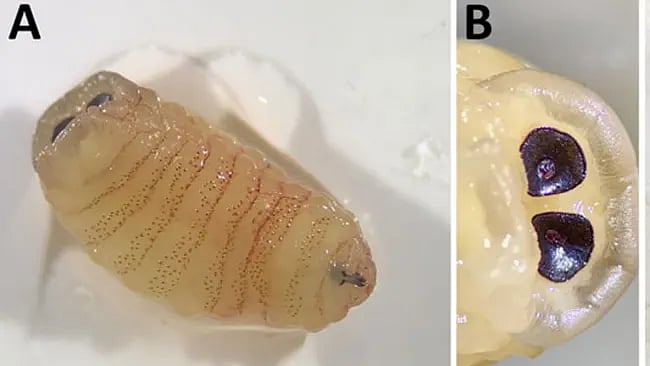
A woman in Greece experienced an extremely rare and unsettling medical condition after unknowingly becoming a host to parasitic larvae inside her nasal cavity. The unusual case has drawn attention from medical experts due to how rarely humans are affected by this type of infestation.
Outdoor exposure led to unexpected infection
The 58-year-old woman had been working outdoors near grazing sheep when she noticed several flies hovering persistently around her face. At the time, the incident seemed harmless and did not raise concern.
Nearly a week later, she began feeling discomfort in her sinuses. What started as mild facial pressure soon progressed into persistent sinus pain and bouts of coughing that lasted for weeks. Despite these symptoms, she did not experience fever or other common signs of infection.
Shocking moment during a sneeze
The situation took a disturbing turn on October 15 when the woman sneezed and expelled a small worm from her nose. Alarmed by the discovery, she immediately sought medical attention.
An ear, nose and throat (ENT) specialist examined her and later performed a surgical procedure. Doctors removed multiple larvae along with a pupa, the developmental stage between larva and adult insect, from deep within her nasal sinuses.
Doctors identify rare sheep bot fly infestation
Laboratory testing confirmed the parasites as Oestrus ovis, commonly known as sheep bot flies. These insects typically deposit larvae in the nasal passages of sheep and goats, where the organisms naturally grow and mature.
Human infections, medically referred to as nasal myiasis, are extremely uncommon because the human nasal environment usually prevents larvae from surviving long enough to develop.
Why the parasites survived in this case
Doctors believe the woman’s significantly deviated nasal septum created an unusual protective space inside her sinuses. This anatomical variation allowed the larvae to survive longer than they normally would in humans, even reaching an advanced developmental stage.

Under normal conditions, such larvae die quickly, dry out, or become calcified due to the body’s immune defenses and unsuitable living conditions.
Following surgical removal, the patient was treated with nasal medications and decongestants to clear remaining irritation and prevent secondary infection. She recovered fully without long-term complications, and none of her co-workers reported similar symptoms.

