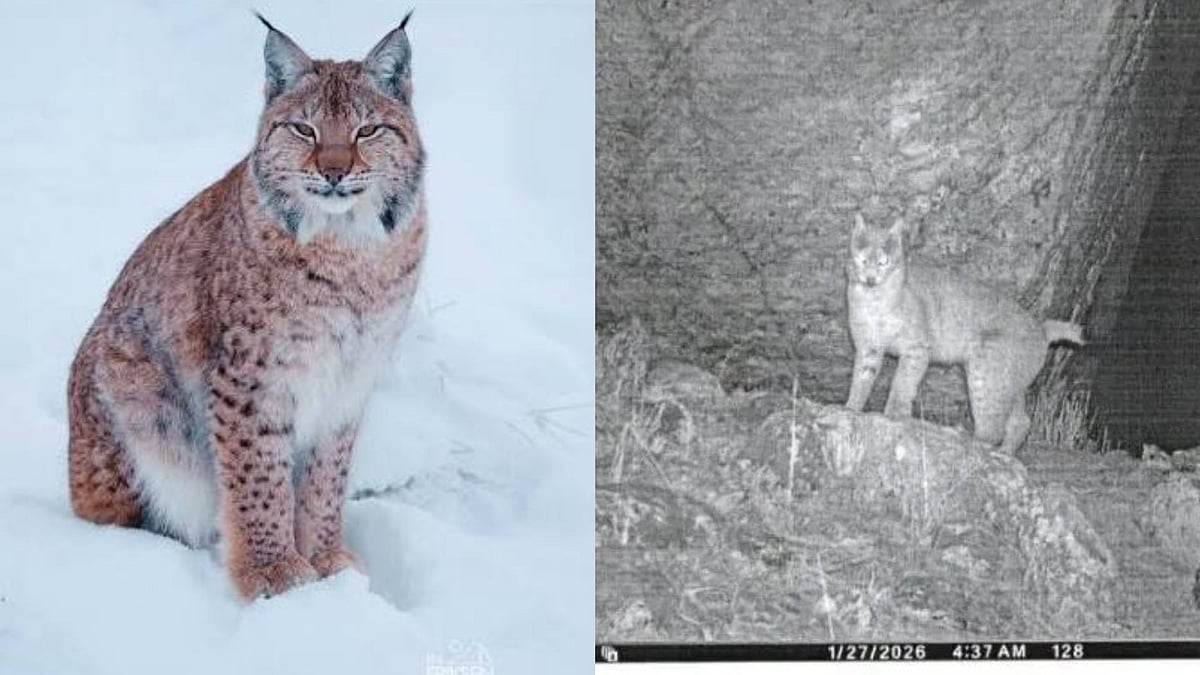
A remarkable wildlife discovery has put Sikkim in the spotlight after a camera trap captured the first-ever photographic evidence of a Eurasian lynx in the state. The rare sighting, recorded in the remote mountains of North Sikkim, is being celebrated as a significant achievement for wildlife research and conservation in India.
The elusive wild cat was photographed on the Tso Lhamo Plateau at an elevation of approximately 5,250 metres, highlighting the ecological richness of the eastern Himalayas and the importance of long-term scientific monitoring in the region.
IFS officer shares historic discovery
Indian Forest Service (IFS) officer Parveen Kaswan shared the historic image on X, calling attention to the extraordinary moment.
"Ghosts of the mountains do exist."
He further wrote, "The first-ever photographic record of the elusive Eurasian Lynx in Sikkim is a significant moment for India's wildlife conservation story. Every such discovery reminds us how much nature still has to reveal."
The post quickly gained traction online, with wildlife enthusiasts, photographers and conservation supporters praising the achievement and the efforts behind it.
Captured during long-term snow leopard monitoring
The image was recorded using a camera trap installed under the long-running Snow Leopard and Rangeland Monitoring Programme. The initiative is jointly conducted by the Sikkim Forest and Environment Department and WWF-India to study wildlife populations in the state's rugged high-altitude landscapes.
Camera traps have become an essential tool for documenting species that are rarely seen by humans. They help scientists monitor wildlife without disturbing natural behaviour and provide valuable insights into animal distribution, habitat use and population trends.
About the Eurasian Lynx
The Eurasian lynx (Lynx lynx) is the largest among the world's four lynx species and is widely distributed across parts of Europe and Asia. Despite its broad range, it remains one of the least observed wild cats because of its secretive lifestyle and preference for isolated habitats.
It is easily identified by its distinctive black ear tufts, short tail with a dark tip, powerful legs, broad snow-adapted paws and a thick, spotted coat that provides excellent camouflage in mountainous terrain.
Social media celebrates the rare sighting
Following Kaswan's post, social media users widely applauded the achievement, describing the image as a powerful reminder that India's remote mountain landscapes continue to shelter extraordinary and little-seen wildlife.

