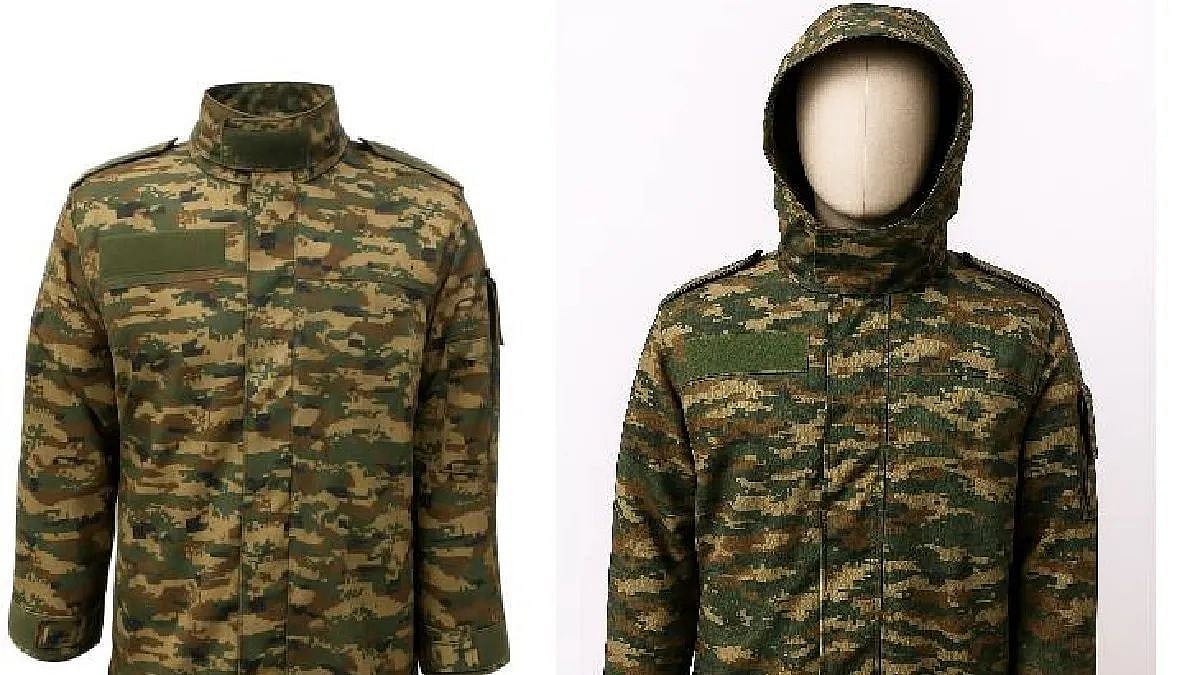
The Indian Army has rolled out a comprehensive overhaul of its dress regulations through the newly released Army Uniforms-2026 manual, marking one of the most significant updates to military attire and appearance standards in recent years.
Spanning 174 pages, the revised framework introduces several changes aimed at aligning military traditions with modern Indian values while eliminating practices and symbols linked to the colonial era. The reforms are part of a broader effort to create a distinctly Indian military identity without compromising discipline, professionalism, or operational effectiveness.
Bandi jacket added to formal attire
One of the most notable additions is the inclusion of the traditional closed-neck bandi jacket as an approved formal outfit for officers.
Under the updated guidelines, officers can wear the bandi jacket with formal trousers and closed shoes. The garment joins other authorised formal dress options, including bandhgala suits, lounge suits, combination dress, and full-sleeve shirts paired with ties.
The Army has specified that the jacket should be in a sober, solid colour, reinforcing the force's emphasis on a neat and dignified appearance.
Colonial-era accessories and terminology removed
Several ceremonial practices inherited from British military traditions have been discontinued under the new regulations.
Ceremonial pouch belts have been removed from multiple categories of formal dress, while reviewing officers will no longer be required to carry swords during parades. The Army has also eliminated the use of colonial-era terminology, including references containing the word "royal."
According to the manual, these revisions are intended to remove what it describes as lingering colonial vestiges and ensure military customs remain relevant in contemporary India.
New winter combat uniform introduced
The Army has also introduced a new winter dress category, designated as Dress 3B, for personnel across all ranks.
The winter ensemble includes an Angola shirt, battle jacket, and beret, providing a standardised cold-weather uniform across the force. The updated manual also references newer combat clothing systems designed to improve practicality and comfort in operational environments.
Strict grooming standards remain in place
While several dress regulations have been modernised, the Army has retained strict appearance standards.
Tattoos and body piercings remain prohibited, a rule that has long existed within the force. Soldiers are also barred from wearing bracelets while in uniform, except for a single sacred thread worn on the day of a religious ceremony. Religious symbols and visible markings continue to be restricted, with certain exemptions available to Sikh personnel in accordance with military regulations.
The updated guidelines further specify that moustaches must not exceed 12 centimetres in length.
The use of perfumes and deodorants while in uniform has also been prohibited, although after-shave lotions continue to be permitted.
Revised dress rules for women officers
The manual provides detailed guidance for women officers as well.
Sarees in sober colours and kurta-salwar combinations featuring ankle-length straight pants and dupattas are authorised. However, sleeveless kurtas, cigarette pants, and palazzo-style trousers are not allowed.
The regulations also place restrictions on cosmetics and accessories while in uniform. Lipstick, coloured nail polish, bindis, and nose pins are prohibited. Sindoor may be worn, provided it remains concealed beneath authorised headgear such as a beret or peaked cap.
Army says changes reflect contemporary Indian ethos
In the foreword to the manual, Adjutant General Lieutenant General VPS Kaushik described the revisions as part of a deliberate effort to align Army dress regulations with present-day Indian values.
The changes come amid a wider push by the government to encourage greater adoption of indigenous traditions and reduce dependence on symbols and customs inherited from the British era.
Social media reacts to new regulations
After details of the revised dress code surfaced online, social media users offered mixed reactions.
“To be honest I dont like this uniforms at all. Tatoos should be allowed, its absolutely stupidity to not allow this, Womens should be allowed as well. India needs to give training to every student passing after passing 12th 6 month of training to all of them," said one user.
“The overall training quality of Indian Army has gone down a bit which needs to be improved. Mostly due to increase in active social media participation and too much political interference. Dress upgrades make no difference, as it is also politically inclined," said another.
“What is the change only the combat? Like is it change of No. 7 or something else? Can updated one be provided all dress no.?" questioned a third user.
“Tatoo and piercing was always banned and was never allowed. This is required for discipline and anonymity," wrote another.
“Modernising while maintaining absolute discipline. A 12cm moustache cap and zero tattoo policy shows the Army isn’t compromising on standards, even while upgrading to more practical combat gear like Category 7A. High standards," commented one user.

