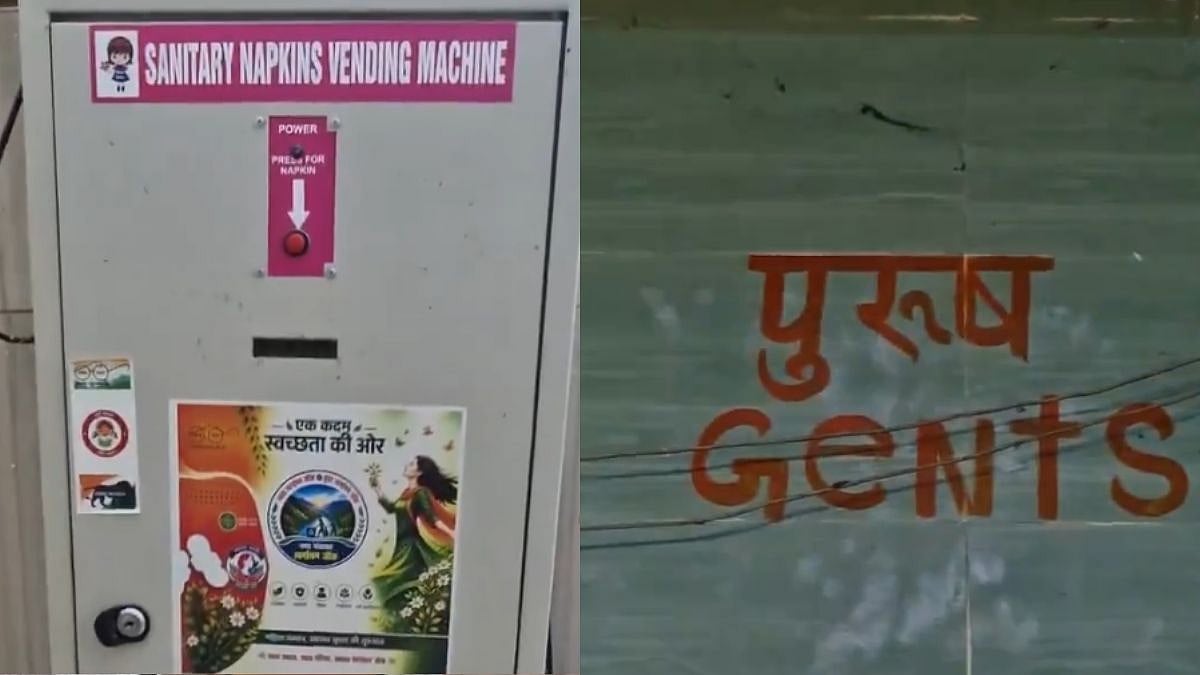
A sanitary pad vending machine inside a men's washroom has left the internet puzzled, amused and curious. A video showing the unusual installation has gone viral on social media, with users debating why a menstrual hygiene dispenser was placed in a space traditionally designated for men.
The clip appears to have been recorded at a coaching-class or college-like establishment, with the visuals reportedly pointing towards Uttarakhand. However, the exact location and the reason behind installing the machine in the men's washroom have not been independently confirmed.
Sanitary Pad Machine In Men's Washroom Leaves Internet Confused
The short video focuses on a sanitary pad vending machine installed inside a men's washroom. The unexpected sight has prompted a flood of reactions, with many users treating the setup as an ironic take on gender equality.
One comment read, "Gender equality bro are you fr?" while others responded with laughing emojis and jokes about the unusual placement.
Some social media users even came up with the term "MENstruation", turning the situation into a playful word game. Another user sarcastically called it a "Great step by up government."
The video also features Chahun Main Ya Naa playing in the background, adding an unintentionally dramatic touch to what many viewers considered an amusing sight.
Viral Clip Sparks Conversation Around Menstrual Hygiene
While the placement of the machine has become the focus of online jokes, access to menstrual products remains a serious public-health and education issue in India.
Sanitary pad vending machines have been introduced in several schools and public institutions as part of menstrual hygiene initiatives. Government programmes and state-level schemes have also used vending machines and disposal facilities to make menstrual products more accessible and reduce the stigma surrounding menstruation.
In its January 2026 judgment in Dr Jaya Thakur v. Government of India, the Supreme Court recognised the right to menstrual health as part of the right to life under Article 21. The court also stressed that lack of menstrual hygiene facilities can become a barrier to girls' education and directed authorities to ensure access to menstrual absorbents, appropriate sanitation facilities and safe disposal mechanisms.
The court further emphasised that menstrual hygiene management should go beyond simply providing sanitary products and include awareness, privacy, clean toilets and proper waste-disposal facilities.

