In a landmark judgment, the Supreme Court has introduced a major change in how the law works to protect freedom. In the past, people often feared immediate arrest for minor crimes, but the apex court has now made it clear that the rules have changed.
As per the court judgment on Thursday, under the Bharatiya Nagarik Suraksha Sanhita (BNSS), the police cannot simply arrest someone for a crime that carries a sentence of up to seven years. Instead, they are now legally required to give the person a formal notice first. This shift ensures that being accused of a crime doesn't automatically mean losing your liberty.
Abhishek Chauhan, counsel at DMD Advocates, says, "The Supreme Court of India recently in the case of Satender Kumar Antil vs CBI and Anr. dated 15.01.2026 ruled that police officers must issue a notice under section 35(3) of the BNSS before arresting a person in a case involving offence punishable with imprisonment upto 7 years. The Supreme Court has examined the scope of Section 35 BNSS, which replaces Section 41 and 41A of Crpc."
Making the rules stick




The Supreme Court ruled that serving this notice under Section 35(3) is a "must-do," not a "maybe." Justices MM Sundresh and N Kotiswar Singh stated that any arrest made without first giving this mandatory notice is against the law for these types of offences. This creates a powerful safety net for the public ensuring that the police follow a fair process. By making this notice a strict requirement, the apex court is making sure that the law serves as a shield for citizens, preventing unnecessary time behind bars before a case is even fully investigated.
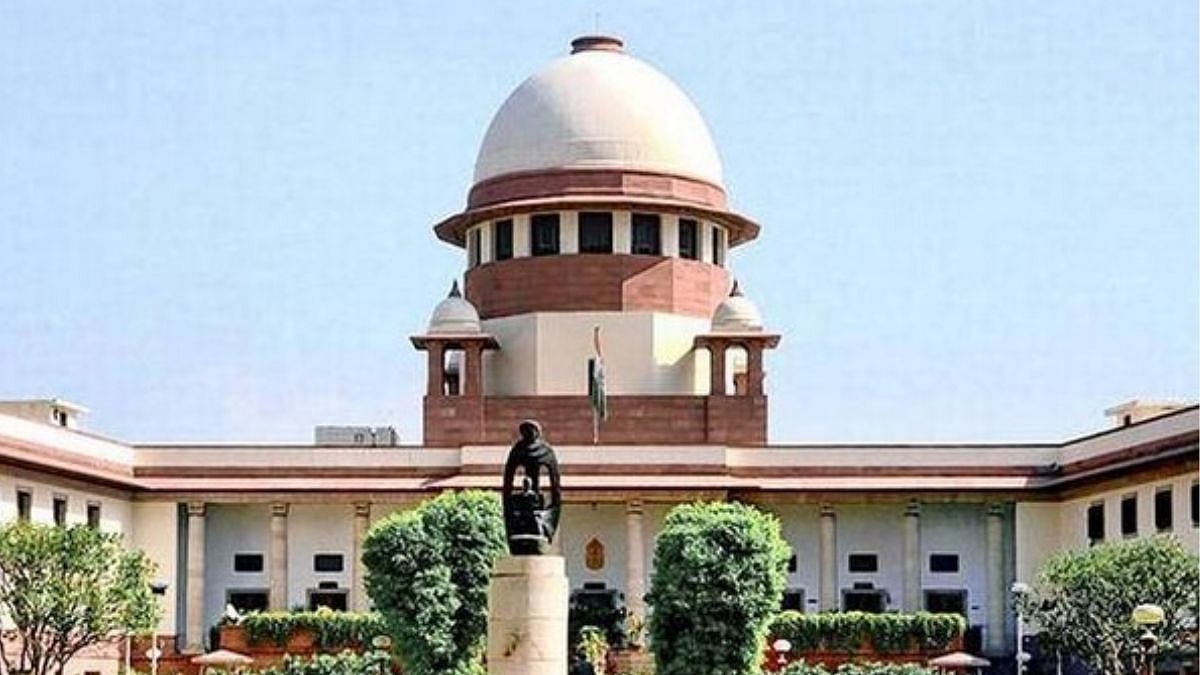
Supreme Court of India | X
Arrest as a choice, not a rule
Even if the legal conditions for an arrest are met, the apex court emphasised that an arrest is still "discretionary and optional." It is not a mandatory step.
Anjali Jain, Partner at Areness Law, describes the clarity of this new direction. "The message is unambiguous. Arrest is no longer a default investigative step. Police must first issue a notice of appearance. So long as the accused cooperates, custody is prohibited unless fresh, specific and recorded reasons establish that arrest has become objectively necessary. Even non-compliance with notice does not automatically justify detention," she says.
Two-step test for police
The judges explained that the police should only use arrest if it is truly necessary to help their investigation, based on the specific facts of a case. It is no longer a standard reaction to every accusation. By highlighting that arrest is a matter of choice and discretion, the Supreme Court is encouraging a more modern and fair legal system where people are treated with dignity and the law is used more thoughtfully.
The police must now pass a strict two-part test under Section 35(1)(b).
First, the officer must have a reason to believe the person committed the crime. Second, they must be satisfied that custody is necessary for specific purposes—such as preventing further offences, helping the investigation, preventing evidence tampering, protecting witnesses or ensuring the person shows up in court.
Chauhan explains the necessity of this check, "The Supreme Court has held that police officer shall ask himself the question as to whether an arrest is a necessity or not, before undertaking the said exercise. Further, for effecting an arrest, qua an offence punishable with imprisonment up to 7 years, the mandate of Section 35(1)(b)(i) of the BNSS, 2023 along with any one of the conditions mentioned in Section 35(1)(b)(ii) of the BNSS, 2023 must be in existence."
Reforming the justice system
This ruling is expected to have wide systemic consequences from reducing jail overcrowding to professionalising how police conduct inquiries.
By forcing a move away from "custody-driven" investigations, the Supreme Court is prioritising evidence and proportionality.
"The judgment dismantles the decade old model which indicates that arrest is a proxy for investigation. It makes clear that custody cannot substitute evidence-gathering... This pushes law enforcement toward professional, evidence-led policing rather than custody-driven inquiry," says Jain.
Accountability and implementation
To ensure these changes aren't just paperwork, the police must record their reasons in writing for both making an arrest and for deciding not to make one.
"Therefore, a notice under Section 35(3) of the BNSS, 2023 to an accused or any individual concerned, qua offences punishable with imprisonment up to 7 years, is the rule. Thus, the apex court has stressed that a police officer must consciously ask whether arrest is truly necessary before taking such step and record the reasons in writing either making the arrest or for issuing the notice under section 35(3) of BNSS. The judgment is a strong signal to law enforcement agencies that personal liberty cannot be sacrificed and compliance of law as provided under BNSS should be in letter and spirit," says Chauhan weighing on the impact of the ruling on law enforcement.
As Jain concludes, the success of this reform depends on how it is enforced on the ground, "In practical terms, the Supreme Court has drawn a new baseline for the criminal justice system, arrest is not a starting point. It is a last resort."