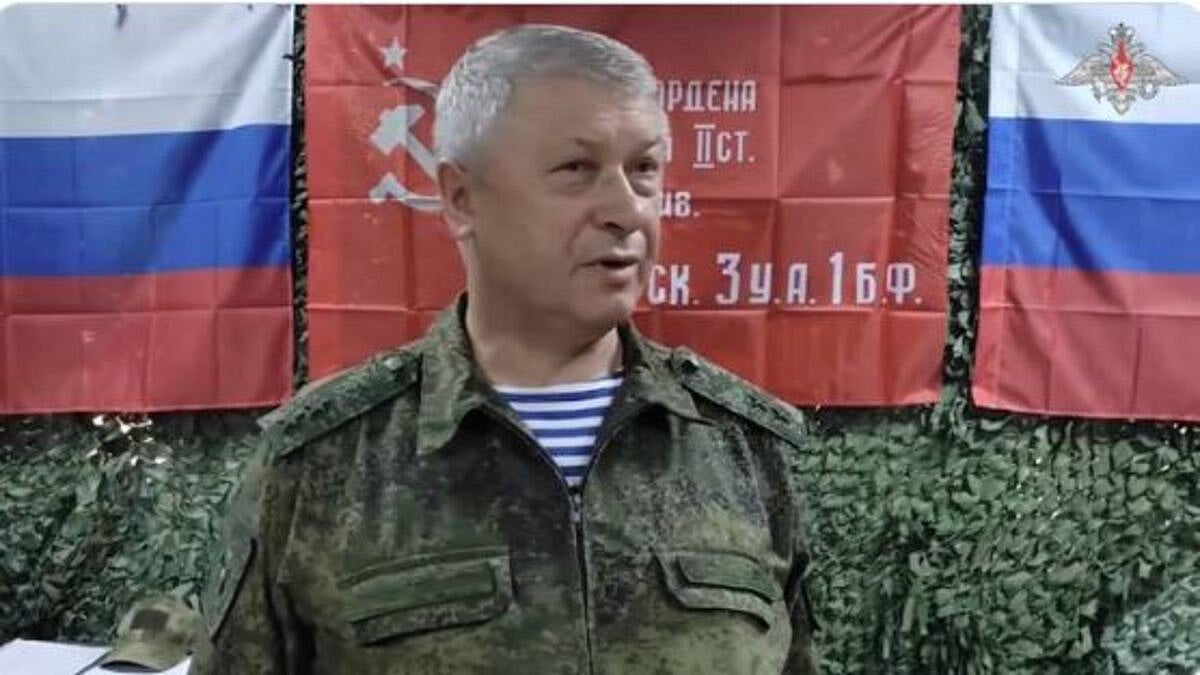
Moscow is currently on edge following a brazen assassination attempt on Lieutenant General Vladimir Alexeyev, a prominent figure within the military high command. State media outlets confirmed on Friday, February 6, 2026, that the Russian General was rushed to a hospital for emergency treatment after being shot.
While specific details regarding his current medical condition have been withheld, the Investigative Committee has formally opened a criminal case into the attack.
The incident took place against a backdrop of heightened tension within the country’s defence establishment. As a deputy chief of the Main Directorate of the General Staff (GRU), Alexeyev has played a central role in several of Russia's most critical military and intelligence operations. Most notably, he served as a key negotiator during the internal unrest involving the Wagner Group in 2023.
Implications of a high-level breach
Public discourse across Russia has shifted sharply toward the implications of such a high-level security breach. The fact that a senior commander could be targeted in the heart of Moscow has raised urgent questions about the safety of the military elite and whether the attack reflects broader internal instability. While national and international observers monitor the fallout, authorities have not yet released information regarding the shooter's identity or the suspected motive.
This shooting is the latest in a series of strikes against senior officials during a conflict that has been uniquely lethal for the Russian officer corps. Since the full-scale invasion began nearly four years ago, investigative outlet The Insider reports that at least 19 Russian generals have been killed. While the Kremlin often remains silent on these losses, verified data from open sources tell a story of high-level attrition. The first year of the war claimed veterans such as Andrei Sukhovetsky and Roman Kutuzov, while subsequent years saw the deaths of Sergei Goryachev and Vladimir Zavadsky.
Specialised losses and frontline attrition
According to reports in The Moscow Times, recent high-level deaths include specialised leaders such as Igor Kirillov, head of the radiation and biological defence troops, and Yaroslav Moskalik, deputy head of the General Staff’s main operational directorate.
These officers have been neutralised through diverse means, ranging from frontline sniper fire and artillery strikes to sophisticated missile attacks on command posts and suspected sabotage. Notably, some of those killed were serving in volunteer formations or mercenary companies at the time of their deaths.
The toll on the elite is mirrored by staggering losses in the general ranks. Verified records by BBC Russian and Mediazona have confirmed over 152,000 military deaths based on open-source data, though NATO officials indicate total casualties could be reaching 1.15 million.
This data highlights a profound demographic imbalance, as approximately 67% of confirmed deaths involve men from rural areas and small towns.
Estimates from The Economist suggest that by late 2025, Russia may have lost roughly 1% of its entire pre-war male population to the conflict.
A campaign of targeted strikes
Throughout the conflict, Russia has repeatedly blamed Ukraine for high-profile assassinations targeting prominent military and political figures. While Kyiv often avoids official claims of responsibility, Ukrainian intelligence frequently describes these deaths as "karmic" justice.
Recent military losses attributed to such operations include Lieutenant General Fanil Sarvarov, killed by a Moscow car bomb in late 2025, and General Igor Kirillov, who died in a 2024 bombing.
High-profile civilian supporters of the war have also been targeted. Nationalist writer Zakhar Prilepin survived a 2023 car bombing, while military blogger Vladlen Tatarsky was assassinated in a St Petersburg cafe. Additionally, the car bombing of Darya Dugina and the shooting of former Ukrainian lawmaker Illia Kyva underscore the reach of these operations.
As the Investigative Committee continues its probe into the Alexeyev shooting, the incident serves as a grim reminder that the war's violence has reached the very centre of Russian military leadership.
