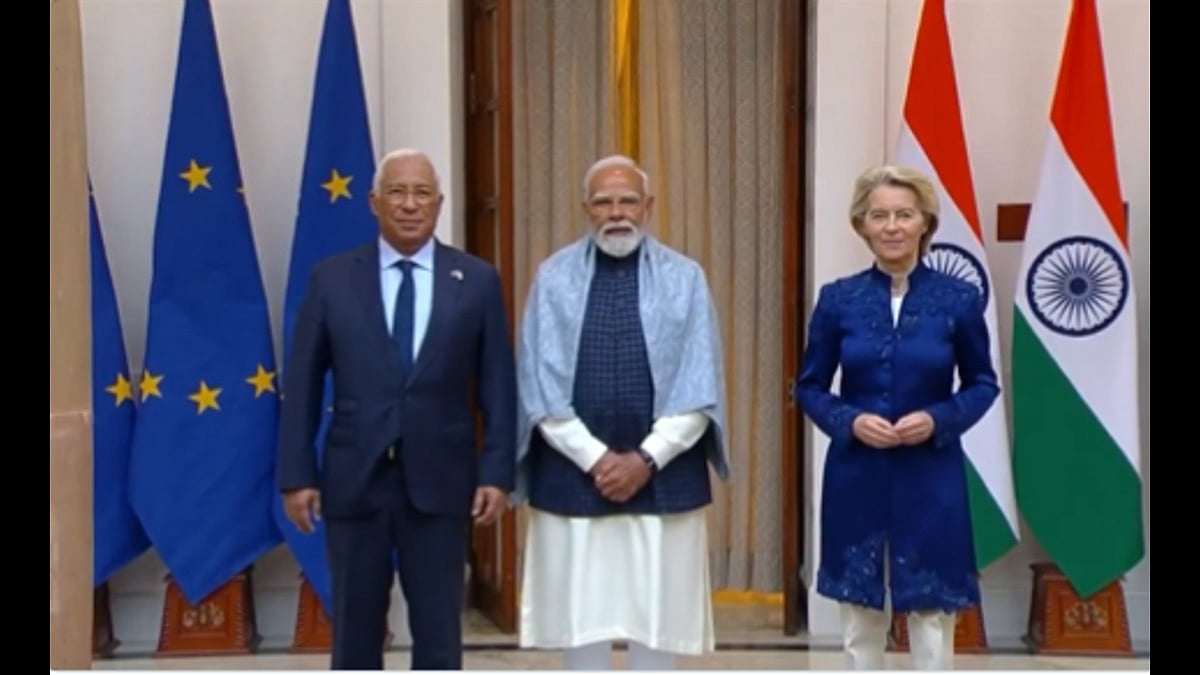
The 77th Republic Day celebrations in India reached a new peak on Tuesday with the official conclusion of the India-EU Free Trade Agreement (FTA). Hailed as a "historic realignment" of the global economy, this landmark deal unites 2 billion people into a single market, representing 25 per cent of global GDP and a full third of world trade.
Beyond the numbers, the "Mother of All Deals" serves as a vital strategic move for both powers. As relations with the United States fluctuate and the push to diversify supply chains away from China intensifies, this partnership provides a powerful hedge, securing the economic future of both regions.
Automotive and quota framework
A standout victory of the agreement is the dismantling of India’s notorious tariff wall for European vehicles.
In a significant shift from the previous 110 per cent duty on fully imported units, India will immediately slash tariffs to 40 per cent for a quota of 250,000 vehicles annually. This rate is set to gradually decline over the next decade, eventually settling at a 10 per cent floor.
These concessions specifically target premium models with an import price exceeding €15,000, allowing luxury stalwarts like BMW, Mercedes and Volkswagen to aggressively expand their Indian portfolios.
However, the deal includes a strategic pause for the electric vehicle sector to shield domestic investments by Tata Motors and Mahindra. EV tariffs will remain untouched for the first five years with their descent to 10 per cent scheduled to begin only after 2031.
Industrial and healthcare de-tariffing
Beyond consumer goods, the pact moves to eliminate the "hidden taxes" that have long burdened the essential building blocks of the Indian economy.
Heavy industry stands to gain significantly as machinery duties of up to 44 per cent, chemical tariffs of 22 per cent, and pharmaceutical taxes of 11 per cent are slated for near-total elimination.
This relief extends deeply into the healthcare sector, where the removal of tariffs on 90 per cent of optical, medical and surgical equipment will drastically lower costs for diagnostic centres and hospitals importing cutting-edge MRI machines and robotic surgical tools.
Furthermore, the agreement bolsters India’s soaring aviation sector by implementing a near-blanket removal of tariffs on aircraft and spacecraft components ensuring the country's infrastructure can keep pace with its rapid expansion.
Wine, spirits and food
European food and beverage exporters are set to gain unprecedented access to India’s rapidly expanding middle class as the agreement aggressively dismantles long-standing trade barriers.
In a move that will reshape the luxury beverage market, wine tariffs will plummet from a staggering 150 per cent to a range of just 20–30 per cent, while spirits will see a new cap of 40 per cent and beer will fall to 50 per cent.
The relief extends to the kitchen pantry as well with duties on popular processed goods like pasta, chocolate and biscuits, previously as high as 50 per cent, will be completely eliminated.
Additionally, the pact transitions olive oil, vegetable oils and non-alcoholic staples like fruit juices and non-alcoholic beer to a zero-tariff regime, effectively easing access to high-quality European products for millions of Indian households.
Indian export wins
For India, the agreement arrives as a vital lifeline following the January 1, 2026, suspension of the Generalised Scheme of Preferences (GSP), a move that overnight exposed 87 per cent of Indian exports to higher tariffs.
The textile and apparel sectors are among the primary beneficiaries by securing a path toward zero-duty access, Indian garments can finally overcome the 10–12 per cent tariff disadvantage that previously favoured duty-free competitors like Bangladesh.
This competitive levelling is mirrored across other labour-intensive industries, including gems, jewellery, leather, and footwear, where the elimination of duties ranging from 9.6 per cent to 12 per cent is expected to spark a massive export surge.
Projections suggest these sectors could drive a staggering 86.6 per cent increase in Indian exports to the EU, reaching approximately €110.7 billion by 2032 and cementing the bloc as a cornerstone of India’s global trade strategy.households.
The "Green" Clause
In a pioneering move, the agreement stands as the first of its kind to integrate deep climate commitments directly with market access, signalling a new era of "green trade."
A major pillar of this partnership is India’s grant of unprecedented "privileged access" to its financial and maritime services, particularly, sectors where New Delhi has historically been cautious in opening a wealth of opportunities for European firms.
This is bolstered by a comprehensive digital trade chapter that establishes secure, fair and predictable rules for cross-border data flows, a move vital for sustaining India’s $250 billion IT powerhouse.
To bridge the gap between economic growth and environmental responsibility, the EU has committed €500 million over the next two years to support India’s emissions-reduction goals.
This financial cushion is specifically designed to help Indian industries adapt to the EU’s rigorous new Carbon Border Adjustment Mechanism (CBAM), ensuring that Indian exporters remain competitive in a decarbonising global market.

