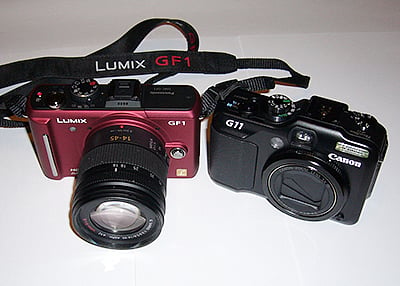
Go mirrorless?
My heart skipped a beat when a prominent science magazine announced that an advanced Sony mirrorless camera cost just Rs 16,000 (body only). They were describing the a7S camera, which has almost see-in-the-dark capabilities. Was it a mistake?
This innovative camera, out just months ago, features a newly developed, 12.2 effective megapixel 35mm CMOS sensor paired with a powerful BIONZ X image processor. Add these together and the camera allows you to shoot at a sensitivity range of ISO 50 – 409600 with unprecedented dynamic range and low noise.
Says the online camera review centre dpreview.com: “The camera is also equipped with the same high-precision Fast Intelligent AF system as the a7R camera, with drastically improved low-light AF sensitivity that can go as low as -4EV.”
In recent months, mirrorless interchangeable-lens cameras have been making news. Not without reason; their quality has improved sharply, to put them in direct competition with the earlier dominant DSLR (digital single-lens reflex) models.
You can get great photos with either, but both DSLRs and mirrorless cameras have their pros and cons. DSLRs use the design of the old 35mm film cameras of the past era. They have a mirror inside the camera body; this reflects light through the lens up to a prism (or additional mirrors) and into the viewfinder for you to preview your shot. On pressing the shutter, the mirror flips up, the shutter opens and light falls on the image sensor.
On the other hand, in a mirrorless camera, light passes through the lens and right onto the image sensor, which captures a preview of the image to display on the rear screen.
Mirrorless cameras score on size and weight. But DSLRs have been speedier in auto-focussing (with better mirrorless cameras catching up). To preview images, DLSRs are better. On image quality and image stabilisation both are equal. In speed, mirrorless are better but for battery life and lenses the DSLR wins. In India, the mirrorless cameras are still hard to come by or very expensive.
Check out some prices here: http://www.infibeam.com/mirrorless-cameras
Patrolling pollution
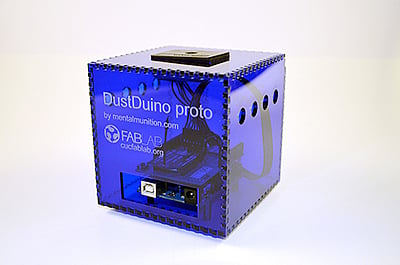
First they offered to track fitness. Now, a new generation of personal sensors are giving people the “ability to monitor the air they breathe”. So says nature.com
DustDuinos devices measure particulate-matter concentrations and quickly upload the data to a public website. Says nature.com: “The DustDuino and other pollution sensors, some of which can be built for as little as US$50, and instructions for which are available online, are part of the next wave in the environmental movement. Across the globe, journalists, advocacy groups, hackers and others are starting to use low-cost monitoring devices to vastly expand the amount of data that are publicly available on forms of air pollution such as particulate matter and toxic gases.” Three cheers for that!
http://bit.ly/dustduinos
Origami microscope

Making the news on TEDTalks recently was Manu Prakash, PhD, the Stanford bioengineering professor. For good reason too. He’s showing the world how microscopes can be made for prices as low as 50 cents (right, that’s no typo) each!
Dr Prakash has created the Foldscope, which makezine.com describes as “an inexpensive, disposable paper microscope that uses tiny spherical lenses”. It is remarkably durable, waterproof and adaptable, and weighs under 9 grammes. It can be built in minutes, need no external power, and since it travels around as a flat and printed sheet, it needs very little space. “It has the potential to be a game-changing tool in the world of medicine and microscopy,” adds the site.
Best of all, this is not merely a challenge taken on just as a challenge. It’s goal is to make it easy for field researchers to identify and diagnose dangerous microbial diseases like malaria, African sleeping sickness, and more.
“The problem lies with the microscope itself… Research microscopes were not designed for field testing. They’re heavy, bulky, really hard to maintain and cost a lot of money,” Prakash has said in his YouTube-shared talk.
For his work, Prakash has been named one of Popular Science magazine’s “Brilliant 10” for 2014. He was also recently included in Technology Review’s list of 35 innovators under 35 (Prakash is 34).
Says the Stanford blog: “When Manu Prakash, PhD, wants to impress lab visitors with the durability of his Origami-based paper microscope, he throws it off a three-story balcony, stomps on it with his foot and dunks it into a water-filled beaker. Miraculously, it still works.”
http://bit.ly/Foldscope2



