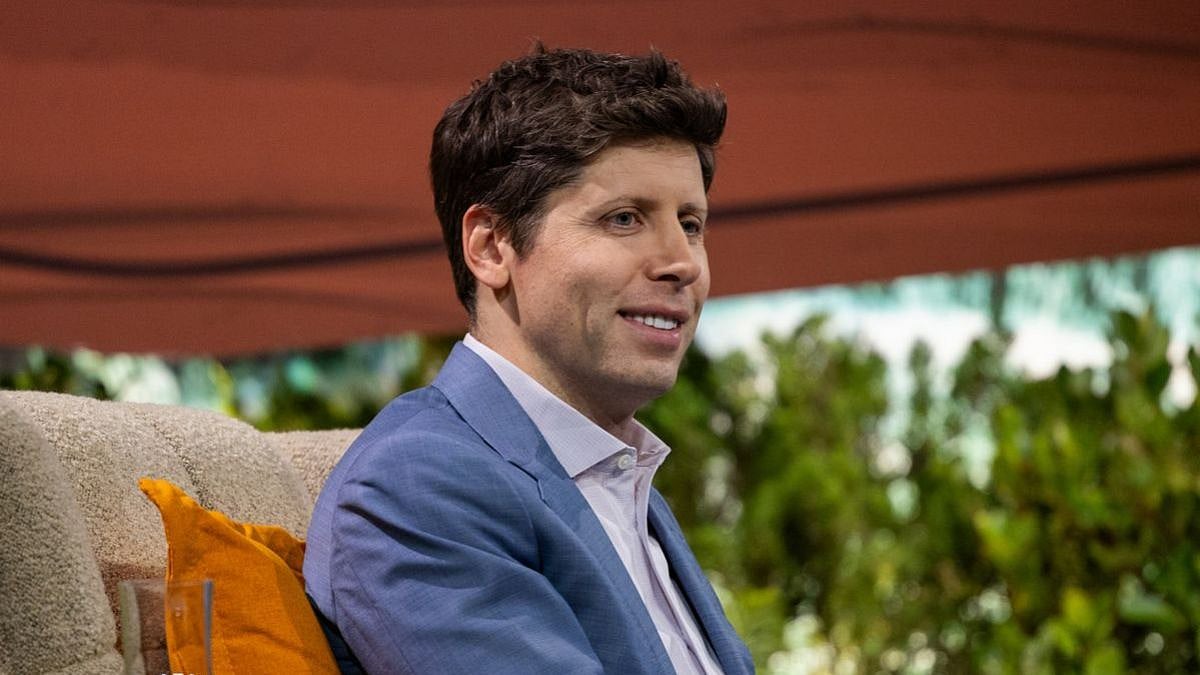
OpenAI CEO Sam Altman has offered his most detailed public statement yet on pacing artificial intelligence (AI) development, declaring the company's stance in stark terms. "We are unapologetically on Team Humanity, and AI must always serve people." The remarks arrive days after Anthropic CEO Dario Amodei's essay "We Must Pace the Frontier" set off a rare wave of agreement among rival AI lab chiefs, followed by Microsoft CEO Satya Nadella's own post welcoming "deliberate pacing" for AI alignment.
Two dangers Altman says must be avoided
Altman laid out what he sees as the two ways AI progress could go catastrophically wrong. The first is humanity losing control of the future to AI altogether, which he called "unacceptable," arguing that alignment and safety techniques must be kept ahead of the pace of capability gains. The second is the concentration of extraordinary power in too few hands. "If an extraordinarily powerful AI is used by one person or company to impress their worldview onto everyone else, the results could be extremely dystopian," he wrote, adding that avoiding both threats requires "walking a narrow middle path," where neither a single country nor a single lab is allowed to accumulate outsized power.
Confidence has to be earned, not assumed
Altman argued that the public deserves assurance that American AI companies will act responsibly, especially given how sharply the pace of progress has accelerated. "Every frontier lab must deliver on this, and there is no reason any of us should come to work if we cannot," he wrote. While he said OpenAI welcomes a federal framework that sets consistent safety requirements across the industry, he was clear that companies should not wait for legislation or antitrust exemptions before acting. "We do not believe we need to wait for an anti-trust exemption or legislation to begin the work of providing this confidence," he said, adding that OpenAI is "excited by ideas like independent auditors."
Moving past older safety frameworks
Altman said the safety tools that frontier labs built in earlier years, such as Responsible Scaling Policies and Preparedness Frameworks, served their purpose at the time but were focused primarily on the deployment of finished models rather than what happens during their development. He said the industry's focus now needs to shift toward safe development and evaluation itself, which will require new tools. As an example, Altman revealed that OpenAI now formulates explicit "safety cases" ahead of frontier reinforcement learning runs expected to meaningfully boost a model's capabilities, in addition to the safety review work the company has long conducted before releasing models publicly. He said he hopes other labs will build on this approach and develop their own, adding that shared standards around misalignment and monitoring "will lead to better outcomes."
Pacing, not stopping
Altman was careful to draw a distinction between slowing down and halting progress altogether. "When we talk about 'pacing', we do not mean 'stopping'. Progress has been rapid and will continue to be," he wrote. However, he acknowledged that pacing means deliberately accepting a slower pace than might otherwise be possible, since interventions like safety cases and monitoring carry real costs. "Pacing will be well worth this cost; no amount of American competitive pressure should justify recklessness, or let capabilities get ahead of alignment and monitoring," he said. On the role of government, Altman said the clearest area where OpenAI would need official support is international coordination, but stressed that labs should first do what they can on their own.

