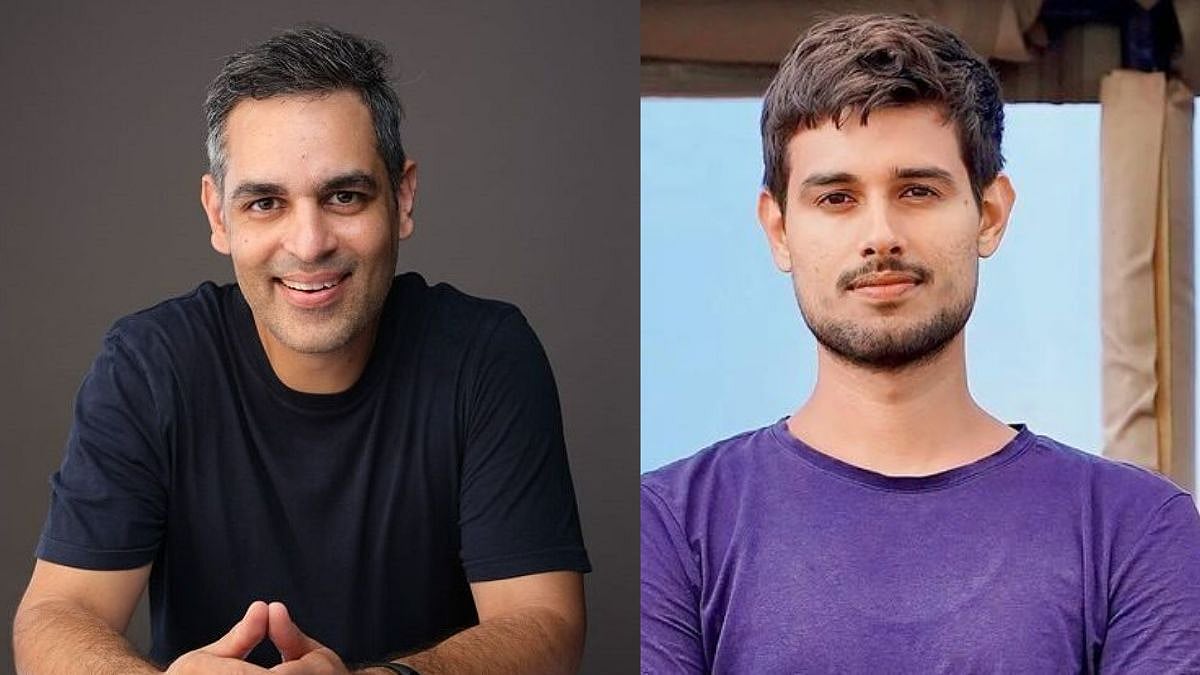
WhatsApp's rollout of usernames, positioned by the company as one of its biggest privacy updates in years, has drawn sharp warnings from entrepreneur Ankur Warikoo and YouTuber Dhruv Rathee, who cautioned that the feature could open the door to a fresh wave of impersonation scams in India. The messaging platform announced that users can now reserve usernames, letting people connect without sharing their phone numbers, with wider rollout planned later this year.
What has WhatsApp announced?
WhatsApp said the update is designed to give users greater privacy by allowing them to connect and be contacted without revealing their phone numbers. The company said reserving a username takes only a few seconds, with the feature opening for reservations this week ahead of a broader rollout later in the year.
Warikoo warns of impersonation risk
Warikoo, in a post on X, said the feature could be exploited by fraudsters if Meta does not put adequate safeguards in place. "In a country such as India, this could be a disaster, if the right anti-abuse systems are not set up by WhatsApp," Warikoo wrote.
He illustrated how scammers could register usernames closely resembling those of public figures. "Imagine receiving a message from warikoo / awarikoo / ankurwarikooo / ankur_warikoo / a_warikoo / ankurwarikooofficial etc etc, soliciting money," he said.
Warikoo added that the shift away from phone-number-based identification removes a key layer of verification. "Cannot be verified through calling the phone number (because username = privacy)," he wrote, also pointing out that many users still do not understand how verified badges work on existing platforms.
Referring to his past legal dispute with Meta, Warikoo wrote, "I have fought a legal case against Meta's lack of attempt to bring down AI-generated ads showing my face, luring people into investment WhatsApp groups. I understand how massive this scam is and how easy it is in our country to execute it."
Rathee criticises Meta's track record on scams
Dhruv Rathee also weighed in on the discussion, taking aim at Meta's broader approach to platform safety. "They don't care.. Team Zuckerberg's only goal is to extract as much money as possible. They willingly let scams and fraud ads run on their other platforms. Now they'll probably let the same happen on WhatsApp," Rathee wrote on X.
Mixed reactions online
The comments triggered a wider debate online, with some users backing the concerns raised by Warikoo and Rathee given WhatsApp's scale in India, and others arguing that impersonation risks already exist on platforms such as X, Facebook and Telegram regardless of the username feature. One user wrote, "That can happen even today right? Someone can simply use your pic, name and send from any other mobile number," while another said, "but the same can be done on x too. facebook too. telegram too. why is it a problem just because its whatsapp?"
Several users called on WhatsApp to introduce stronger verification or reporting mechanisms once the feature rolls out more widely, with one warning that the update, 'introduced in the name of privacy,' could become 'a haven for scammers' in India without robust anti-abuse systems.

