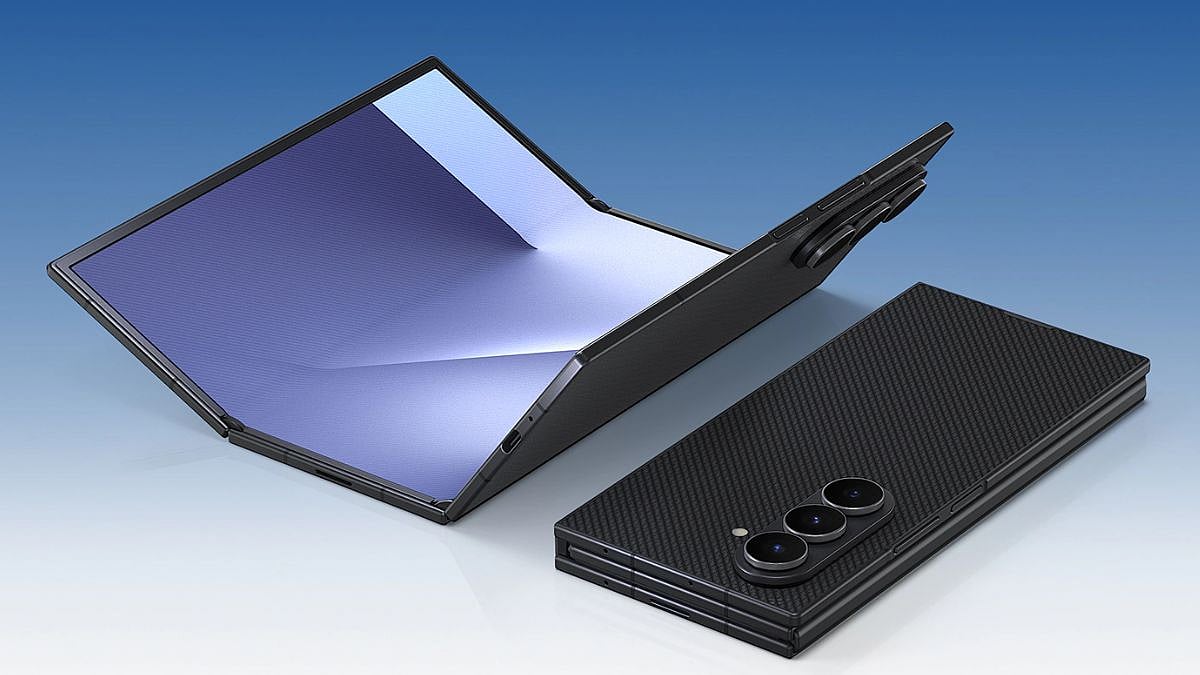
After months of waiting, Samsung has finally unveiled its first-ever tri-folding smartphone. This smartphone will rival the Huawei's tri-folding range, one of the only company to make these multi-folding smartphones. Calling it the Samsung Galaxy Z TriFold, this phone unfolds two ways to open up a really large, almost tablet-like display, and has an outer 6.5-inch screen as well for when users want to use their phone folded for quick tasks.
Here are five key things you need to know about the Samsung Galaxy Z TriFold before you head out to buy one.
1. Samsung Galaxy Z TriFold design
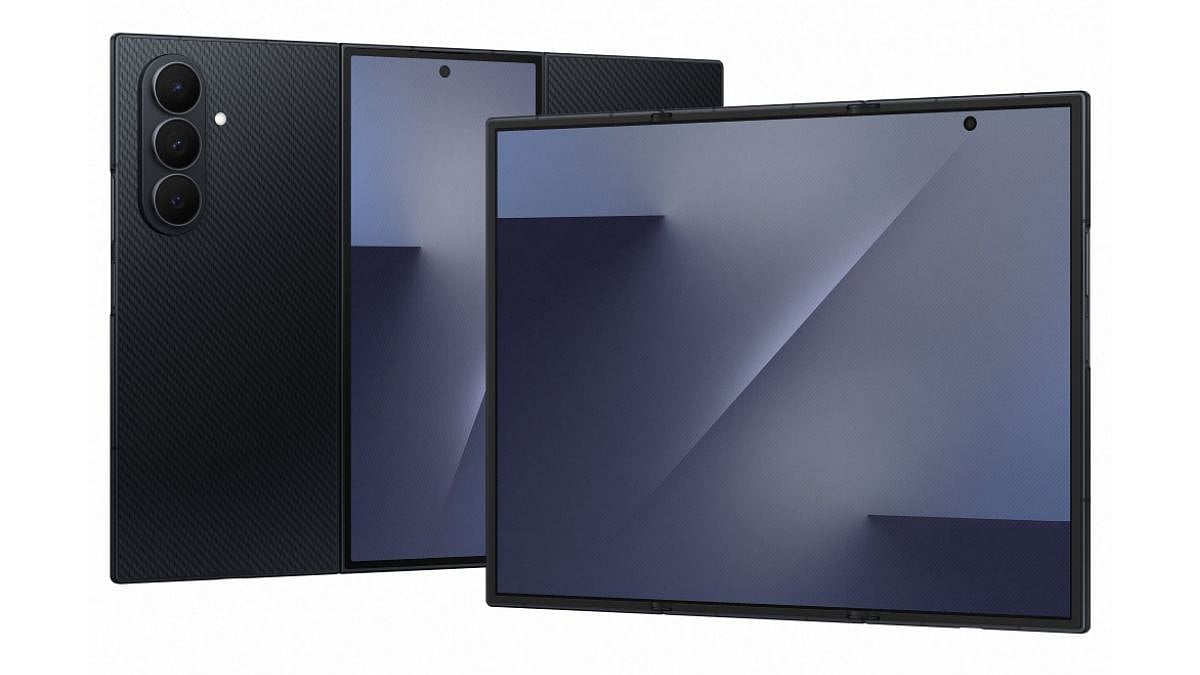
The Samsung Galaxy Z TriFold measures just 3.9 mm at its thinnest point, making it remarkably slim when unfolded, whilst the folded profile allows it to slip easily into a pocket despite housing a 10-inch display. Samsung has employed a titanium hinge housing alongside an Advanced Armour Aluminium frame for structural rigidity without adding bulk, and the back panel uses a ceramic-glass fibre-reinforced polymer to maintain thinness while resisting cracks. The side-mounted (possibly to keep the slim form factor) capacitive fingerprint sensor sits alongside the power button, maintaining a clean exterior aesthetic. Corning Gorilla Glass Ceramic 2 protects the front cover, and the device carries an IP48 rating for water resistance.
The engineering centrepiece lies in what Samsung calls its most advanced hinges yet - two differently sized Armour FlexHinges with a dual-rail structure that work in harmony to accommodate the varying weight and components across the three panels. The hinge mechanism allows the screen panels to meet with minimal gap when closed, contributing to the device's slim profile, and includes an auto-alarm system that alerts users through on-screen notifications and vibrations if the device is being folded incorrectly. The inward-folding design protects the main display from external damage, whilst Samsung claims minimised creasing keeps content viewing seamless. The device's three-cell battery system of 5,600 mAh is distributed across all three panels for balanced power delivery, a design decision necessary to maintain the device's thin form factor.
2. Samsung Galaxy Z TriFold pricing and availability
The Samsung Galaxy Z TriFold will be available for purchase in Korea on December 12, followed by other markets including China, Taiwan, Singapore, the UAE and the US. Samsung has confirmed that prices start at 3,590,400 Korean won, roughly $2,500 or Rs. 2,20,000, which positions the device only $700 (roughly Rs. 63,000) more expensive compared to the Galaxy Z Fold 7. The pricing has come in lower than earlier speculation, with rumours having claimed that the Galaxy Z TriFold would cost $3,000 (roughly Rs. 2,70,000). For the US market, Samsung will release the handset at some point in the first quarter of 2026, between January and March, though local pricing may vary slightly from the benchmark figure.
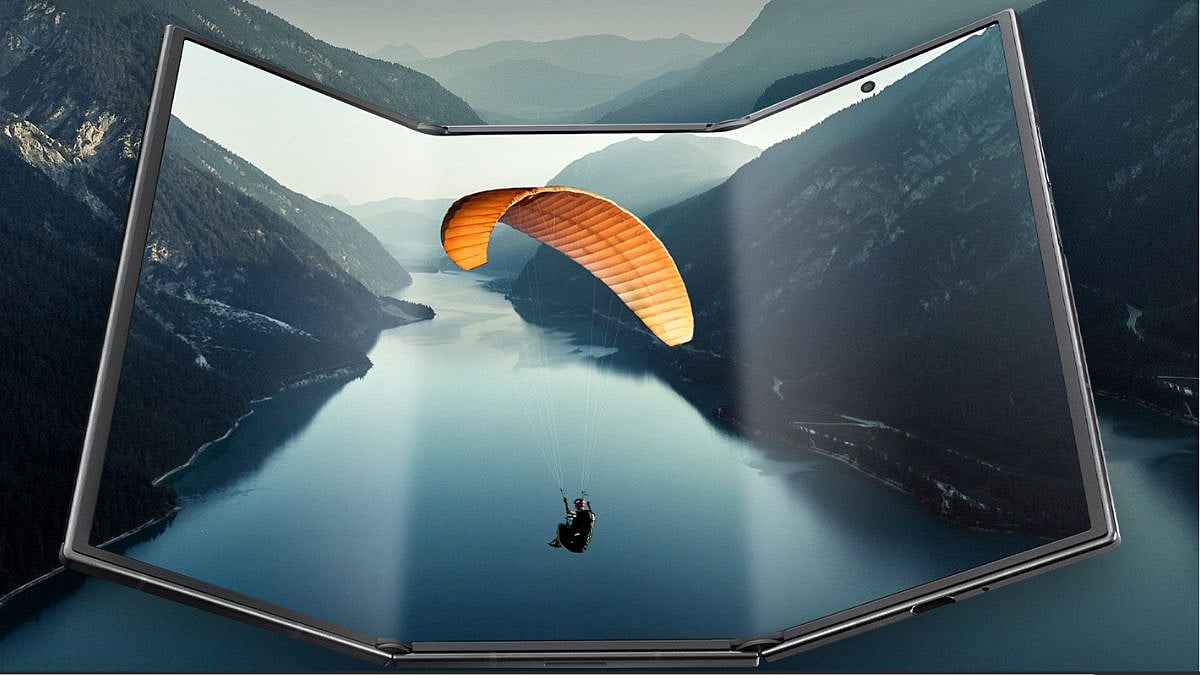
At launch, the Samsung Galaxy Z TriFold will be offered at select retail stores in respective launch countries for hands-on discovery of the device and in-store assistance. Samsung is providing purchase incentives that include a six-month trial on Google AI Pro, with access to features including video generation powered by Veo3, plus 2TB of secure cloud storage. The company has also introduced an exclusive display repair benefit, with every Galaxy Z TriFold purchaser eligible for a one-time 50 percent discount on display repair costs. The device will be available in two storage configurations - 512GB and 1TB - both paired with 16GB of RAM, though Samsung has not disclosed differential pricing for the higher storage variant. There is no clarity on when this tri-folding smartphone will be launched in India.
3. Samsung Galaxy Z TriFold specifications
Coming to the specifications, the Samung Galaxy Z TriFold features a 10-inch QXGA+ Dynamic AMOLED 2X main display with 1600 nits peak brightness and a 120Hz adaptive refresh rate, whilst the 6.5-inch cover screen delivers 2600 nits peak brightness, also with a 120Hz refresh rate. The device is powered by the customised Snapdragon 8 Elite Mobile Platform for Galaxy and comes with 16GB of RAM paired with either 512GB or 1TB of internal storage, with no microSD expansion support. Samsung has equipped the device with the biggest battery it has ever had in a foldable phone - a 5,600 mAh three-cell battery system distributed across the three panels, supporting 45W wired charging and 15W wireless charging.
The camera system comprises a 200-megapixel wide-angle camera with optical image stabilisation, a 12-megapixel ultra-wide camera, and a 10-megapixel telephoto camera offering 3x optical zoom with digital zoom extending up to 30x. Front-facing cameras include a 10-megapixel sensor on the cover screen and another 10MP camera on the main display. The device weighs 309g when measured without the pre-installed protective film and carries an IP48 rating for water resistance. Connectivity options include 5G, Wi-Fi 7, and Bluetooth 5.4, whilst security is handled through a side-mounted capacitive fingerprint sensor backed by Samsung Knox with Knox Vault. The handset ships with Android 16 and One UI 8, supporting dual nano-SIM and multi-eSIM configurations.
4. Samsung Galaxy Z TriFold competition
Samsung's entry into the tri-fold market places it in direct competition with Huawei, which launched its Mate XT tri-fold smartphone last year, the first of its kind globally. The Mate XT has a price tag of approximately $2,520, positioning Samsung's device as a more affordable alternative in this nascent category. Chinese manufacturers including Honor and Xiaomi have also showcased tri-fold concepts, with Xiaomi introducing a more affordable tri-fold model aimed at broadening market accessibility, whilst Tecno displayed its Phantom Ultimate 2 at Mobile World Congress earlier this year. Samsung, which once dominated the foldable market with over 80 percent market share in 2022, now holds about 50 percent after facing increasing competition, with Huawei's market share expected to rise significantly.
Apple remains conspicuously absent from the foldable smartphone segment entirely, with the company's first foldable iPhone expected to launch alongside the iPhone 18 models in autumn 2026. Multiple reports suggest the device will feature a book-style fold with a 7.8-inch display and will cost an eye-watering $2,399, though Apple retains the latitude to postpone if the quality is not up to scratch, preferring to delay rather than sacrifice the experience. The device is rumoured to forgo Face ID in favour of a side-mounted Touch ID sensor due to space constraints, and will reportedly feature an industry-first 24-megapixel under-display camera. Apple's prolonged absence from foldables has allowed Samsung and Chinese manufacturers to establish technical expertise and market presence, though the company's eventual entry could reshape competitive dynamics in the premium segment.
5. Samsung Galaxy Z TriFold AI features
Samsung Galaxy Z TriFold integrates Galaxy AI features that Samsung says make every feature more intuitive on the large screen. Photo Assist includes Generative Edit and Sketch to Image, which adapt to Galaxy AI flexibly with impressive scale, enabling users to compare before and after edits side by side on the expansive display. Browsing Assist can provide quick summaries or translations within Samsung Internet as needed. The device also supports Gemini Live, enhanced with multimodal AI that understands what users see, say and do, allowing users to ask contextual questions without switching between apps. Samsung demonstrates this with an example where users can show the AI a room, a shopping site and paint swatches to receive custom recommendations.
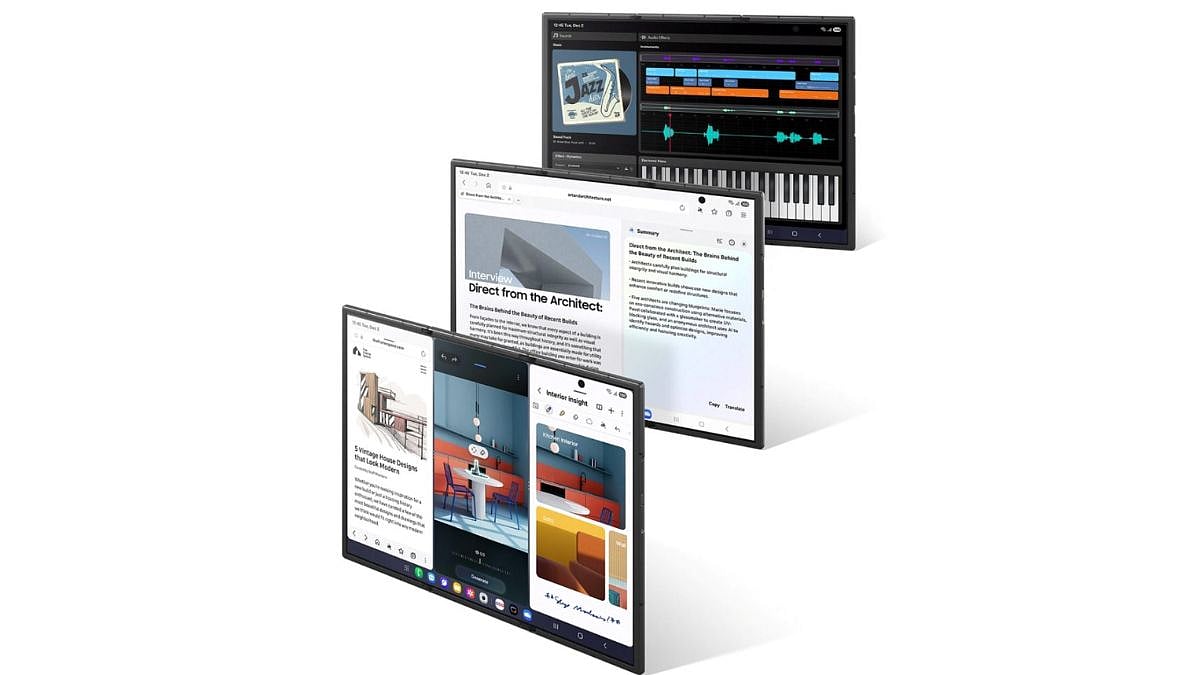
The Z TriFold is the first mobile phone to have standalone Samsung DeX available, providing a desktop-like environment directly on the device without requiring external displays. Users can access up to four workspaces, each running five applications simultaneously, whilst Extended Mode enables dual-screen functionality when connected to an external monitor. All Galaxy Z TriFold buyers will receive a free six-month Google AI Pro trial, which includes enhanced access to Gemini 3 Pro model, AI-based video creation with Veo 3.1, 1,000 monthly AI credits for video creation, Notebook LM access and 2TB Google Drive storage- benefits Samsung values at $120. Samsung has noted that a Samsung Account login may be required to use certain AI features, and availability may vary depending on region, OS version, device model and phone carrier.

