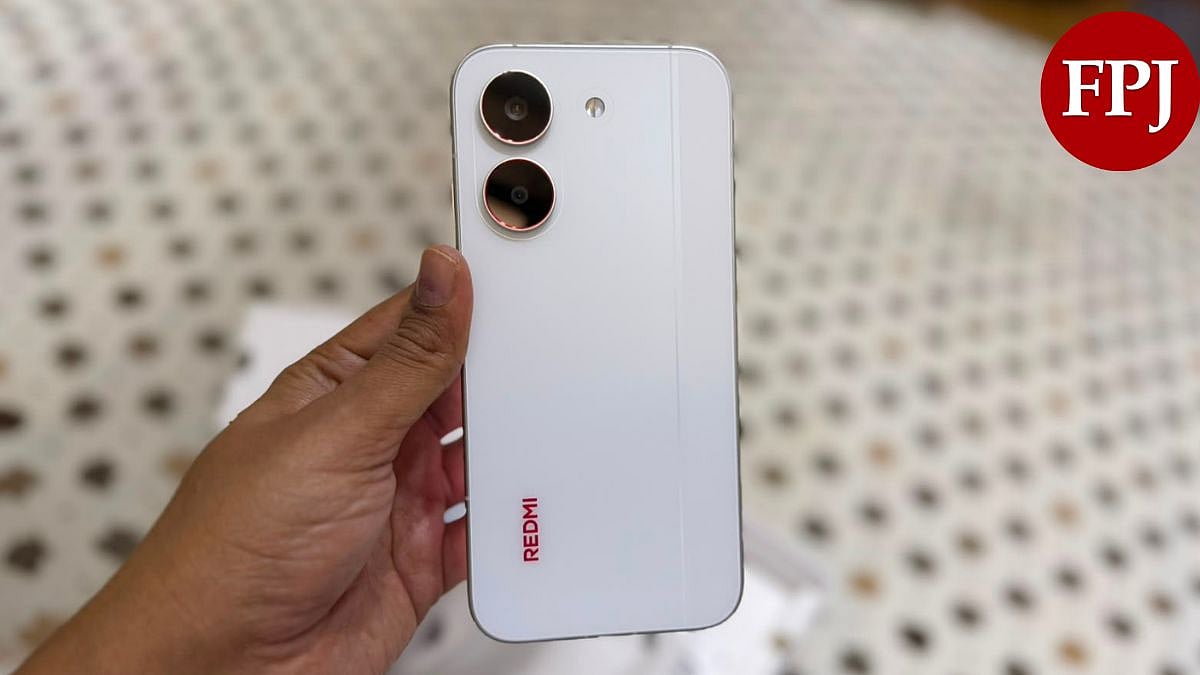
Redmi's Turbo series has finally arrived in India, and it's making its debut with a bold proposition. The Redmi Turbo 5 is priced at Rs. 37,999 for the 8GB RAM and 256GB storage variant, and Rs. 40,999 for the 12GB RAM and 256GB storage version. It enters a fiercely contested segment where it goes up against the likes of the Motorola Edge 70 Pro, OnePlus Nord CE 6, and even its sibling, the Poco X8 Pro. It promises to be the fastest, largest-battery, and brightest-screen Redmi phone ever built for India.
After spending a week with the Turbo White variant, here's whether it lives up to those claims.
Redmi Turbo 5 Review: Design
The Turbo White finish is the quiet achiever of the three colour options on offer. Unlike the Nitro Blue, which leans into the gamer-bro aesthetic, the white variant has a clean, almost understated matte glass back that feels surprisingly premium in hand. The aluminium frame wraps around it neatly, and the edges have been polished to a smoothness that makes it comfortable to grip even during extended gaming sessions. At 204 grams, it is not a featherweight, but the 8.18mm profile keeps it from feeling dense.
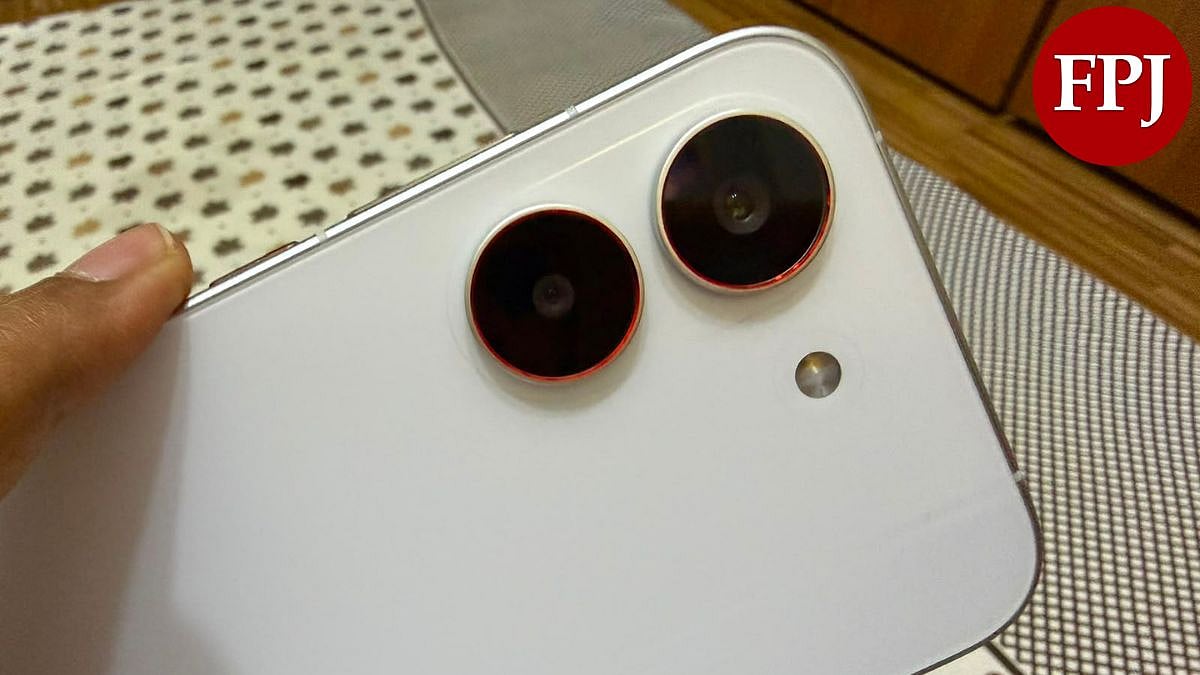
The two circular camera rings on the back house the Redmi Pixel Matrix, an RGB lighting system that pulses and reacts to notifications, calls, and gaming. On the Turbo White, the rose-gold-tinted rings stand out without screaming for attention. The feature itself is buried in Settings under Additional Settings and is switched off by default, which seems like a missed opportunity given how much Redmi has marketed it. In practice, it is genuinely useful when the phone is face-down on silent. You can set it to different colours for calls and notifications, though you cannot assign colours to specific apps, which remains a frustrating limitation.
Build quality is where the Turbo 5 punches well above its segment. The front is protected by Corning Gorilla Glass 7i, and the phone carries IP66, IP68, IP69, and IP69K ratings. That last one means it can survive high-pressure water jets, which is genuinely rare at this price. The phone went under a running tap during testing and emerged completely unscathed. The bottom edge has a USB-C port flanked by a SIM tray and speaker grille, while the right spine houses the power button and volume rocker.
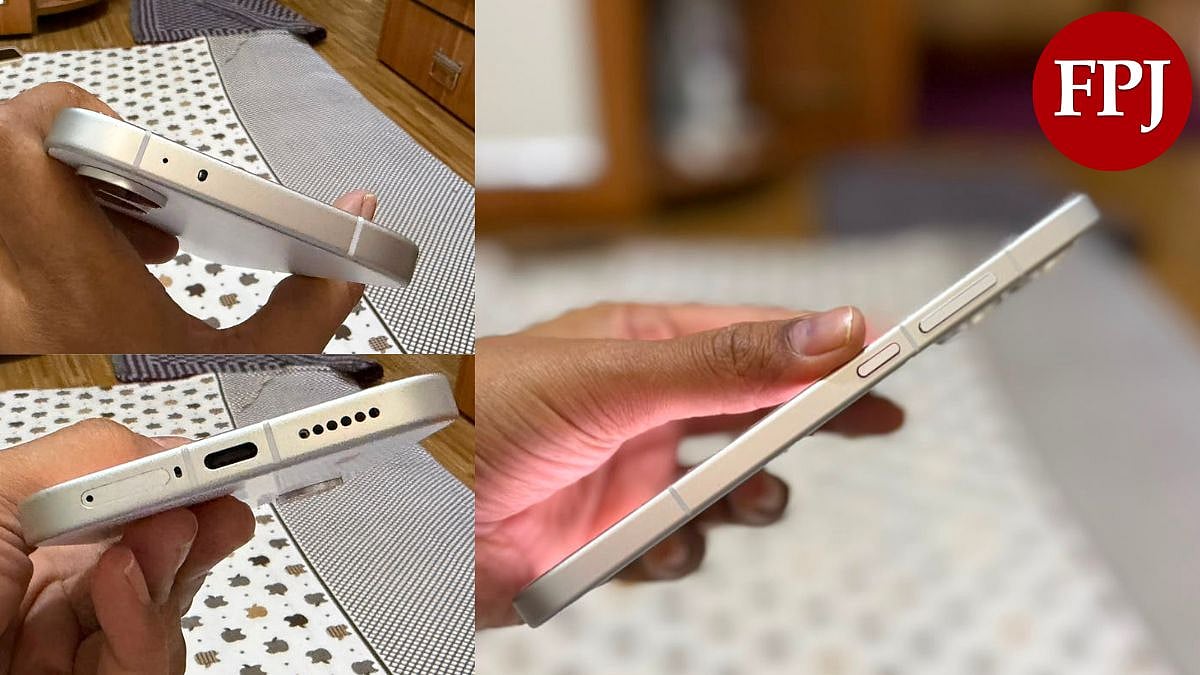
Redmi Turbo 5 ports |
Redmi Turbo 5 Review: Display
The 6.59-inch 1.5K AMOLED display is one of the strongest arguments for buying this phone. With a resolution of 1268x2756 pixels, a 120Hz refresh rate, 12-bit colour depth, Dolby Vision, and HDR10+ support, it covers the essentials well. Peak brightness is rated at 3,200 nits, and in real-world outdoor use under Mumbai's summer sun, the display holds up with zero readability issues.
Colours are punchy and vibrant out-of-the-box on the default Original Colour Pro setting, but those who prefer accuracy can switch to a more neutral profile. The display's HDR10 output worked without any manual configuration on YouTube and Prime Video, delivering noticeably richer contrast and better highlight detail on supported content. The centred punch-hole cutout for the selfie camera is small enough to be unobtrusive, and the slim bezels around the panel give it a genuinely immersive look.
The 2,560Hz touch sampling rate in Game Turbo mode makes a real difference during fast-paced titles. Inputs register immediately and accurately. The optical fingerprint scanner, positioned at the lower end of the display, takes some getting used to, but it unlocks consistently and quickly once the placement becomes muscle memory. The 3,840Hz PWM dimming is a thoughtful inclusion for those sensitive to screen flicker during low brightness use.
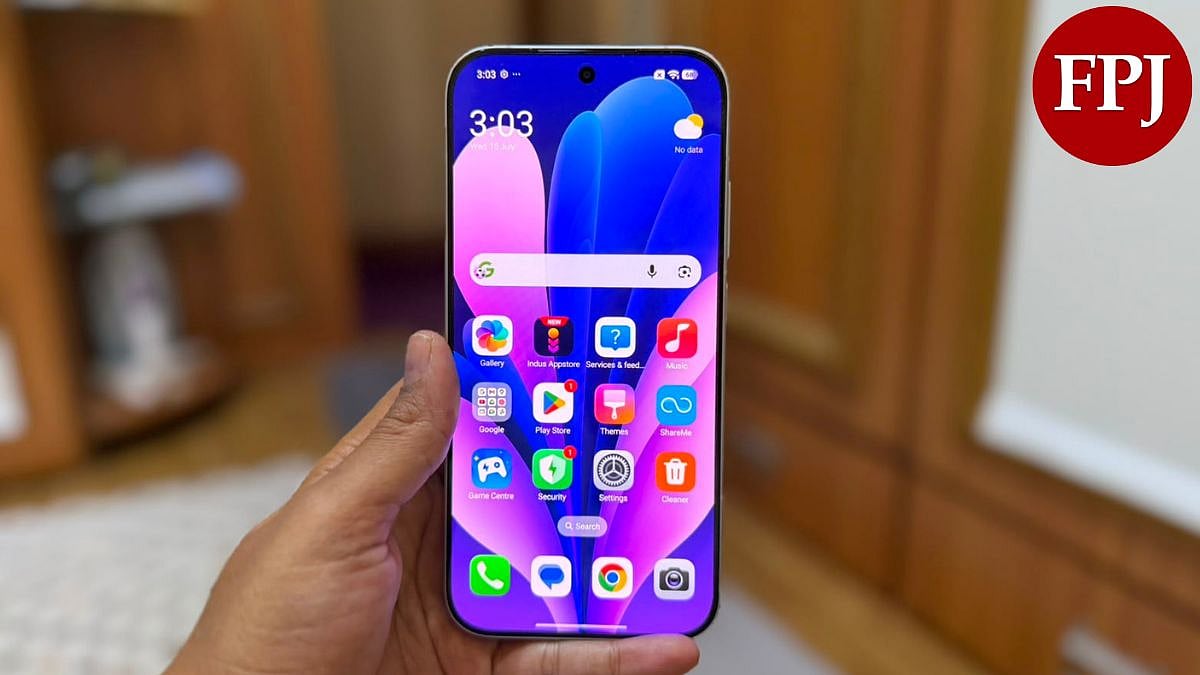
Redmi Turbo 5 Review: Display |
Redmi Turbo 5 Review: Camera
The Redmi Turbo 5 is not a camera phone, and Redmi has not positioned it as one. The rear setup consists of a 50-megapixel Sony IMX882 primary sensor with OIS and an f/1.5 aperture, paired with an 8-megapixel ultrawide at f/2.2. The front houses a 20-megapixel selfie shooter. What this means in practice is that the primary camera does all the meaningful work, and it does it reasonably well.
Daylight shots from the primary sensor come out with good detail, pleasing colour saturation, and a wide enough dynamic range to handle high-contrast scenes. A portrait of a child captured indoors shows natural skin tones and decent sharpness at the subject's face, though there is some mild oversharpening visible when you zoom in. The 1.3x portrait preset tends to over-expose backgrounds and soften facial detail more than necessary. At native focal length in good light, however, the 50-megapixel sensor delivers images that look great on a smartphone screen and hold up reasonably on a tablet.
The ultrawide is a step down in every measurable way. Detail is noticeably softer, colour temperature shifts warmer compared to the primary camera, and low-light shots from this lens are borderline unusable. In night mode, the primary camera manages to brighten scenes impressively, though at the cost of accuracy; images look cleaner than the actual lighting conditions.
Video maxes out at 4K at 60 frames per second on the primary camera, while the ultrawide and selfie cameras top out at 1080p. That inconsistency is hard to overlook at this price. The 20-megapixel front camera produces decent selfies in controlled light but struggles with backlit environments and tends to add a slight green cast to skin in some conditions. For social media use, it gets the job done. For anything more demanding, the camera system will leave you wanting.

Redmi Turbo 5 camera samples |
Redmi Turbo 5 Review: Processor
The MediaTek Dimensity 8500 Ultra is the headline act, and it delivers. The 4nm chip, clocked at 3.4GHz, is paired with LPDDR5X RAM and UFS 4.1 storage, and the result is a phone that handles multitasking, app switching, and content consumption without a hint of lag. On AnTuTu V11, the device scored 2,130,478, while Geekbench 6 returned a single-core score of 1,699 and a multi-core score of 6,642. The GPU OpenCL score came in at 13,817. These numbers put it firmly in upper-midrange territory.
In gaming, the Turbo 5 is well-equipped. Call of Duty: Mobile ran at 120 frames per second on Ultra graphics with Wild Boost enabled, and Genshin Impact held a smooth 60 frames per second on High settings throughout extended sessions. The 3D Ice Loop Cooling system, which uses a 5,300mm stainless steel vapour chamber, does a reasonable job of managing thermals under sustained load. The phone does get warm around the camera module after 30 to 40 minutes of intensive gaming, but it never became uncomfortably hot to hold during daily use.
Sustained performance under benchmarking showed some throttling, which is expected. For everyday usage, including web browsing, streaming, and social media, the chip is overkill in the best possible way.
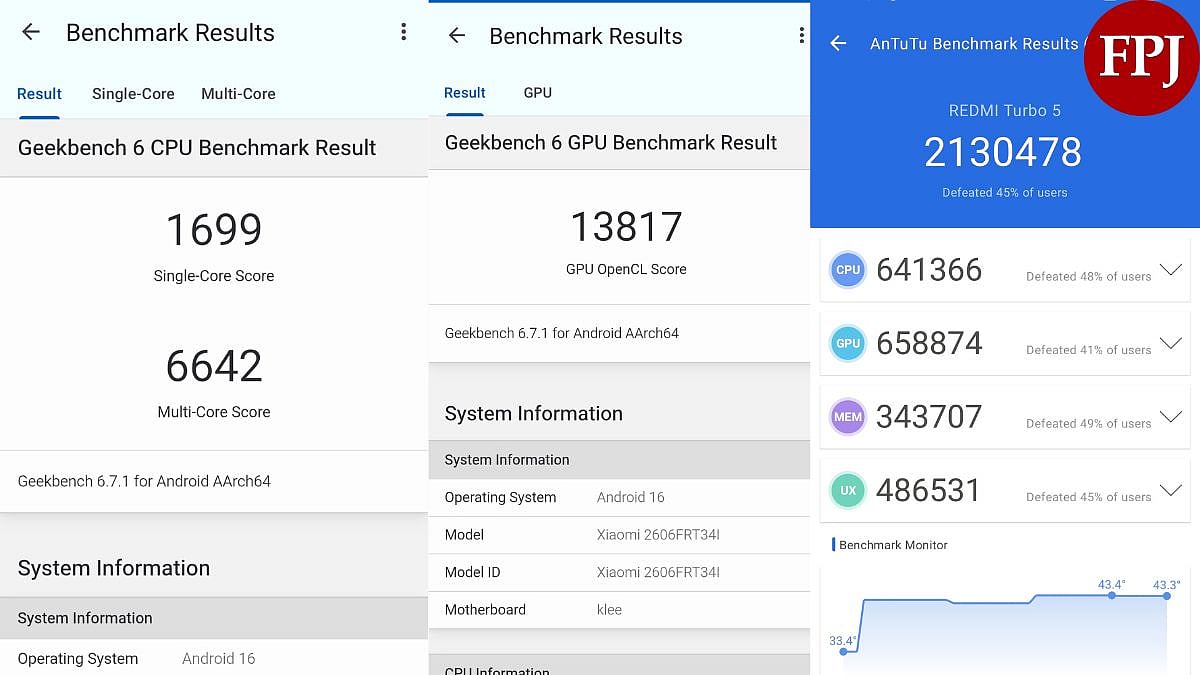
Redmi Turbo 5 Review: Processor |
Redmi Turbo 5 Review: Battery
The 7,540mAh silicon-carbon battery is where the Turbo 5 makes its most convincing case. It is the largest battery ever shipped on a Redmi phone in India, and it shows. The phone consistently lasted well over a day of mixed usage including calls, social media, streaming, and some casual gaming. During a day of heavier use, it still pushed past the 15-hour mark before needing a charge.
Standby drain is slightly higher than expected for a battery of this size, which means you may not always wake up to the same charge percentage you hoped for. That is a software-level issue that Redmi could address in a future update.
The bundled 100W HyperCharge adapter, which ships inside the box, is a genuine convenience. In testing, the phone went from 20 percent to full in approximately 51 minutes. Getting to 55 percent took under 30 minutes. For a battery this large, that charging speed is impressive and a direct practical benefit for heavy users who cannot afford long charging windows.
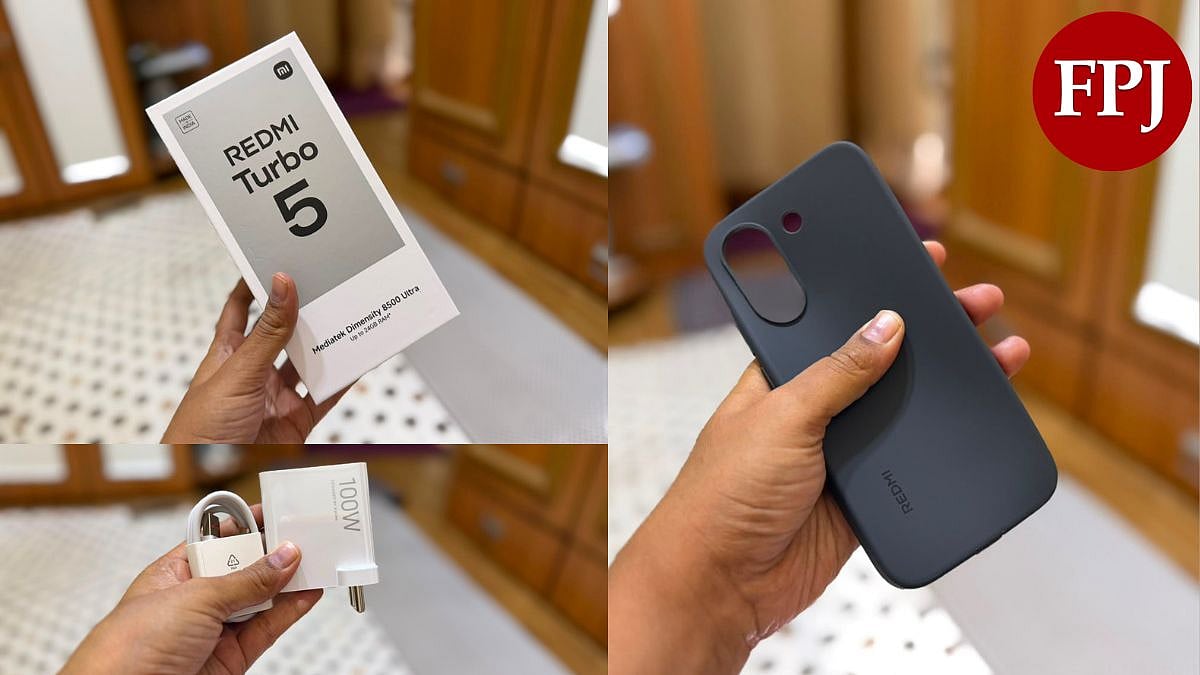
Redmi Turbo 5 Review: UI
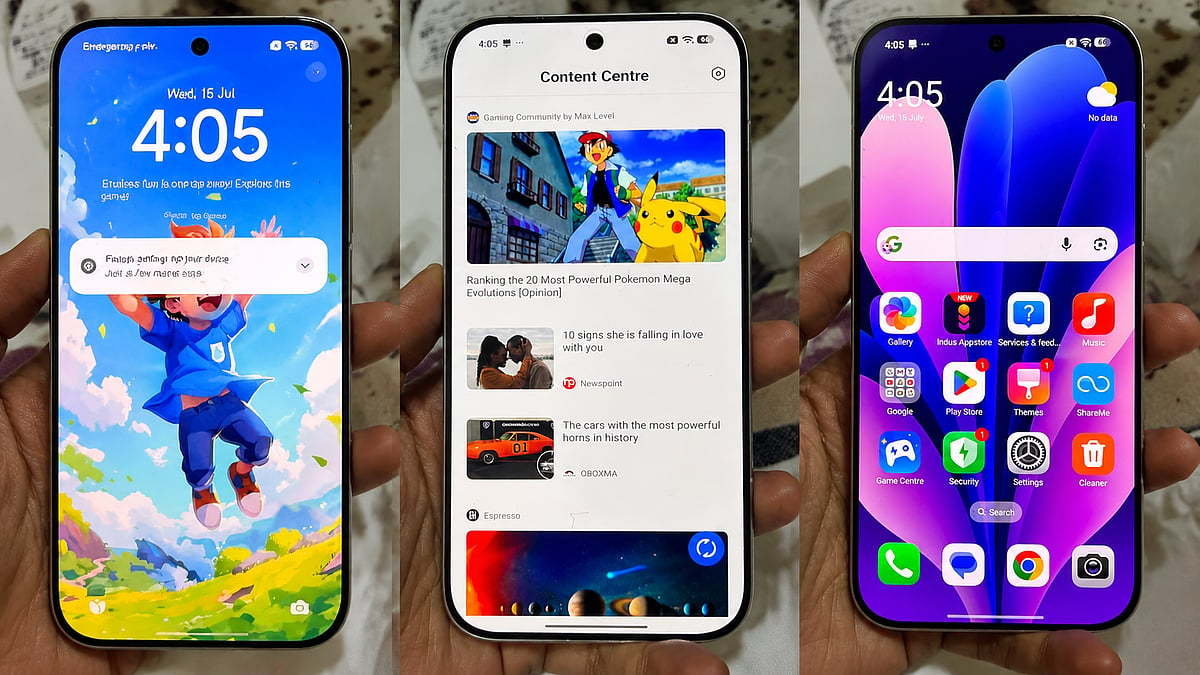
HyperOS 3 on Android 16 is a feature-packed, visually polished interface, but it comes with caveats. The good: animations are smoother than the previous generation, the Gaussian blur effects on notifications look premium, and there are extensive personalisation options from fonts and themes to lock screen depth effects. The Hyper Island, which functions similarly to Apple's Dynamic Island, surfaces notifications and quick info as a compact pill that expands with a tap. Cross-device connectivity with Windows PCs, Macs, and even iPads via Xiaomi Interconnect is genuinely useful for a phone at this price.
The HyperAI suite covers wallpaper generation, writing assist, call transcription, translation, and AI photo editing basics. Google Gemini is available alongside Xiaomi's own models. The AI photo tools are functional but not comprehensive; the absence of tools like AI Reflection Remover or AI Unblur, which some competitors offer, is noticeable.
The bloatware situation is where HyperOS 3 frustrates. The phone shipped with 63 pre-installed apps, including 22 third-party applications. That is a significant number for a premium-priced device, and the Indus App Store sends update notifications regardless of whether it has ever been opened. A full-screen advertisement appeared once while using the File Manager app. Most pre-installed apps can be uninstalled, which helps, but the initial setup experience is cluttered in a way that does not match the phone's Rs. 37,999 price tag. On the positive side, the software commitment of four OS updates and six years of security patches is a genuinely long-term promise.
Redmi Turbo 5 Review: UI |
Redmi Turbo 5 Review: Verdict
The Redmi Turbo 5 is a focused device that knows exactly who it is for. It is built for someone who games hard, uses the phone heavily through a full day, and wants the assurance of a near-indestructible build without paying flagship money. At Rs. 37,999 for the 8GB variant, it makes a strong case through its combination of the Dimensity 8500 Ultra's gaming-grade performance, a class-leading 7,540mAh battery with genuinely fast 100W charging, a vibrant 1.5K AMOLED panel, and IP69K-rated durability that stands ahead of most peers in this price band.
Redmi Turbo 5 Review: Verdict |
Where it falls short is equally clear. The camera system relies almost entirely on the primary sensor, and the 8-megapixel ultrawide is a significant weak link for a phone priced this high. Thermal management under heavy sustained load needs refinement, and the bloatware count is unacceptably high for the asking price. The Motorola Edge 70 Pro remains a better-rounded camera option at a comparable price, and the OnePlus Nord CE 6 beats it on battery endurance. But neither offers the Turbo 5's quad-rated durability or the same level of gaming performance.
If performance, battery life, and ruggedness are the priorities, the Redmi Turbo 5 is one of the easier recommendations in this segment right now. Just go in knowing that the camera will not be the reason you reach for it.
Rating: 4/5
Pros
Massive 7,540mAh battery with 100W fast charging included in the box
Excellent gaming performance courtesy of the MediaTek Dimensity 8500 Ultra
Bright, vibrant 1.5K AMOLED display with Dolby Vision and HDR10+ support
Premium aluminium and glass build with Corning Gorilla Glass 7i protection
Cons
Weak 8-megapixel ultrawide camera that disappoints at this price point
Heavy bloatware load with 63 pre-installed apps including a full-screen ad in File Manager
No telephoto lens, leaving the camera system overly dependent on the primary sensor

