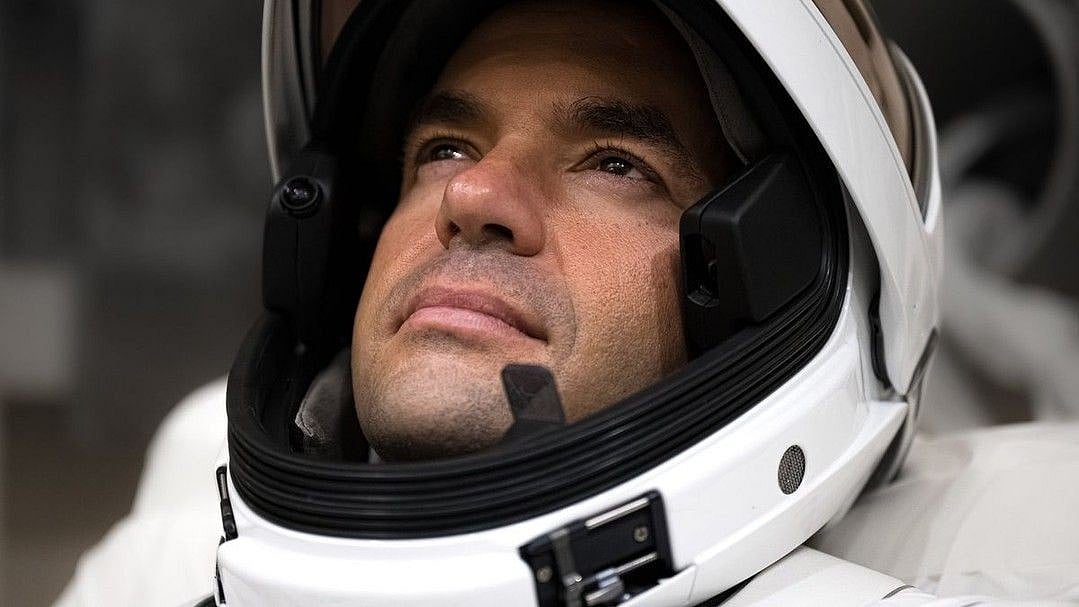
NASA Administrator Jared Isaacman, a billionaire entrepreneur and close ally of Elon Musk, has outlined an ambitious roadmap to return American astronauts to the lunar surface by the end of President Donald Trump’s second term and establish a permanent lunar base by 2030.
In recent interviews, Isaacman emphasised accelerating the Artemis programme, with a crewed Moon landing targeted before 2029 and long-term human settlement to follow shortly thereafter.
Moon landing within Trump’s second term
Isaacman has pledged that the United States will achieve a historic crewed lunar landing during President Trump’s current term, which ends in January 2029.
Speaking to media outlets, he stated that the Artemis III mission — the first to return humans to the Moon since Apollo 17 in 1972 — remains a top priority.
This timeline aligns with substantial funding boosts for NASA and a renewed national space policy signed by President Trump, which prioritises American leadership in space exploration.

Building a permanent ‘Moon Home’ by 2030
Isaacman has declared an unequivocal commitment to establishing a permanent lunar base, describing it as a shift from short-term visits to enduring human presence.
"We are going to build a Moon base,” he affirmed, highlighting the goal of a sustained 'Moon home' capable of supporting continuous scientific research and operations.
The target is to lay the groundwork for this permanent habitat by 2030, including the deployment of nuclear power systems to enable long-term activity on the lunar surface.
Nuclear propulsion and surface reactors are seen as critical for providing reliable energy far from Earth’s resources.
Unlocking scientific and economic potential
The lunar base vision extends beyond exploration to harnessing the Moon’s resources for broader benefits.
Isaacman pointed to Helium-3, a rare isotope abundant in lunar soil, as a potential fuel for clean fusion energy on Earth.
He also stressed the creation of an “orbital economy” through investments in space data centres, on-orbit refuelling infrastructure, and lunar logistics.
These efforts, he argued, will drive scientific discoveries, create jobs, stimulate private sector growth, and enhance national security.

Role of private partnerships like SpaceX
Central to the plan is collaboration with commercial space companies.
SpaceX, led by Elon Musk, is developing the Human Landing System for Artemis missions, while partnerships with firms like Blue Origin focus on propellant transfer technologies.
Isaacman noted that contracts will be awarded based on performance, ensuring the fastest and most capable providers contribute to meeting these deadlines.

